Introduction
So, your skin is staging a rebellion. Maybe it's acne that won't quit, eczema that's driving you bonkers, psoriasis plaques that seem to have taken up permanent residence, or rosacea that makes you look like you've been running marathons in 100-degree heat. You've tried the creams, the pills, the "just wash your face better" advice (eye roll), and maybe even the nuclear option—Accutane or round after round of prescriptions.
And yet… here you are.
Here's the truth bomb: your skin isn't the problem. It's the messenger.
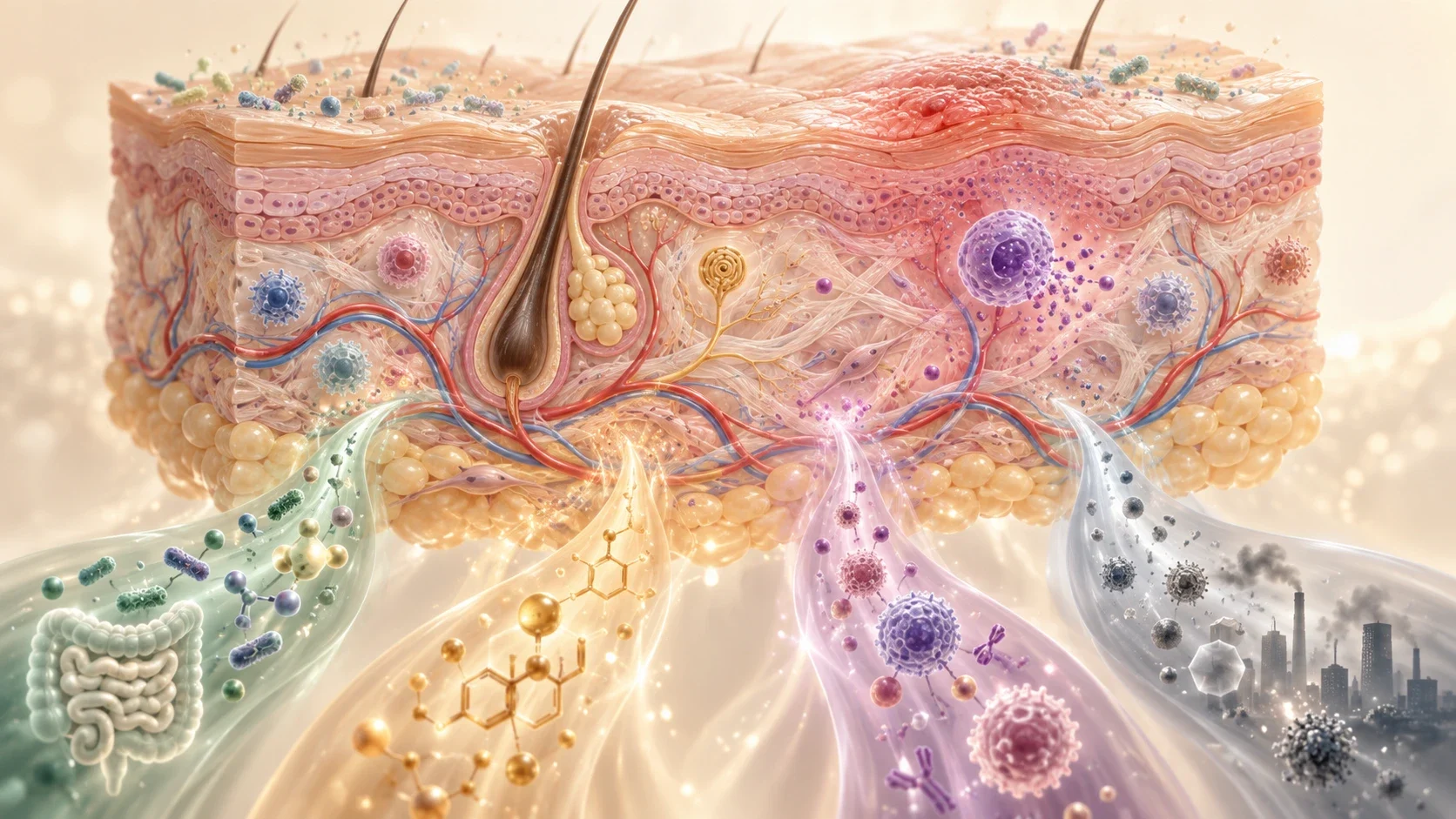
Think of your skin as that friend who can't keep a secret—it's going to broadcast the internal drama whether you like it or not. Gut chaos? Your skin knows. Immune misfires? Your skin will show it. Hormones going feral? Your face will snitch. And yes—environmental exposures (especially from water-damaged buildings) can absolutely end up on the skin's "incident report."
The good news? Once you understand what your skin is actually trying to tell you, you can stop playing topical roulette and start fixing the upstream biology that keeps reigniting the fire.
This guide is for people who've tried conventional treatments and are ready to understand the biology underneath. Whether you're a patient researching options or a practitioner deepening your functional lens, we're going mechanisms-deep while keeping it readable. Dermatology is excellent at symptom control and preventing complications—the functional lens complements that by asking what upstream drivers may be feeding the fire.
Fair warning: this is a deep dive. We're talking about mechanisms, immune pathways, and enough acronyms to make your head spin. If you're the kind of person who enjoys words like "Th2 cytokines" and "immune tolerance," welcome home.
TL;DR — "Just Tell Me Why My Face Is Staging a Rebellion"
Your skin is throwing a fit because:
Your gut ecosystem is unstable: dysbiosis + barrier dysfunction can increase systemic inflammatory signaling that shows up on skin.
Your immune system is dysregulated: it's overreacting (eczema), stuck in chronic loops (rosacea/acne), or driving immune-mediated hyperproliferation (psoriasis).
Your hormones are having a rave: insulin/IGF-1 signaling, androgen/DHT activity, cortisol stress physiology, and estrogen/progesterone imbalance can all push skin toward flares.
Your toxic load and your detox "throughput" don't match: certain exposures can amplify oxidative stress, histamine signaling, and inflammatory tone.
You're missing key building blocks: zinc, magnesium, vitamin A, vitamin D, selenium, manganese, molybdenum (and friends) are required for barrier integrity, immune regulation, and detox chemistry.
Your mast cells are drama queens: when triggered, they dump histamine and inflammatory mediators → itching, flushing, redness, hives, and hypersensitivity.
Your skin microbiome ecology got chaotic: protective species drop, opportunists take over, and immune cells are easier to trigger, leading to more inflammation.
Dietary signaling can be a trigger (especially milk/whey for acne-prone people): observational studies link milk/dairy intake with acne, milk intake can modestly raise IGF-1, and whey supplementation has been associated with acne flares in some people—mechanistically this may relate to insulin/IGF-1 → mTORC1 signaling → more sebum + follicular “clog” biology. Also, blood sugar dysregulation leads to elevated insulin levels, which drives growth-promoting pathways and elevated sebum production.
Bottom line: skin is the tip of the iceberg. The real issue is the biology underneath.
Understanding the Major Skin Conditions (Quick Overview)
Acne: Angry Skin — A Follicle + Hormone + Immune Problem + Gut Inflammation
Acne is a multi-factor inflammatory condition involving excess sebum production (often influenced by androgens and insulin/IGF-1 signaling), follicular hyperkeratinization (dead cells clog pores), Cutibacterium acnes strain/ecology shifts inside plugged follicles, and immune activation from bacterial overgrowths leading to inflammatory lesions.
Diet connection (especially dairy/whey): Milk intake is associated with higher circulating IGF-1, and whey’s leucine/insulin signaling can amplify mTORC1 activity—one of the growth/lipogenesis switches that pushes sebaceous follicles toward more oil and more inflammation in acne-prone people.
Gut connection: Chronic, inflammatory acne often overlaps with gut dysbiosis. In subsets, H. pylori infection correlates with severity, and yeast/fungal overgrowth patterns plus certain bacterial metabolite signatures appear in functional practice literature. Gut inflammation leads to systemic inflammation – and skin often is one of the first visible responders to those circulating inflammatory signals.
Psoriasis: Immune-Mediated Inflammation + Hyperproliferation + Gut Inflammation
Psoriasis is immune-mediated and commonly involves IL-23/Th17 axis signaling (where Th17 = inflammation-forward T cells producing IL-17 and IL-22), keratinocyte hyperproliferation and impaired differentiation, and thick plaques with chronic inflammatory loops.
Gut connection: Psoriasis often overlaps with dysbiosis/permeability patterns and immune tolerance breakdown. Also: infections can act as major triggers (classic example: streptococcal throat infections can precipitate guttate psoriasis and flare psoriasis activity).
Eczema (Atopic Dermatitis): Barrier Breakdown + Th2 Immune Bias (Plus Mast Cell Amplifiers)
Eczema involves barrier dysfunction (often reduced filaggrin/ceramides leading to dry, permeable skin), Th2-skewed inflammation (IL-4 and IL-13 actively suppress barrier proteins and antimicrobial peptides), intense itch biology (IL-31 is a major itch signal), and infection susceptibility when the barrier is compromised.
Gut connection: Eczema is often tied to early immune programming, microbiome development, and systemic immune reactivity patterns. And yes: mast cells commonly amplify flares (histamine/tryptase/leukotrienes), but Th2 biology is the underlying "instruction manual" that keeps the barrier fragile and reactive.
Rosacea: Innate Immune Dysregulation + Neurovascular Reactivity + Microbial Triggers
Rosacea features flushing and persistent redness (neurovascular dysregulation), inflammatory papules/pustules (not classic acne), visible vessels (telangiectasia), and Demodex mite overgrowth in some phenotypes—mainly Demodex folliculorum (hair follicles) and Demodex brevis (sebaceous glands).
Gut connection: Rosacea often overlaps with gut dysfunction patterns (especially SIBO-like symptoms, histamine load, and inflammatory signaling). Not everyone. But enough people that not addressing the gut is like trying to put out a kitchen fire while the stove is still on.
Other Conditions (Quick Hits)
Seborrheic dermatitis: Malassezia yeast + inflammation; skin and gut fungal patterns can overlap.
Perioral dermatitis: Often triggered by barrier disruption (including overuse of strong creams); can involve microbial and irritant drivers.
Vitiligo: Autoimmune melanocyte destruction leading to depigmented patches. Associated with oxidative stress and other autoimmune conditions.
Universal Root Causes
Root Cause #1: The Gut–Skin Axis
A large share of immune activity and immune "education" happens at mucosal surfaces—especially the gut. When gut ecology destabilizes or barrier signaling breaks down, immune noise rises. Skin often becomes the billboard.
Gut Dysbiosis: The Microbial Imbalance
Common patterns include lower microbial diversity (less stable ecosystem, easier overgrowth), lower barrier-supportive organisms (often includes butyrate-supporting ecology shifts), higher inflammatory drivers (especially higher relative Gram-negative burden leading to more endotoxin/LPS—where LPS = lipopolysaccharide, an endotoxin from Gram-negative bacteria—signaling potential), and fungal dysbiosis patterns (yeast/fungal overgrowth can increase aldehyde burden and immune activation in susceptible people).
Why this can show up on skin: Less barrier support leads to easier immune activation, more innate immune triggering produces more systemic cytokine signaling, and more oxidative stress/histamine load causes itching, flushing, and sensitivity.
Intestinal Barrier Dysfunction (aka "Permeability Issues")
Your gut lining is one cell thick, held together by tight junction proteins (occludin, claudins, ZO-1). When regulation gets disrupted, microbial fragments and antigens can interact with the immune system in the wrong context.
Consequences that matter for skin: Higher innate immune activation, higher systemic inflammatory tone, and higher reactivity potential to foods and environmental triggers.
Root Cause #2: Immune Dysregulation and the "Tolerance Problem"
Here's the core concept: your immune system must do two opposite things at once—defend you from real threats while tolerating your own tissues and your normal commensal microbes. When tolerance breaks, you get chronic inflammation and flares.
The "Genetics vs Tolerance" Truth
Loss of immune tolerance is the core event in immune-mediated inflammatory disease. Genetics often influences susceptibility and trigger sensitivity, but it's only part of the story. Infections can act as powerful catalysts that contribute to the immune system losing its ability to self-regulate and to recognize self-proteins.
Root Cause #3: Low Secretory IgA (sIgA) — The Missing Shield
sIgA (secretory immunoglobulin A = mucosal immune defense antibody) is the immune system's calm containment strategy on mucosal surfaces.
Low sIgA is one common reason people become ‘reactive to everything,’ because immune exclusion is weaker and antigen traffic gets noisier.
What sIgA Does Mechanistically (Why It's a Tolerance Molecule)
Immune exclusion: sIgA binds microbes and antigens in the mucus/lumen so they don't adhere, invade, or provoke deeper immune activation.
Non-inflammatory control: sIgA is designed for quiet containment—less "scorched earth," more "border control."
Commensal ID system: sIgA coats commensal organisms and helps the immune system treat them as residents, not invaders. Think of it as immune-issued residency badges: "I recognize you. Stay in your lane."
Microbiome shaping: Selective coating influences which microbes thrive and helps prevent opportunists from dominating.
Prevents bad immune learning: When fewer antigens penetrate, the immune system is less likely to "learn" inappropriate reactivity.
When sIgA is low, the mucosal immune system loses its calm governance. That often means more dysbiosis, more barrier irritation, more antigen exposure, and more downstream inflammatory signaling—including on the skin.
Root Cause #4: Mineral Deficiencies and Imbalances (Broken Biochemistry)
Minerals are cofactors for thousands of enzymatic reactions. If they're low or imbalanced, barrier biology, immune regulation, and detox chemistry suffer.
Zinc: Barrier + Immune Balance + Acne Physiology
Zinc supports epithelial repair, keratinocyte differentiation, immune regulation, antimicrobial signaling, antioxidant defense, and hormone signaling balance (relevant for acne physiology). In acne specifically, zinc can inhibit 5α-reductase in vitro (the enzyme converting testosterone to DHT), and zinc status is associated with acne severity in some studies—clinically, effects vary.
Magnesium: Inflammatory Tone + Stress Physiology + Metabolic Stability
Magnesium supports energy production, inflammatory regulation, stress physiology, and insulin signaling—relevant across essentially all inflammatory skin patterns.
Selenium: Antioxidant Defense + Thyroid Signaling
Selenium supports glutathione peroxidase activity and thyroid conversion—both relevant for repair, dryness, and inflammatory load.
Manganese: Mitochondrial Defense + Nitrogen Metabolism
Manganese is famous for MnSOD (mitochondrial superoxide dismutase—antioxidant defense in mitochondria), and it also supports arginase activity in nitrogen metabolism and repair chemistry. Manganese is a Goldilocks mineral—both deficiency and excess matter.
Molybdenum: Sulfite Handling + Aldehyde Processing + Purine Metabolism
Molybdenum is required for the molybdenum cofactor (Moco), which supports enzymes including sulfite oxidase (sulfite → sulfate; relevant to sulfite sensitivity/reactivity patterns), aldehyde oxidase (aldehyde handling; relevant when aldehyde burden is high), and xanthine oxidoreductase (involved in purine breakdown to uric acid). Translation: molybdenum supports both reactivity chemistry (sulfites/aldehydes) and nitrogenous waste chemistry.
Root Cause #5: Vitamins A and D — Immune Tolerance + Barrier Regulators
These two are foundational because they influence both barrier integrity and immune tone.
Vitamin A: The Immune Educator
Retinoid signaling supports keratinocyte differentiation, mucosal integrity, and immune tolerance training (including healthy mucosal defense programs). Vitamin A is central to sIgA production—retinoic acid (active vitamin A) works with TGF-β to help B cells switch from producing IgM to producing IgA. Without adequate vitamin A, you lose this critical mucosal defense layer.
Vitamin A also shifts dendritic cells from inflammatory to tolerogenic (tolerance-promoting), and it's essential for Treg differentiation. Tregs (regulatory T cells = immune system's brake pedal) are strongly promoted by vitamin A (as retinoic acid) working with TGF-β, which helps them switch on FOXP3, their master transcription factor, especially the Tregs formed in the gut and other tissues. Low vitamin A can mean fewer of these Tregs, which means loss of immune tolerance—setting the stage for autoimmunity (psoriasis, vitiligo) and allergy (eczema).
Vitamin D: Immune Regulation + Antimicrobial Signaling
Vitamin D influences dendritic cell behavior, Treg/Th17 balance (immune brakes vs immune acceleration), and antimicrobial peptide programs in skin. Like vitamin A, vitamin D supports Treg differentiation and works synergistically with TGF-β to promote FOXP3 expression. Vitamin D also directly suppresses Th17 cells (the inflammation-forward cells driving psoriasis).
Many clinicians aiming at immune modulation target higher-normal ranges (often ~50-60 or 50-70 ng/mL) and recheck labs to avoid excess; evidence and guidelines vary.
Functional translation: When A/D status is poor, the immune system is more likely to run reactive and less likely to maintain tolerance calmly.
Root Cause #6: Toxic Burden + Detox Throughput
Certain exposures can amplify oxidative stress, disrupt immune regulation, and push histamine signaling and inflammation higher. The goal is to identify when exposure load is a real driver and reduce it while supporting elimination pathways intelligently. I explain how these loads add up in The Toxic Bucket.
Mycotoxins (Mold Toxins)
Mycotoxins can influence mast cell activation, oxidative stress, and immune signaling via mitochondrial stress and DAMPs (damage associated molecular patterns – damaged cell parts essentially). Urine mycotoxin testing can be a clue about exposure in the context of symptoms + history + building assessment. Clinically, I often see eczema and psoriasis in people living in significantly moldy environments. I have also observed resolution of skin symptoms when the individuals remove themselves from the moldy environment, even without other interventions. For more on these toxins, see Happy Mold vs Angry Mold, Part I.
Heavy Metals
Heavy metals (mercury, lead, cadmium, arsenic, aluminum) can generate oxidative stress, deplete antioxidants like glutathione, inhibit detoxification enzymes, and contribute to immune dysregulation. They can impair many cellular functions and are known to create channelopathies (blocking ion channels) and induce mitochondrial damage. They often displace beneficial minerals like zinc and magnesium, leading to mineral deficiencies and imbalances. These imbalances can contribute to poor skin barriers and wound healing, as well as impaired collagen synthesis.
Glyphosate
Glyphosate-based herbicides can alter gut microbiome composition and tight junction protein expression. These chemicals are also direct mineral chelators and can contribute to mineral deficiencies, chelating minerals from both the soil as well as from the gut when ingested with food. Glyphosate may also damage collagen production and make collagen less stable (glyphosate is similar structurally to glycine, one of the 3 amino acids which form the collagen backbone). Reducing exposure through organic food choices (especially grains and legumes) is a reasonable precautionary strategy.
Endocrine Disruptors (Phthalates, Parabens, BPA)
These chemicals from plastics and personal care products can mimic hormones (especially estrogen), potentially contributing to hormonal acne and barrier disruption. Reducing exposure through clean product choices and avoiding plastic containers is prudent.
Root Cause #7: Mast Cell Activation Patterns (The Histamine Fire Alarm)
Mast cells are packed with histamine, tryptase, prostaglandins, leukotrienes, and cytokines. When they're overly trigger-happy, you can see itching, hives, flushing, burning, dermatographism (skin writing), and exaggerated reactions to foods, heat, stress, chemicals, infections, and mold-related patterns.
Important context: Mast cells don't single-handedly create every skin condition—but they can make every condition louder. I cover what sets them off, and how I approach calming them, in Mast Cells: When Your Body Reacts to Everything.
Root Cause #8: Skin Microbiome Disruption
Your skin is an ecosystem. When you repeatedly nuke it (harsh cleansers, antibacterial washes, constant over-treating), you reduce protective organisms and give opportunists an advantage.
Common patterns include reduced diversity with inflammatory strain enrichment in acne, especially shifts toward acne-associated strains of Cutibacterium acnes in the follicle, alongside excess sebum production in acne-prone individuals, and high tendency toward S. aureus dominance in eczema (especially when barrier and antimicrobial programs are suppressed—colonization is very common in atopic dermatitis, around 70% of affected skin in a large meta-analysis, and less on unaffected skin), Demodex mite density plus innate immune activation patterns in rosacea, and Malassezia involvement in seborrheic dermatitis.
Root Cause #9: Hormones and Blood Sugar
Skin is a hormone-responsive organ. Insulin and IGF-1 push sebum production and the growth signaling behind acne. Androgens, especially DHT, enlarge oil glands and thicken the lining of the follicle. Chronic stress keeps cortisol high, which weakens the skin barrier and slows repair. And an estrogen–progesterone imbalance can shift histamine and mast cell activity, which is one reason flares so often follow the menstrual cycle.
That is why skin often tracks blood sugar swings, stress and hormonal shifts, and why I look at them together rather than treating the skin on its own. I go deeper on estrogen, progesterone and histamine in When Estrogen Steals the Show.
Testing Strategy: Identify Your Root Causes
Cookie-cutter protocols fail because each person's driver stack is different. Testing isn't "proof of disease." It's a map showing which systems are off track.
1) Gut Ecology + Inflammation + Mucosal Immunity
Comprehensive stool testing (GI-MAP, GI360, Gut Zoomer, or similar) to assess dysbiosis patterns, inflammatory markers, digestion and absorption patterns, and mucosal immune defense patterns including sIgA.
2) Organic Acids (Functional Metabolism + Dysbiosis Metabolites)
Useful for identifying yeast and bacterial metabolite patterns, oxidative stress and glutathione demand, nutrient functional markers, and mitochondrial stress patterns.
3) Minerals / Metals Patterns
Useful for assessing mineral status patterns in context and heavy metal exposure patterns in context.
4) Toxin Burden
Identifying toxic stressors helps to drive interventions to lower environmental load.
5) Hormones / Cortisol Rhythm (When the Pattern Screams Endocrine)
Useful for cyclical acne, PCOS signs, sleep and cortisol dysregulation patterns, and estrogen/progesterone imbalance patterns.
6) Basic Bloodwork to Anchor the Plan
Vitamin D status, inflammatory markers, iron and ferritin context, glucose and insulin patterns, thyroid markers are critical tools to identify physiological baselines and drive correlation with the above labs.
Summary
The takeaway: Skin conditions aren't superficial. They're visible manifestations of deeper immune, barrier, metabolic, microbial, and environmental biology. Sustainable improvement usually comes from addressing what's driving inflammation and barrier dysfunction upstream—not just suppressing symptoms.
Ready to Go Deeper?
In future posts, I'll dive into:
- Why suppressing symptoms alone can backfire over the long term
- Condition-specific deep dives (the full mechanisms)
- How to interpret your test results and build a phased protocol without overwhelming your system
This is not medical advice; it's educational information. Always consult with a qualified healthcare provider before making changes to your treatment plan.
Selected references and further reading
Key studies and reviews behind the mechanisms described above. Many of the patterns in this article also come from clinical experience shared across practitioners, which doesn't always have a single paper behind it.
Acne: diet, hormones and follicle microbes
- Juhl CR, Bergholdt HKM, Miller IM, Jemec GBE, Kanters JK, Ellervik C. Dairy Intake and Acne Vulgaris: A Systematic Review and Meta-Analysis of 78,529 Children, Adolescents, and Young Adults. Nutrients. 2018;10(8):1049. PubMed 30096883
- Melnik BC. Lifetime Impact of Cow's Milk on Overactivation of mTORC1: From Fetal to Childhood Overgrowth, Acne, Diabetes, Cancers, and Neurodegeneration. Biomolecules. 2021;11(3):404. PubMed 33803410
- Smith RN, Mann NJ, Braue A, Mäkeläinen H, Varigos GA. A low-glycemic-load diet improves symptoms in acne vulgaris patients: a randomized controlled trial. Am J Clin Nutr. 2007;86(1):107-15. PubMed 17616769
- Fitz-Gibbon S, Tomida S, Chiu BH, Nguyen L, Du C, Liu M, et al. Propionibacterium acnes strain populations in the human skin microbiome associated with acne. J Invest Dermatol. 2013;133(9):2152-60. PubMed 23337890
- Stamatiadis D, Bulteau-Portois MC, Mowszowicz I. Inhibition of 5 alpha-reductase activity in human skin by zinc and azelaic acid. Br J Dermatol. 1988;119(5):627-32. PubMed 3207614
- Yee BE, Richards P, Sui JY, Marsch AF. Serum zinc levels and efficacy of zinc treatment in acne vulgaris: A systematic review and meta-analysis. Dermatol Ther. 2020;33(6):e14252. PubMed 32860489
Eczema, psoriasis and rosacea biology
- Palmer CN, Irvine AD, Terron-Kwiatkowski A, Zhao Y, Liao H, Lee SP, et al. Common loss-of-function variants of the epidermal barrier protein filaggrin are a major predisposing factor for atopic dermatitis. Nat Genet. 2006;38(4):441-6. PubMed 16550169
- Howell MD, Kim BE, Gao P, Grant AV, Boguniewicz M, Debenedetto A, et al. Cytokine modulation of atopic dermatitis filaggrin skin expression. J Allergy Clin Immunol. 2007;120(1):150-5. PubMed 17512043
- Sonkoly E, Muller A, Lauerma AI, Pivarcsi A, Soto H, Kemeny L, et al. IL-31: a new link between T cells and pruritus in atopic skin inflammation. J Allergy Clin Immunol. 2006;117(2):411-7. PubMed 16461142
- Totté JE, van der Feltz WT, Hennekam M, van Belkum A, van Zuuren EJ, Pasmans SG. Prevalence and odds of Staphylococcus aureus carriage in atopic dermatitis: a systematic review and meta-analysis. Br J Dermatol. 2016;175(4):687-95. PubMed 26994362
- Lowes MA, Suárez-Fariñas M, Krueger JG. Immunology of psoriasis. Annu Rev Immunol. 2014;32:227-55. PubMed 24655295
- Telfer NR, Chalmers RJ, Whale K, Colman G. The role of streptococcal infection in the initiation of guttate psoriasis. Arch Dermatol. 1992;128(1):39-42. PubMed 1739285
- Chang YS, Huang YC. Role of Demodex mite infestation in rosacea: A systematic review and meta-analysis. J Am Acad Dermatol. 2017;77(3):441-7.e6. PubMed 28711190
- Parodi A, Paolino S, Greco A, Drago F, Mansi C, Rebora A, et al. Small intestinal bacterial overgrowth in rosacea: clinical effectiveness of its eradication. Clin Gastroenterol Hepatol. 2008;6(7):759-64. PubMed 18456568
Mucosal immunity, sIgA and vitamins A and D
- Pabst O, Slack E. IgA and the intestinal microbiota: the importance of being specific. Mucosal Immunol. 2020;13(1):12-21. PubMed 31740744
- Mora JR, Iwata M, Eksteen B, Song SY, Junt T, Senman B, et al. Generation of gut-homing IgA-secreting B cells by intestinal dendritic cells. Science. 2006;314(5802):1157-60. PubMed 17110582
- Mucida D, Park Y, Kim G, Turovskaya O, Scott I, Kronenberg M, et al. Reciprocal TH17 and regulatory T cell differentiation mediated by retinoic acid. Science. 2007;317(5835):256-60. PubMed 17569825
- Liu PT, Stenger S, Li H, Wenzel L, Tan BH, Krutzik SR, et al. Toll-like receptor triggering of a vitamin D-mediated human antimicrobial response. Science. 2006;311(5768):1770-3. PubMed 16497887