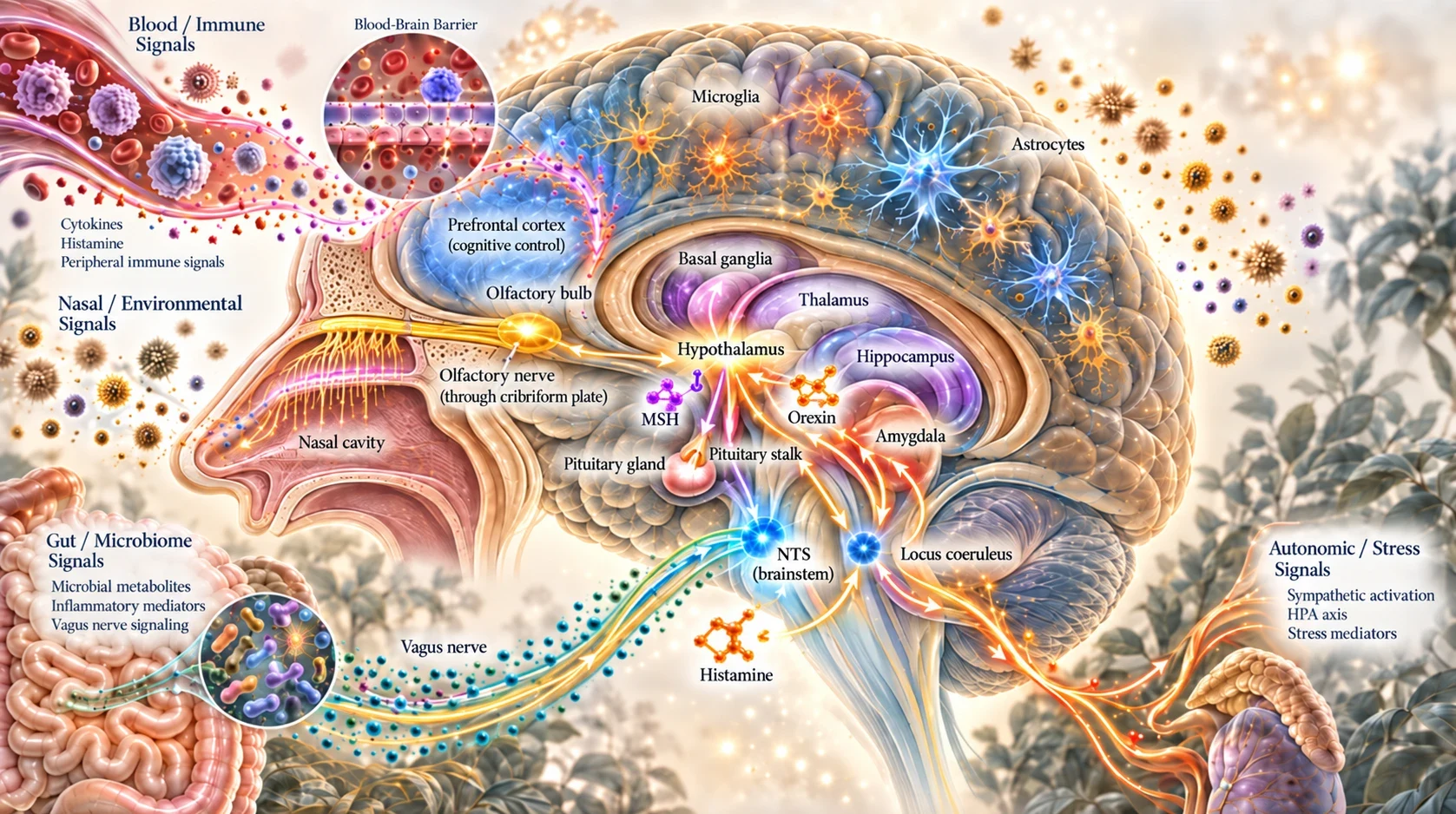
If you or someone you love is dealing with brain fog, chronic headaches, anxiety, depression, anhedonia, memory problems, sleep issues, word-finding difficulty or has been told their neurological symptoms are “stress” or “just getting older” — this article is for you. It is long and detailed, because the truth is detailed.
What follows is the full, detailed exploration of each of these mechanisms and how they interconnect. If you are a practitioner, a researcher, or someone who wants to understand the complete picture, read on.
A note from the author: The perspectives shared in this article reflect my clinical experience working with complex, multi-system clients. I am not stating absolutes — I am sharing the patterns, mechanisms, and truths I have observed in practice, informed by the published literature and by the real people I have had the privilege of working with. I am ever evolving. As the field advances, as new research emerges, and as new insights reshape our understanding, I will update this work accordingly. Science is not static, and neither am I. If you are reading this and something has changed since it was written, know that I am likely already integrating it into my practice and my thinking.
Educational information only; not every mechanism applies to every person. Seek medical care for new or severe neurological symptoms.
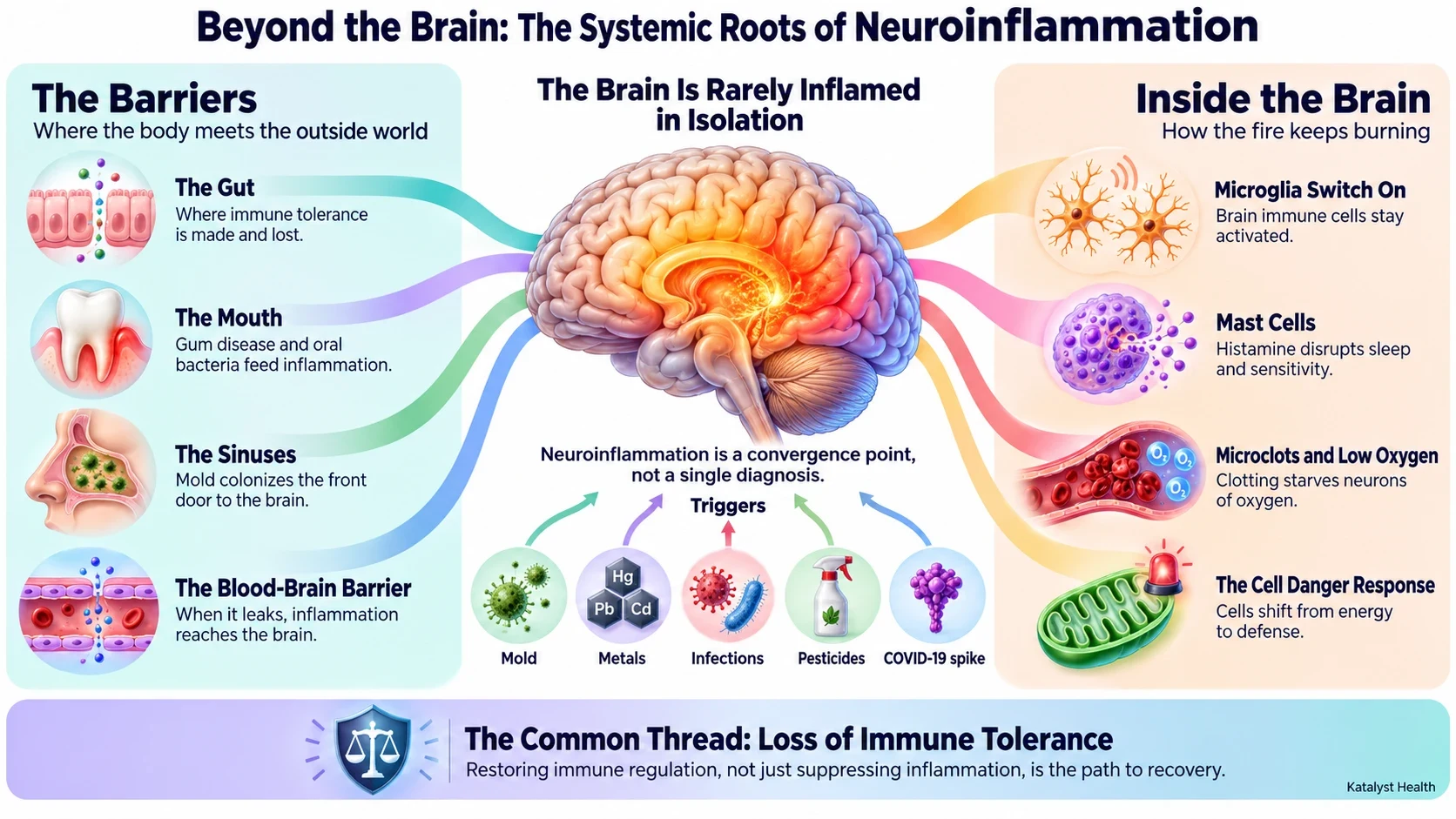
Neuroinflammation is not a diagnosis — it is a convergence point: the final common pathway through which a wide array of upstream insults — infections, toxins, metabolic dysfunction, immune dysregulation — express themselves in the central nervous system. It can sit behind a wide range of presentations: brain fog, word-finding problems, memory problems and cognitive decline; anxiety, depression, irritability and rage; mood swings, including bipolar-type highs and lows; attention problems and ADHD; obsessive-compulsive symptoms, tics and PANS; autism; headaches and sensory sensitivity; and autonomic dysfunction and disrupted sleep. In clinical practice, I rarely see a single cause. More often, several overlapping drivers add up until the immune system loses its ability to tell self from non-self, and that loss of immune tolerance, more often than not, begins far from the brain. The question is rarely simply whether neuroinflammation is present. The question is what lit the fire, and what is keeping it burning.
But first, a closer look at three of the most common presentations, because when I say neuroinflammation, I am not describing a rare or exotic condition. Brain fog often reflects neuroinflammation. The client who cannot find their words, who walks into a room and forgets why, who feels like they are thinking through gauze — that is often microglial activation, cytokine-mediated synaptic dysfunction, and impaired neurotransmitter metabolism.
Headaches often involve neuroinflammation — whether tension-type, migraine, or the diffuse pressure that mold-ill clients so often describe. Neurogenic inflammation, mast cell degranulation in the meninges, and sensitized trigeminal pathways are all expressions of the same upstream processes.
Anxiety and depression often involve neuroinflammation. Inflammation diverts tryptophan away from serotonin and toward a neurotoxic byproduct, a pathway I explain in the gut section below. These are not always separate diagnoses. They are the lived experience of an inflamed brain, and many of the mechanisms in this article can be operating behind them.
The Gut: Where Tolerance Is Made and Lost
The gut houses roughly 70% of the immune system. More importantly, it is where immune tolerance is established and maintained. The gut-associated lymphoid tissue (GALT), Peyer’s patches, and the regulatory T-cell populations they support are responsible for teaching the immune system what to attack and what to leave alone. This is the primary site of barrier integrity and immune education in the body, and when it fails, everything downstream follows.
The first line of defense is physical. In the colon, a firm inner mucus layer keeps bacteria at a distance from the gut lining (Johansson et al., 2008), and the cells of that lining use butyrate, made by fiber-fermenting bacteria, as their main fuel. In the small intestine, specialized M cells sit over the Peyer’s patches and sample what passes by, so that tolerogenic dendritic cells can teach regulatory T cells, through calming signals such as IL-10 and TGF-β, what to leave alone.
When intestinal barrier integrity is compromised — through dysbiosis, inflammatory foods, infections, or toxicant exposure — this education breaks down. Lipopolysaccharide (LPS) and other microbial components translocate into systemic circulation, triggering toll-like receptor 4 (TLR4) activation on immune cells throughout the body. But the deeper problem is that loss of intestinal barrier integrity disrupts peripheral immune tolerance — the regulatory T-cell function, dendritic cell tolerogenicity, and mucosal immune calibration that keep the immune system from attacking self-tissue. This is not simply about reacting to food antigens. When gut barrier function fails, the constant antigenic bombardment can exhaust regulatory mechanisms system-wide and lower the threshold for autoimmune reactivity. Proteins that were previously tolerated — including self-proteins in distant tissues like the brain — may then become targets.
Gluten is the clearest example of a food driving this process. Gliadin, a component of gluten, prompts the gut lining to release zonulin, a protein that loosens tight junctions. This happens to a smaller, short-lived degree even in people without celiac disease (Drago et al., 2006). In susceptible people, the immune response to gluten does not stay in the gut. Gluten sensitivity can show up mainly, or only, as neurological symptoms, with no digestive complaints at all (Hadjivassiliou et al., 2010). The best-studied form is gluten ataxia. Ataxia means loss of coordination: unsteady walking, clumsy hands and sometimes slurred speech. In gluten ataxia, the immune reaction is directed at the cerebellum, the brain’s balance and coordination center. In one large series, 41% of people with otherwise unexplained sporadic ataxia had antibodies to gliadin, compared with 12% of healthy controls, and only 13% of those with gluten ataxia had gut symptoms (Hadjivassiliou et al., 2003). People with gluten ataxia make antibodies against transglutaminase 6, a form of the enzyme found in the nervous system, whether or not the gut is involved; celiac disease is marked by antibodies to the gut-related transglutaminase 2 (Hadjivassiliou et al., 2008).
Gluten antibodies have been shown to cross-react with other nervous system targets too: synapsin I, a protein that controls neurotransmitter release at the synapse (Alaedini et al., 2007); Purkinje cells, the main output neurons of the cerebellum (Hadjivassiliou et al., 2002); and GAD-65, the enzyme that makes the calming neurotransmitter GABA, along with cerebellar peptides, in about half of blood donors with raised gliadin antibodies (Vojdani et al., 2013). Antibodies to gangliosides, lipids on the surface of nerve cells, have also been found in people with celiac disease and nerve damage (Alaedini et al., 2002). It is a direct illustration of this section’s theme: an immune reaction that begins at the gut barrier can end up targeting the brain.
Stress acts directly on this barrier. In healthy volunteers, public-speaking stress and the stress hormone corticotropin-releasing hormone (CRH) both increased intestinal permeability, and the effect depended on mast cells (Vanuytsel et al., 2014). Gut mast cells release histamine, tryptase and cytokines that loosen the tight junctions between cells, the same cells I describe in the mast cell section below.
What lives in the gut, and what reaches it, shapes all of this. Overgrowth of Candida, parasites and other pathobionts adds to the antigen load and the LPS burden. Glyphosate, the herbicide, works by blocking the shikimate pathway, which plants and many bacteria use to make the aromatic amino acids tryptophan, tyrosine and phenylalanine, the building blocks of serotonin and dopamine. In rats, glyphosate inhibited this pathway in the gut microbiome itself (Mesnage et al., 2021).
The gut also makes most of the body’s serotonin. Enterochromaffin cells in the gut lining produce it, and gut bacteria help drive that production (Yano et al., 2015). Gut serotonin does not cross into the brain. In the body, it mainly regulates gut motility, and platelets take it up and use it in clotting. Dysbiosis and inflammation can push it too high or too low, and that shows up more as diarrhea, constipation or platelet changes than as mood. The brain makes its own serotonin from tryptophan that crosses the blood-brain barrier, and this is where inflammation matters most: inflammatory cytokines switch on the enzyme IDO, which pulls tryptophan away from serotonin and into the kynurenine pathway. In activated microglia, that pathway ends in quinolinic acid, which overstimulates NMDA receptors and is toxic to neurons (Schwarcz et al., 2012). Inflammation can therefore mean less tryptophan for brain serotonin and more neurotoxic signaling at the same time.
The vagus nerve provides a direct neural highway from gut to brainstem. Inflammatory signaling in the gut alters vagal afferent tone, which directly modulates central neurotransmitter systems, microglial activity, and hypothalamic function. Simultaneously, short-chain fatty acids (SCFAs) produced by commensal bacteria — particularly butyrate — are critical for maintaining blood-brain barrier integrity (Braniste et al., 2014). When gut dysbiosis reduces SCFA production, the blood-brain barrier becomes more permeable, allowing peripheral inflammatory mediators and autoantibodies direct access to neural tissue.
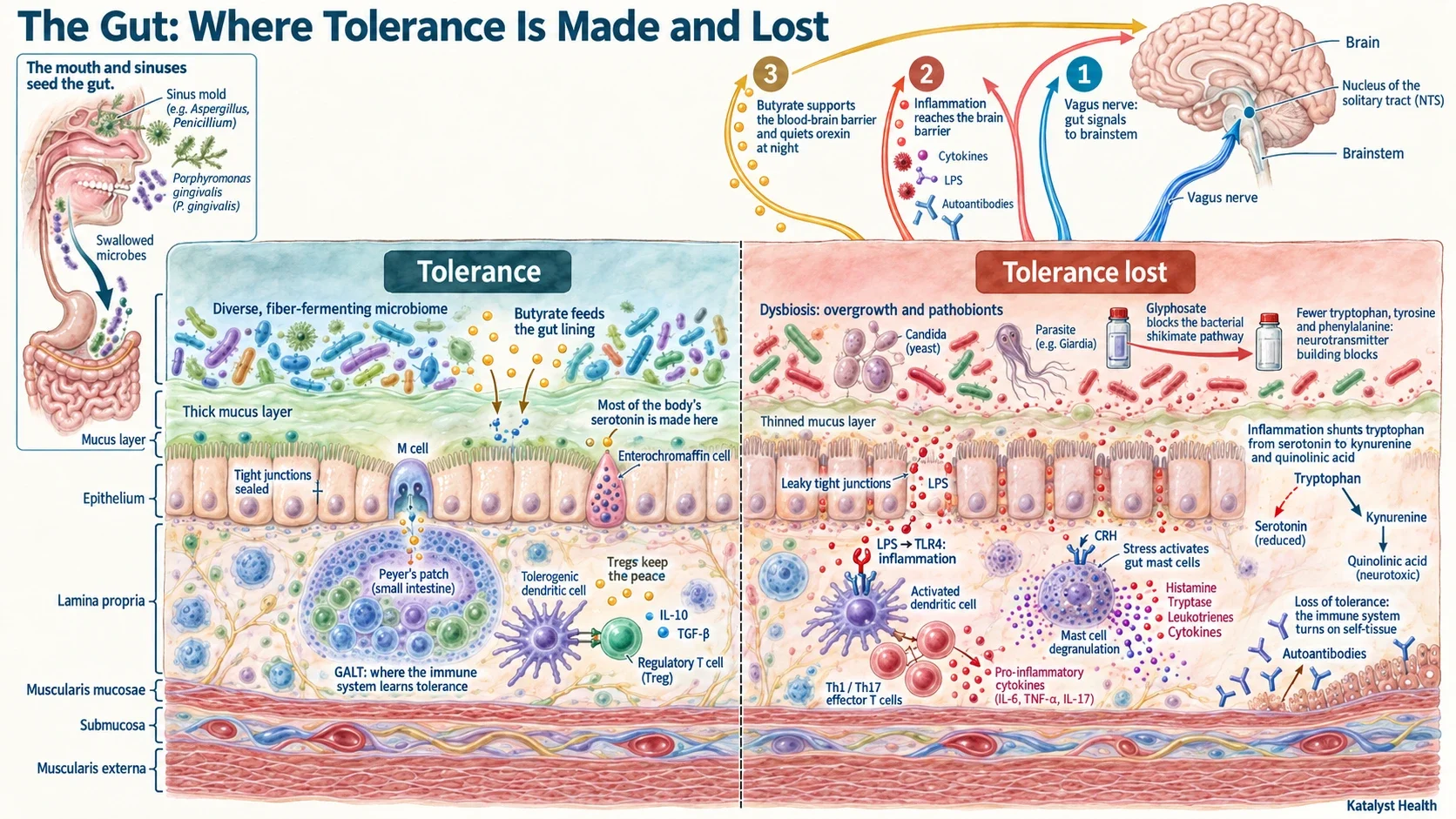
This is the “leaky gut to leaky brain” progression. It is not merely a pathway to inflammation — it is a pathway to autoimmunity.
Ammonia and Aldehydes: The Brain’s Metabolic Exhaust
The gut shapes the brain through more than its barrier. It also shapes the chemistry the brain has to clean up. Every metabolic process leaves exhaust. Two kinds matter especially for the brain: aldehydes and ammonia. Both are made every day in small amounts and cleared without fuss. Both build up when the gut is dysbiotic and the mitochondria are struggling, and both land on the same targets this article keeps returning to: mitochondria, astrocytes, microglia and glutamate. The same gut overgrowths often add a third burden, histamine, which is cleared through the same strained pathways.
Aldehydes: Small Molecules, Big Damage
Aldehydes are highly reactive molecules that bind to proteins, lipids and DNA and change how they work. The body’s main defense is a family of aldehyde dehydrogenase (ALDH) enzymes, above all ALDH2 inside the mitochondria, which convert aldehydes into harmless acids (Chen et al., 2014). That reaction has a cost: it uses NAD+ and turns it into NADH. ALDH2 is also vulnerable to the very aldehydes it clears; 4-HNE, the lipid peroxidation product described below, can inactivate it.
The aldehyde load comes from more places than most people realize:
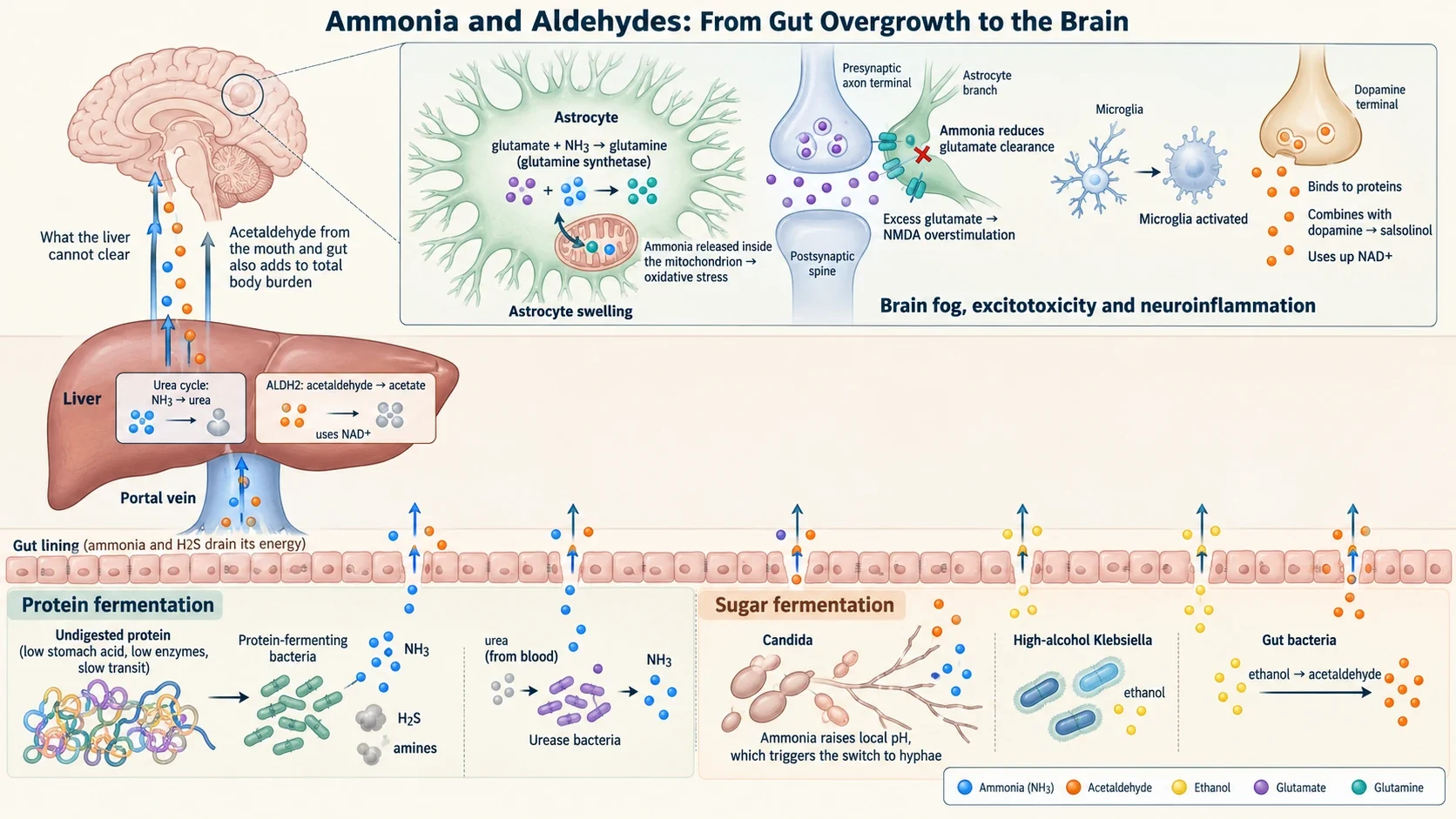
- Gut fermentation. Overgrowths of yeast and bacteria that ferment sugars produce ethanol and acetaldehyde, the same toxic aldehyde made when we drink alcohol. Candida albicans produces acetaldehyde directly, from glucose as well as from ethanol (Uittamo et al., 2009). Bacterial overgrowths add to it: many gut and oral bacteria turn ethanol into acetaldehyde locally (Salaspuro, 2003), and high-alcohol-producing strains of Klebsiella pneumoniae make enough ethanol from ordinary food to cause fatty liver in mice, and were found in many people with fatty liver who did not drink (Yuan et al., 2019). Yeast and bacteria together feed one total aldehyde burden.
- Lipid peroxidation. When polyunsaturated fats (PUFAs) in cell membranes oxidize, they break down into 4-HNE, MDA and acrolein, covered in the membrane section below. The more PUFAs in the membranes, and the more oxidative stress, the bigger this second wave of aldehydes.
- Polyamine breakdown. Under oxidative stress, polyamines are broken down into acrolein, one of the most reactive aldehydes of all (see the M1 and M2 section).
- Metabolic dysfunction. When glucose handling is strained, as in insulin resistance, glycolysis spills over into methylglyoxal, a reactive dicarbonyl that damages proteins and DNA (Rabbani & Thornalley, 2015).
- Neurotransmitter and histamine breakdown. Each time monoamine oxidase (MAO) breaks down dopamine, it makes an aldehyde called DOPAL, which is toxic to dopamine neurons when it is not cleared quickly (Goldstein et al., 2013). Histamine is no different: diamine oxidase (DAO) turns it into imidazole acetaldehyde, which then needs ALDH to finish the job (Maintz & Novak, 2007). Every one of these oxidation steps also releases hydrogen peroxide and ammonia.
- The environment. Alcohol, smoke and vaping, fumes from overheated cooking oils (a major source of acrolein), and formaldehyde off-gassing from building materials and furniture all add to the same pool.
The NAD+ drain. Joshua Leisk, who models chronic illness as a metabolic network, puts the NAD+ balance at the center of this. When mitochondria struggle, NADH backs up and NAD+ runs short, and every aldehyde-clearing step that depends on NAD+ slows down. Aldehydes then accumulate and damage the mitochondria further, a self-reinforcing loop. He also points to histamine: when bioavailable copper (needed for DAO) and NAD+ are both short, histamine clearance stalls and the body ends up, in his words, “drowning in histamine.” This is a copper handling issue, not necessarily low total copper: as the copper section explains, total copper can be normal or even high while too little of it is properly bound and available to enzymes. He describes gut fermentation as one of the biggest aldehyde sources in chronic illness, and notes that excess acetaldehyde can combine with dopamine to form salsolinol, an alkaloid with complex effects on dopamine signaling (Kurnik-Łucka et al., 2018), which pulls dopamine metabolism off its normal path.
The alcohol clue. ALDH2 is also essential to alcohol metabolism. The body first turns alcohol into acetaldehyde, using a different enzyme, alcohol dehydrogenase, and ALDH2 then turns that acetaldehyde into harmless acetate. The best-known reason for poor alcohol tolerance is an inherited variant that makes ALDH2 far less active, the most common single-point gene variant in humans (Chen et al., 2014). But tolerance can also drop in people who used to handle alcohol well. One plausible reason is that ALDH2 is already overloaded elsewhere: when NAD+ is short, when 4-HNE has inhibited the enzyme, as it does in laboratory studies of human ALDH2 (Doorn et al., 2006), or when aldehydes from gut fermentation and oxidized fats are already competing for it, there is less capacity left for the acetaldehyde from a drink.
A yeast overgrowth adds to the load in a second way. Candida makes far more acetaldehyde when alcohol is present, because it converts the alcohol itself: in laboratory cultures, Candida albicans and C. tropicalis produced acetaldehyde from a small amount of alcohol at levels well above those considered damaging to tissue (Reddy et al., 2022). In people, saliva that produced high levels of acetaldehyde from alcohol was far more likely to carry yeast, and the more yeast, the more acetaldehyde (Tillonen et al., 1999). So a drink can deliver acetaldehyde from two sources at once: the liver and the yeast. New alcohol intolerance is well documented in chronic illness: two-thirds of people with chronic fatigue syndrome in one clinic had cut back on alcohol because of how it made them feel (Woolley et al., 2004), and new alcohol sensitivity has been described in Long COVID (Eastin et al., 2023). No study has yet measured ALDH2 activity in these groups, so the link is an inference. A new intolerance to alcohol is a clue worth exploring, and impaired aldehyde clearance is one possible explanation.
The nutrient cofactors here are worth knowing: NAD+ (from niacin) for ALDH, riboflavin for MAO, bioavailable copper for DAO, and molybdenum for aldehyde oxidase, a backup route for clearing aldehydes. This is one more place where mineral status, which I assess with hair tissue mineral analysis (HTMA) alongside other testing, shapes how well the brain copes with its own exhaust.
Ammonia: From the Gut to the Astrocyte
How the gut makes ammonia. Protein that is not fully digested, because of low stomach acid, low pancreatic enzymes, a heavy protein load or slow transit, reaches the colon. There, protein-fermenting bacteria break it down into ammonia, amines, phenols such as p-cresol, and hydrogen sulfide. This mostly happens in the lower colon once fiber runs out, which is why low-fiber diets push fermentation in this direction (Windey et al., 2012). Urease-producing microbes, such as Proteus, Klebsiella, Morganella and H. pylori in the stomach, add more by splitting urea that diffuses into the gut from the blood. Ammonia and hydrogen sulfide in turn interfere with the energy metabolism of the cells lining the colon (Davila et al., 2013), weakening the barrier described in the gut section above.
The gut environment can lock this in. Short-chain fatty acids from fiber keep the colon slightly acidic, while ammonia and amines make it more alkaline. A more alkaline colon favors protein-fermenting species over the butyrate producers, and it also helps Candida: the yeast raises the pH around itself by releasing ammonia, and that rise in pH is the trigger for its switch into the invasive hyphal form (Vylkova et al., 2011).
Candida uses the same chemistry to escape the immune system. When a macrophage swallows a Candida cell, the yeast switches on its own arginine production and breaks the arginine down with arginase into urea. It then splits the urea into carbon dioxide and ammonia. It does this not with urease, which Candida albicans lacks, but with a related enzyme called urea amidolyase. The carbon dioxide is a signal to switch into the hyphal form, and strains missing this enzyme could not make hyphae from arginine or escape (Ghosh et al., 2009). At the same time, the ammonia Candida makes from amino acids neutralizes the acidic compartment the macrophage is trying to kill it in, and that neutral pH also triggers hyphae; a strain that could not do this stayed in acidic compartments and was killed more often (Vylkova & Lorenz, 2014). The hyphae then grow out through the macrophage and rupture it. This is one reason a Candida overgrowth is hard for the immune system to clear, and why it can keep adding to the ammonia and aldehyde load.
What happens in the brain. Normally, ammonia from the gut travels to the liver and is converted to urea, a process that costs energy. What escapes reaches the brain, where astrocytes are the main line of defense. Astrocytes use the enzyme glutamine synthetase to combine ammonia with glutamate, forming glutamine. In small amounts this is protective. Under a constant ammonia load, it becomes a problem. Glutamine is carried into the astrocyte’s mitochondria, where it is split again and releases ammonia right inside them, driving oxidative stress, mitochondrial failure and astrocyte swelling, the “Trojan horse” model of ammonia toxicity (Albrecht & Norenberg, 2006). Ammonia also reduces the transporters astrocytes use to clear glutamate from the synapse (Chan et al., 2000), so glutamate lingers and keeps stimulating NMDA receptors, feeding directly into the excitotoxicity cascade described later. In animal studies, chronically raised ammonia was enough on its own to activate microglia, raise inflammatory markers and impair learning (Rodrigo et al., 2010).
Put together, a strained astrocyte is caught between two demands: clearing ammonia and managing glutamate, with less energy to do either. Clinically, this often shows up as brain fog, and it is one more reason the gut, digestion and mitochondrial health come first in how I approach neuroinflammation. Supporting stomach acid and enzymes, adequate fiber, a balanced microbiome and the cofactors that clear aldehydes reduces the exhaust before it reaches the brain.
Histamine: The Same Overgrowths, a Third Burden
Histamine is not only made by mast cells. Many gut bacteria carry histidine decarboxylase, the enzyme that turns the amino acid histidine into histamine, and secrete it directly into the gut. Morganella morganii is one of the best-known producers, and histamine-secreting bacteria were more abundant in the gut of adults with asthma (Barcik et al., 2016). People with histamine intolerance also show distinct gut dysbiosis (Sánchez-Pérez et al., 2022). Protein-fermenting bacteria add to the problem in another way: they make putrescine and cadaverine, amines that compete with histamine for DAO, so histamine lingers even without extra production (Maintz & Novak, 2007).
Candida works differently. Whether it makes meaningful amounts of histamine itself is, to my knowledge, unclear: one older culture study found small amounts from throat isolates (Voropaeva, 2002), but no histamine-making enzyme has been characterized in it. Its clearer contribution is indirect: components of its cell wall trigger gut mast cells to degranulate and release their histamine (Sakurai et al., 2012). Either way, the histamine ends up in the same clearance pathways described above. DAO breaks it down into an aldehyde that needs ALDH and NAD+, releasing ammonia along the way, while the intracellular enzyme HNMT draws on SAMe, linking histamine clearance to the methylation section below. And histamine is itself a wake signal and a driver of the mast cell activity described in the mast cell section, so a gut that overproduces it feeds sleep disruption and neuroinflammation directly.
Some clinicians in mental health go further. Psychiatrist Dr. Janet Settle, speaking with Dr. Tania Dempsey in 2023, described mast cell activation as a driver of some anxiety, depression and mood disorders, and said she finds mast cell issues to address in a large proportion of the patients who come to her. Part of the reason this is overlooked, she explained, is that the tools to map histamine in the brain arrived decades after those for dopamine and serotonin: “we’re at least that far behind in understanding histamine in the brain” (Settle & Dempsey, 2023).
Who Makes What, and How Testing Helps
A fairly small cast of organisms tends to show up across all three burdens. The ability to make these compounds varies from strain to strain, and it is spread across many groups of gut bacteria (Pugin et al., 2017), but some stand out:
- Ammonia. In culture, the largest amounts came from gram-negative anaerobes such as Bacteroides, clostridia, enterobacteria and Bacillus species, while lactobacilli and yeasts made very little (Vince & Burridge, 1980). Urease producers, including Proteus mirabilis, Klebsiella, Morganella and H. pylori in the stomach, add more by splitting urea.
- Histamine and other amines. Morganella morganii is the best-known histamine producer (Barcik et al., 2016). Amine-producing strains isolated from the human gut also include Klebsiella, Proteus, Enterobacter, Escherichia and some lactic acid bacteria such as Lactobacillus and Enterococcus (Pugin et al., 2017).
- Ethanol and acetaldehyde. Candida and other yeasts, high-alcohol strains of Klebsiella pneumoniae (Yuan et al., 2019), and Escherichia and related enterobacteria, which were more abundant in children with fatty liver disease who also had raised blood ethanol (Zhu et al., 2013). Many gut and oral bacteria then turn that ethanol into acetaldehyde (Salaspuro, 2003).
Notice the overlap. Klebsiella, Proteus, Morganella and their enterobacterial relatives appear on more than one list, and Candida adds acetaldehyde while also pushing mast cells to release histamine. One overgrowth can raise ammonia, histamine and aldehyde load at the same time.
This is where gut testing earns its place. Comprehensive stool testing can measure many of these organisms directly, including Morganella, Klebsiella, Proteus, Citrobacter, Enterobacter, H. pylori and Candida, alongside markers of digestion, inflammation and gut immune defense. Seeing which organisms are overgrown, and the conditions that let them thrive, such as low stomach acid, low enzyme output, slow transit or low fiber, lets us address the source of the exhaust rather than only its effects.
The Oral Microbiome: An Amplifier That Can Become a Primary Driver
In most clients, gut barrier disruption is the primary event — but the oral microbiome is an underappreciated amplifier that can also become a primary driver under certain conditions. The oral cavity is not a separate ecosystem; it is directly connected to the gut through the simplest physiology imaginable: saliva. Most adults produce roughly 0.5–1.5 liters per day, and with it swallow on the order of 10¹¹ to 10¹² oral bacteria daily. When gut dysbiosis and systemic inflammation alter immune function, the oral microbiome shifts in parallel — and oral dysbiosis then feeds pathogenic organisms and inflammatory mediators right back into the gut, creating a bidirectional cycle.
Swallowed oral bacteria can change the gut itself. In mice, swallowing Porphyromonas gingivalis, the main gum-disease bacterium, was enough on its own to shift the gut microbiome, loosen the gut barrier and raise systemic inflammation (Arimatsu et al., 2014).
P. gingivalis also illustrates why oral health cannot be ignored regardless of the direction of causality. Researchers have identified P. gingivalis and its toxic proteases called gingipains directly in the brains of Alzheimer’s patients. Published work by Dominy et al. (2019) in Science Advances demonstrated gingipain presence in postmortem Alzheimer’s brain tissue and showed that gingipain inhibitors reduced bacterial load and neurodegeneration in animal models. This organism does not merely correlate with neurodegeneration — it may actively drive it through protease-mediated neuronal damage and chronic immune activation.
The mouth also has more direct routes to the brain:
The gum pocket. Unlike the gut, the gums are not protected by a thick mucus layer. In gum disease, the pockets around the teeth become lined with thin, ulcerated tissue, and across a whole mouth that inflamed surface adds up to a significant open wound (Nesse et al., 2008). Everyday chewing and brushing then push oral bacteria and their LPS into the bloodstream, far more so when the gums are inflamed (Forner et al., 2006). From there, they reach the blood-brain barrier described below.
The trigeminal nerve. The trigeminal nerve supplies the teeth, gums and jaw and runs straight back to the brainstem. Oral spirochetes (Treponema, relatives of the Lyme organism) have been found in human trigeminal ganglia, and in Alzheimer’s brain tissue far more often than in controls (Riviere et al., 2002). Nerves offer another way in, much like the olfactory route described in the sinus section below.
The venous shortcut. Veins from the teeth, jaw and face drain into the pterygoid plexus, a network of veins deep in the face that is connected to the cavernous sinus at the base of the brain. Blood normally drains away from the brain through these connections, but the veins have no one-way valves, so flow can reverse. That is why dental and facial infections can occasionally spread toward the brain.
Where the oral cavity becomes a primary driver rather than an amplifier is in clients with direct oral insults — most notably mercury amalgam fillings, root canal infections, and cavitations. Mercury vapor from amalgams suppresses local immune function, disrupts the oral microbiome, and provides a constant source of toxic metal exposure that drains directly into the lymphatic and venous systems of the head and neck. Elemental mercury vapor is inhaled and crosses into the brain readily; once there, it is converted into a form that stays trapped. The toxic metals section below explains how mercury depletes glutathione and pushes zinc out of metallothionein. In a primate study, amalgam fillings also increased mercury- and antibiotic-resistant bacteria in the mouth and gut, because the resistance genes travel together (Summers et al., 1993). Vapor release rises with chewing, grinding and hot drinks (Sällsten et al., 1996), and drilling out amalgams releases a burst of vapor, which is why removal protocols designed to minimize exposure matter. In these clients, the oral cavity is not downstream of the gut — it is an independent source of immune dysregulation and toxic burden that compounds whatever is happening below.
Chronically infected root-canal teeth (apical periodontitis) and cavitations, areas of poorly healed, dead jawbone often at old extraction sites, are proposed as hidden, long-running sources of inflammatory signaling, although the evidence for cavitations is still emerging. Oral Candida can add to the yeast burden discussed in the MSH section below.
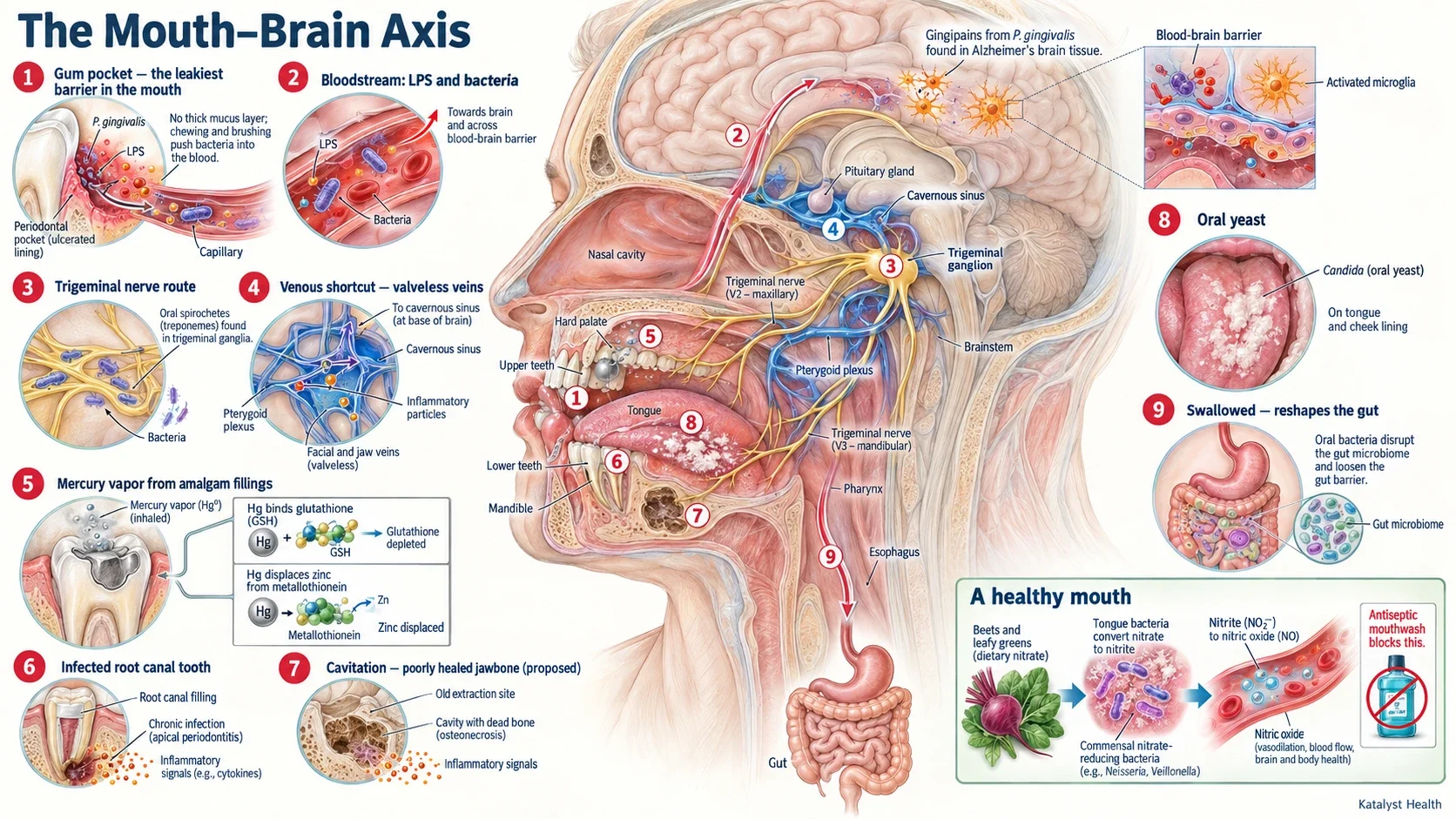
A healthy oral microbiome works in your favor, too: bacteria on the tongue turn dietary nitrate into nitric oxide, a pathway described in the M1 and M2 section below.
The gut-brain axis is really a mouth-gut-brain axis. Whether oral dysbiosis is cause or consequence in a given client, it must be assessed and addressed — because left unchecked, it perpetuates the very gut and systemic inflammation that drives neuroinflammation.
The Sinuses: A Barrier at the Front Door
If the gut–brain axis is really a mouth–gut–brain axis, the nose belongs in the picture too: there is a sinus–brain axis. As Dr. Jill Crista puts it, the nose is the front door to mold exposure, and the lining of the nose and sinuses is the first barrier that inhaled mold spores, fungal fragments, bacteria and mycotoxins meet. It is warm, dark and moist, and it sits only a short distance from the brain.
Like the gut, this lining carries its own microbiome: bacteria, and a small, normal amount of fungi, living in the mucus layer. In a healthy nose, mucus and cilia sweep particles out, and the immune system tolerates what belongs there. With repeated exposure in a water-damaged building, spores and fragments land on that sticky surface again and again until some take hold. Some mycotoxins make this easier; chaetoglobosin from Chaetomium, for example, can paralyze the cilia that should be clearing them. Once mold colonizes, it tends to build a biofilm, often shared with bacteria such as MARCoNS (multiple antibiotic-resistant coagulase-negative staphylococci), and making mycotoxins takes a lot of energy, so a mold that keeps producing them is usually competing with other organisms for its space. Fungi from the sinuses can also drain down the throat and be swallowed, seeding the gut, which links this barrier straight back to the gut. Sinus colonization is one of the most overlooked reasons symptoms continue after someone has left a moldy building: the exposure has moved inside. My own nasal culture during our new-home mold story showed MARCoNS and Penicillium with strong biofilm. I explain how nasal cultures show colonization, MARCoNS and biofilm in Happy Mold vs Angry Mold, Part II.
The tissue itself can be damaged, not just congested; in some people the inflamed lining even develops small open sores. And sinus inflammation reaches the brain. In a brain-imaging study, people with more sinonasal inflammation showed altered connectivity in the brain networks that govern attention, focus and the detection of what matters (Jafari et al., 2021).
Smell, memory and fear. The nose is also wired directly into the emotional brain. Smell does not have to pass through the thalamus the way the other senses do. Olfactory nerve fibers run up through the cribriform plate, a thin, perforated bone at the roof of the nose, to the olfactory bulb, which connects closely with the amygdala, the brain’s threat detector, the hippocampus, its memory center (Soudry et al., 2011), and the hypothalamus. That is why a smell can bring back a memory instantly, and why, after a mold exposure, the body can learn to treat a musty smell, or even a harmless fragrance, as danger before you consciously notice it. The fear response is real and physiological, even when the smell itself is not harmful. It is part of the primed, limbic pattern I describe in Mast Cells: When Your Body Reacts to Everything.
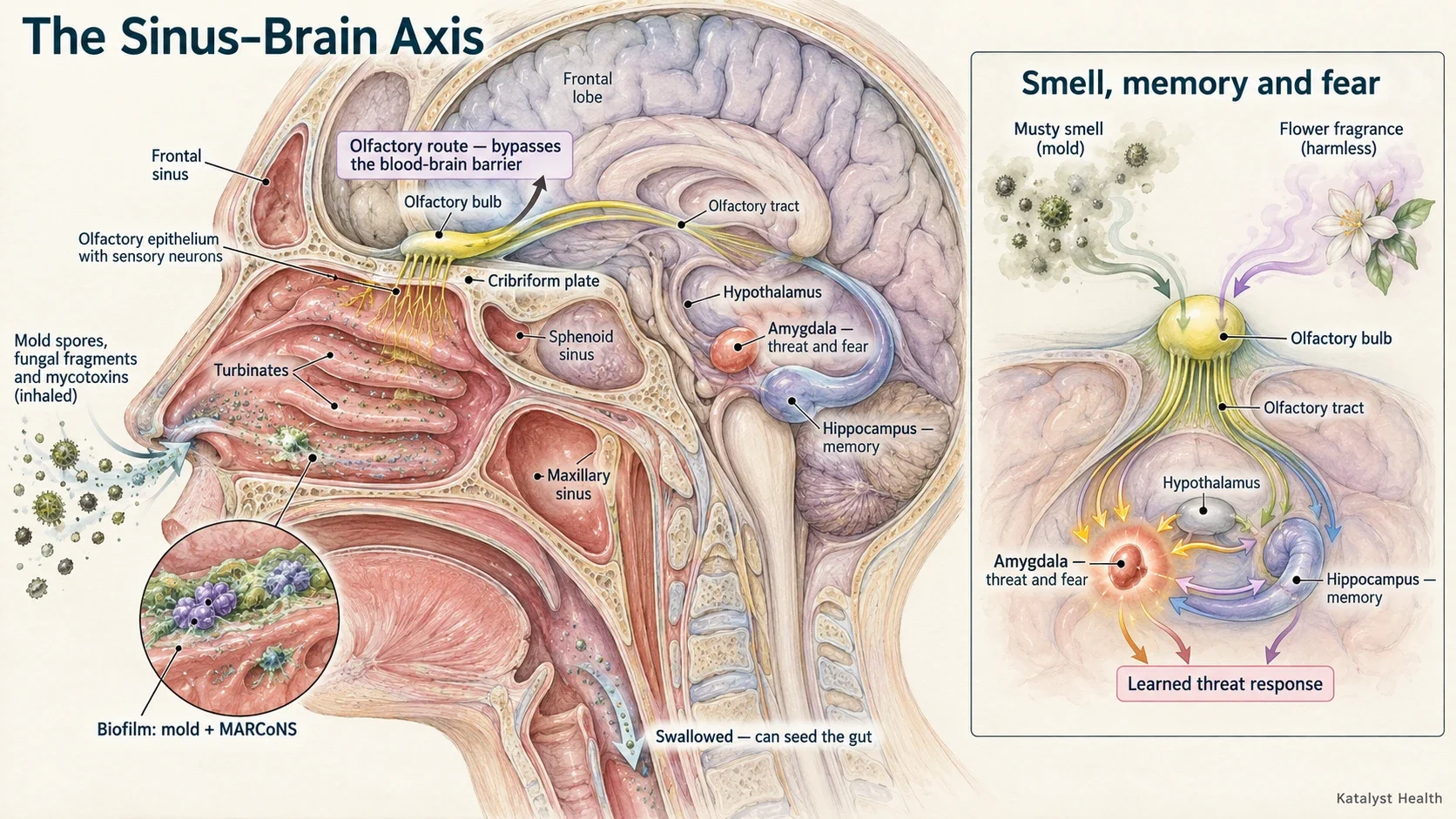
The same short route that carries smell can also carry harm. Some mycotoxins and inflammatory signals in the nasal cavity can travel along the olfactory pathway to the olfactory bulb and, potentially, deeper into the limbic system, bypassing the blood–brain barrier’s usual gatekeeping. In animal studies, the Stachybotrys toxin satratoxin G placed in the nose killed olfactory sensory neurons and caused inflammation that reached the olfactory bulb (Islam et al., 2006).
In a water-damaged building, the nose rarely meets just one exposure; it meets a stack. Mold contributes mycotoxins such as trichothecenes, ochratoxin A, gliotoxin and aflatoxins, along with spores and fine fungal fragments carrying immune-activating cell-wall components like β-glucans. Gram-negative bacteria contribute endotoxin (LPS), which strongly activates innate immune signaling, and actinomycetes, bacteria common in damp materials and dust, add their own inflammatory burden. Clinically, it is this total “biotoxin load” that drives the downstream loops I describe throughout this article: mast cell activation, barrier dysfunction, autonomic dysregulation and microglial activation. For a deeper dive into mycotoxins, see Happy Mold vs Angry Mold: A Problem of Mycotoxins, Part I.
The Hypothalamus: Where the Load Lands
Whether it arrives along the olfactory route or through the bloodstream, that inflammatory load lands hard on the hypothalamus, which sits at the center of hormonal, autonomic and circadian regulation. Three of its systems take the hit: MSH, orexin and the HPA axis.
Alpha-Melanocyte Stimulating Hormone (MSH) Suppression
MSH is a neuropeptide with broad anti-inflammatory and mucosal regulatory functions. It modulates cytokine production, supports mucosal barrier integrity throughout the gut and respiratory tract, has antimicrobial properties, and regulates melanocortin pathways involved in appetite, energy balance, and immune tolerance. In the chronic inflammatory response syndrome (CIRS) model developed by Dr. Ritchie Shoemaker, hypothalamic damage suppresses MSH production, a pattern often seen in chronically mold-exposed clients, and the downstream effects are profound: increased mucosal permeability, loss of immune regulation at barrier surfaces, and a self-perpetuating inflammatory state that resists treatment until MSH status is addressed.
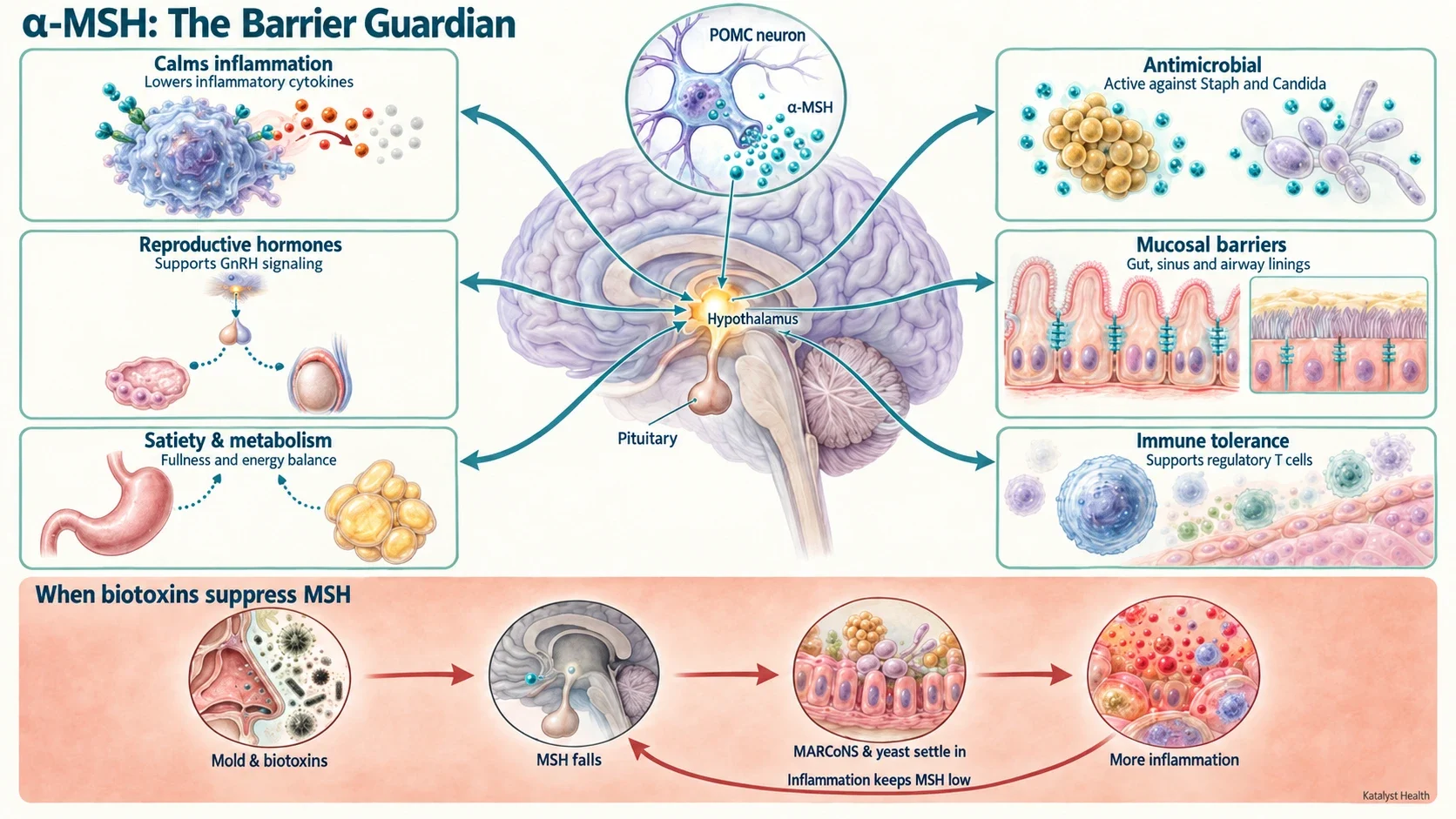
MSH also defends the barriers directly. In laboratory studies, alpha-MSH has antimicrobial activity against Staphylococcus aureus and antifungal activity against Candida albicans. When MSH is low, the nasal passages and other barrier surfaces lose part of this defense, which is one reason MARCoNS can settle in, and recent data suggest that clearing MARCoNS goes along with higher MSH. In my clinical practice, I also often find yeast overgrowth alongside low MSH. I explain how MSH and the other markers of CIRS are tested in Happy Mold vs Angry Mold, Part II.
Low MSH is one of the reasons mold-ill clients remain symptomatic long after exposure has ended. MSH is more than a marker of hypothalamic injury: it is a gatekeeper of the immune tolerance that prevents autoimmunity.
Orexin Dysregulation and Circadian Disruption
Orexin (hypocretin), produced by a small population of hypothalamic neurons, is essential for maintaining wakefulness and appears to help regulate the cortisol awakening response (CAR) and the circadian clocks of peripheral tissues. Mycotoxin-related hypothalamic injury may reduce orexin output, and if it does, the consequences would extend far beyond sleepiness. This is a working hypothesis rather than something shown in human studies.
The cortisol awakening response — the sharp rise in cortisol within the first 30–45 minutes after waking — helps synchronize circadian clocks throughout the body. When it is blunted, downstream clocks desynchronize, affecting metabolism, immune cycling, hormone secretion, and autonomic tone.
We do know what losing orexin looks like, because that is what narcolepsy type 1 is: people with it have lost most of their orexin-producing neurons (Thannickal et al., 2000), most likely through an autoimmune process. Narcolepsy type 2, the form without cataplexy, is different: orexin levels are usually normal and the cause is less clear. In my practice, I have worked with a case of narcolepsy type 2 that resolved as we reduced brain inflammation and corrected a dysregulated cortisol rhythm. The improvement tracked with falling inflammatory markers and a restored cortisol awakening response and daily cortisol pattern, which fits the idea that the wake system can be disrupted by inflammation without the neurons themselves being lost.
Orexin can also be too active at the wrong time. Orexin neurons are meant to quiet down at night, and overactive orexin signaling at night is linked to the hyperarousal behind insomnia. Histamine is closely tied to this system: orexin neurons drive the brain’s histamine neurons, and together they form one of its main wake-promoting circuits (Eriksson et al., 2001). Inflammation raises histamine both in the body and in the brain, adding to that wake signal.
This is why many of my clients who wake repeatedly through the night sleep better once their histamine load comes down. Lowering the histamine and inflammatory load in the body can be enough to turn down histamine signaling in the brain and calm the orexin system with it.
The gut plays a part too: butyrate, made by fiber-fermenting gut bacteria, appears to quiet orexin neurons at night. In a 2025 study in Molecular Psychiatry, people with insomnia had lower blood butyrate and fewer butyrate-producing gut bacteria than people without insomnia (Wang et al., 2025). That comparison alone cannot show which came first, so the researchers went further. When they transferred gut bacteria from people with insomnia into germ-free mice, the mice developed insomnia-like sleep and lower butyrate, and giving butyrate by mouth improved their sleep. Recording directly from the brain, they found that butyrate reduced the activity and excitability of orexin neurons in the lateral hypothalamus, so the cells fired less readily; when the researchers switched those neurons back on, the sleep benefit disappeared. It is one more reason the butyrate described in the gut section matters: a healthy gut microbiome may help the brain’s wake system stand down at night.
HPA Axis Dysregulation and Cortisol Resistance
The hypothalamic-pituitary-adrenal (HPA) axis is not merely suppressed in chronically ill clients — it is dysregulated in a way that creates cortisol resistance. Under normal conditions, cortisol is the body’s primary endogenous anti-inflammatory signal: it activates glucocorticoid receptors on immune cells to suppress NF-κB-mediated cytokine production (Smoak & Cidlowski, 2004). However, chronic inflammation creates a paradox. Sustained NF-κB activation downregulates glucocorticoid receptor expression and sensitivity, meaning that even when cortisol is present, immune cells stop responding to it (Pace et al., 2007).
This is cortisol resistance — and it explains the “wired and tired” presentation so common in these clients. The HPA axis may be producing cortisol (or even overproducing it in early stages), but the anti-inflammatory signal is not being received (Cohen et al., 2012; Miller et al., 2002). The immune system operates as though cortisol is absent, perpetuating inflammation despite what appears to be adequate adrenal output on standard testing. Over time, as mycotoxin-mediated hypothalamic damage compounds the picture and the cortisol awakening response blunts, the HPA axis itself begins to fail — and the client transitions from cortisol resistance to cortisol insufficiency, losing both the signal and the response.
Blood-Brain Barrier Permeability: The Convergence Point
Nearly every insult discussed in this article damages the blood-brain barrier (BBB). The BBB depends on tight junction proteins — claudin-5, occludin, ZO-1 — maintained by astrocytic end-feet and pericytes (Abbott et al., 2010; Nitta et al., 2003). These structures are vulnerable to systemic inflammation, oxidative stress, mast cell activation, heavy metals, mycotoxins, and infectious agents (Varatharaj & Galea, 2017; Ribatti, 2015; Zheng et al., 2003).
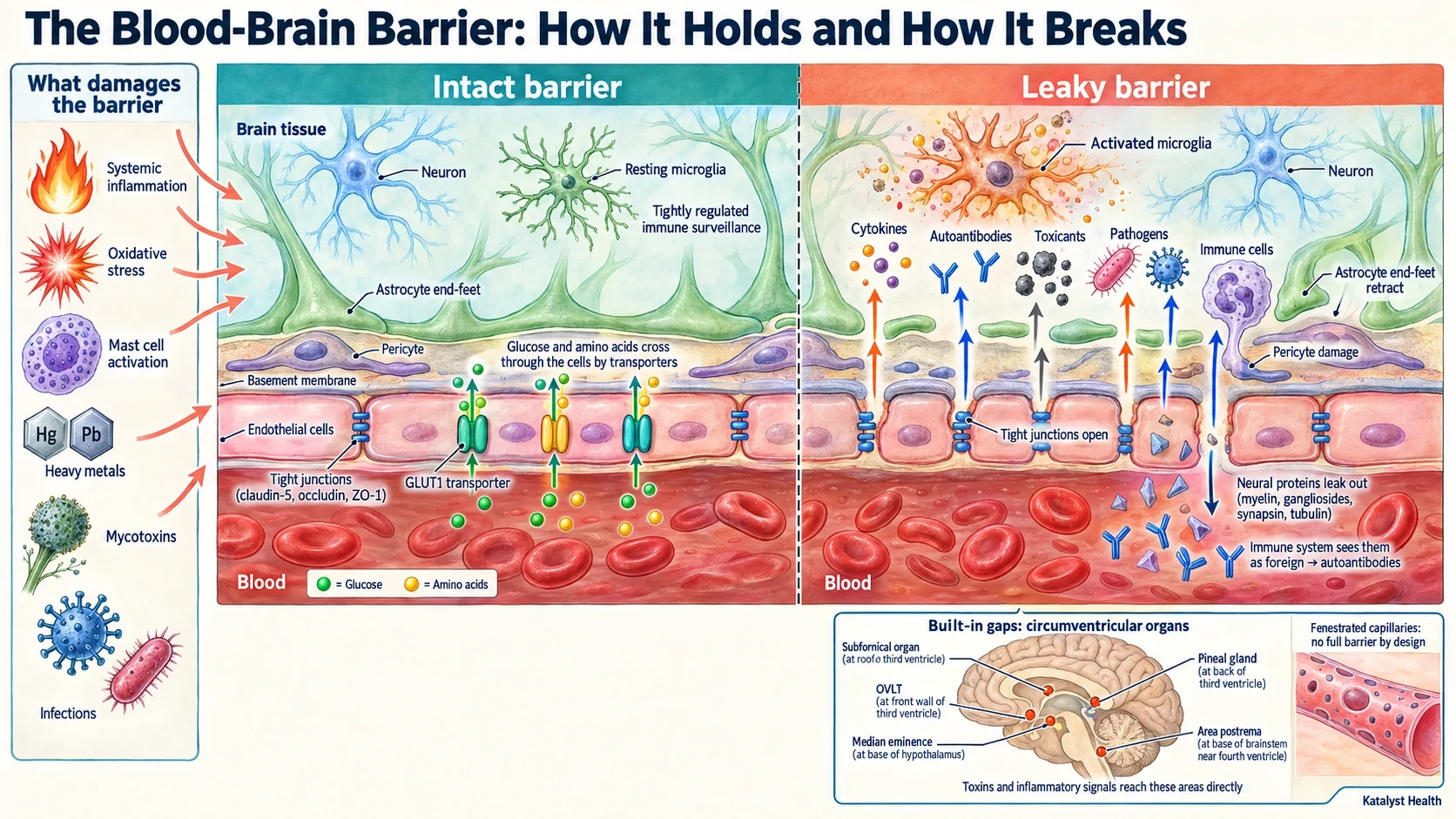
Once BBB integrity is lost, the brain shifts from tightly regulated immune surveillance into pathological access. Peripheral cytokines, autoantibodies, toxicants, and pathogens gain access to neural tissue. And critically, neuronal and glial antigens that are normally sequestered behind the BBB become visible to the peripheral immune system (Raad et al., 2014). This is how neuronal damage leads to autoimmune targeting: when myelin basic protein (MBP), gangliosides, synapsin, tubulin, and other neural components leak through a compromised barrier, the already-primed immune system recognizes them as foreign.
This is one plausible mechanism behind demyelinating patterns and autoimmune targeting of myelin. Autoantibody panels are not diagnostic of multiple sclerosis (MS), but they can be a clue that immune tolerance has been lost and myelin is under immune pressure—especially in the right clinical context. When a client develops numbness, tingling, visual changes, or coordination difficulties, it raises the question of demyelination and warrants a formal neurologic workup; in parallel, I investigate why the barrier broke and why tolerance was lost.
It is also worth noting that certain brain structures never had full BBB protection to begin with. The circumventricular organs (CVOs) — including the area postrema, the subfornical organ, the organum vasculosum of the lamina terminalis, the median eminence, and the pineal gland — are regions where the BBB is fenestrated or absent by design, allowing them to sample blood-borne signals for neuroendocrine regulation (Miyata, 2022). This means that systemic toxicants, heavy metals, and inflammatory mediators reach these structures more easily than the rest of the brain, without requiring BBB breakdown. The clinical implications are significant: the area postrema’s exposure may explain the nausea so common in toxic clients; the median eminence’s vulnerability affects hypothalamic-pituitary signaling; and in the pineal gland, fluoride accumulates alongside calcium (Luke, 2001), and calcification goes with lower melatonin production (Kunz et al., 1999), which further disrupts the circadian regulation and antioxidant protection that the brain depends on.
Addressing the BBB is therefore rarely optional in complex cases. It is central to any neuroinflammation protocol, and its integrity depends on immune regulation, gut health, and the resolution of the upstream insults that damaged it.
APOE4: A Genetic Head Start on Barrier Breakdown
Genetics can decide how early the barrier starts to give way. Apolipoprotein E (APOE) comes in three common variants: ε2, ε3 and ε4. ε3 is the most common and serves as the neutral reference. ε4 is the strongest known genetic risk factor for Alzheimer’s disease.
APOE4 matters so much for this article because of where it acts first: the blood-brain barrier, and specifically the pericytes.
What pericytes are. Pericytes are contractile cells that wrap around the outside of the brain’s smallest blood vessels, the capillaries. They sit inside the same basement membrane as the endothelial cells that form the barrier wall, close enough to signal to them directly. The barrier itself lives in those endothelial cells, but pericytes keep it tight. In animal studies they:
- maintain the tight junctions that seal the gaps between endothelial cells
- suppress transcytosis, the process of shuttling molecules across endothelial cells inside small vesicles
- turn down the molecules that let immune cells into the brain
- help anchor the astrocyte end-feet that surround brain vessels
When pericytes are lost, the barrier leaks in proportion to how many are missing (Armulik et al., 2010; Daneman et al., 2010). Pericytes also help regulate capillary blood flow, so losing them reduces oxygen delivery as well as barrier protection.
How APOE4 damages them. In a healthy brain, astrocytes secrete APOE, and the APOE3 form acts on pericytes through a lipoprotein receptor to keep an inflammatory pathway switched off. APOE4 cannot do this. In mouse studies, APOE4 left the cyclophilin A → NF-κB → MMP-9 pathway active inside pericytes. MMP-9 is an enzyme that breaks down tight junction proteins and the basement membrane. The results were barrier breakdown, blood-derived neurotoxic proteins entering neurons, and reduced blood flow in both the capillaries and the brain overall. Critically, these vascular changes came before neuronal dysfunction and could start neurodegenerative changes on their own (Bell et al., 2012).
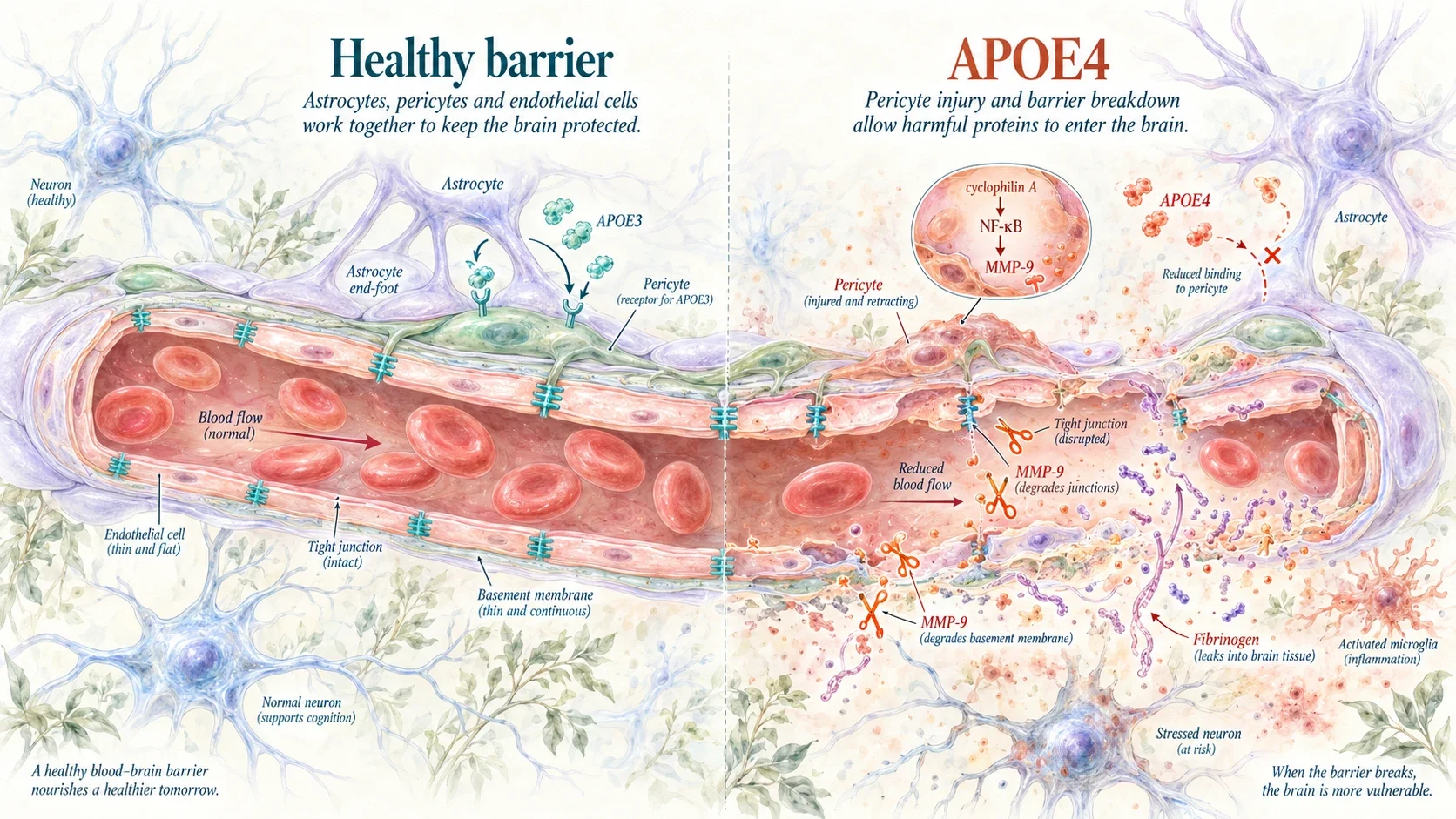
The same pattern holds in people. In a 2020 study in Nature, Montagne and colleagues found BBB breakdown in the hippocampus and medial temporal lobe of APOE4 carriers, with one copy (ε3/ε4) or two (ε4/ε4), compared with ε3/ε3 individuals. The leak was already present in carriers who were cognitively normal and was worse in those with cognitive impairment. It was also independent of amyloid and tau. A cerebrospinal fluid marker of pericyte injury (soluble PDGFRβ) predicted future cognitive decline in carriers but not in non-carriers, and it tracked with activity of the same cyclophilin A–MMP-9 pathway. In other words, in APOE4 carriers the barrier can start leaking before memory changes and before the classic Alzheimer’s proteins show up.
Clinically, I read APOE4 as a sensitivity, not a sentence. A barrier already under genetic strain has less room to absorb everything else described in this article: mold exposure, metal burden, chronic infection, gut permeability, insulin resistance and poor sleep. Alzheimer’s-related changes build over a long silent window before symptoms. For an APOE4 carrier, that means the time to look for and address every contributor is years to decades before typical onset, not after memory problems begin. Chronic infection belongs on that list too; I cover Lyme disease and Alzheimer’s in the stealth infections section.
Dr. Dale Bredesen’s work classifying Alzheimer’s subtypes has been valuable in this context. His Type 3 — toxic or inhalational Alzheimer’s, not to be confused with the “type 3 diabetes” label used for insulin resistance in the brain — describes clients whose cognitive decline is driven primarily by biotoxin exposure, particularly mycotoxins. In my practice, I see this pattern frequently: clients presenting with progressive cognitive impairment, and when we investigate, mycotoxin burden is present alongside the metabolic and inflammatory markers that characterize neurodegeneration. The conventional model treats Alzheimer’s as a single amyloid-driven disease. The clinical reality is that many dementia presentations are the downstream expression of toxic exposures, immune dysregulation, and metabolic failure — and when those root causes are identified and addressed, cognitive trajectory can change in ways the conventional model does not predict.
Stealth Infections: When the Immune System Cannot Keep Up
Chronic toxic and biotoxic exposures suppress innate and adaptive immune function in ways that open the door to opportunistic and stealth infections. Organisms like Borrelia and Bartonella species have well-documented neurotropism. Borrelia can cross the BBB, persist intracellularly, form biofilms, and directly infect glial cells and neurons. Bartonella has been identified in brain tissue and is increasingly recognized in neurological and neuropsychiatric presentations, including encephalopathy, seizures, psychosis and mood instability. Rage, sudden explosive irritability and obsessive-compulsive symptoms are patterns I see with Bartonella constantly. In my practice, roughly 80% of clients with OCD and/or rage have Bartonella, so any of these symptoms, especially in a child, should prompt investigation for this organism.
It is important to understand that Bartonella does not have to invade the brain to affect it. It is an endothelial pathogen: it lives in and around the cells lining blood vessels, and several species secrete factors that activate VEGF receptor signaling and drive abnormal vessel growth. Published neurological cases include cerebral vasculitis as well as encephalitis. So there are two routes to the same symptoms:
- Direct neuroinvasion: the organism reaches neural tissue.
- Neurological and vascular inflammation without invasion: inflamed vessel walls, circulating cytokines and a stressed blood-brain barrier inflame the brain from the outside in.
Both can produce the same rage, OCD, anxiety and cognitive picture. When the organism is not found in the nervous system, that does not make Bartonella irrelevant to the symptoms.
When Borrelia or Bartonella do reach neural tissue, they trigger both direct cytotoxicity and secondary autoimmune responses. The molecular mimicry between microbial surface proteins and human neural antigens is well-documented — Borrelia outer surface proteins share epitopes with myelin and neuronal gangliosides. The immune response intended for the pathogen cross-reacts with self-tissue, and in a client who has already lost tolerance, this cross-reactivity is amplified rather than contained.
Chronic infection may also contribute to Alzheimer’s-type decline. Spirochetes have been proposed as a contributor to Alzheimer’s for years. Judith Miklossy’s reviews report spirochetes in Alzheimer’s brain tissue, including Borrelia burgdorferi in about a quarter of the cases analyzed. That hypothesis is still debated. More recently, Dr. Richard Horowitz has characterized Lyme disease as a significant and under-recognized driver of Alzheimer’s-type decline. His Multiple Systemic Infectious Disease Syndrome (MSIDS) model maps sixteen overlapping drivers of chronic illness. In 2026 he published the first case report showing Alzheimer’s blood biomarkers improve after treatment aimed at persistent Borrelia in a patient with chronic Lyme disease: phosphorylated tau normalized and the amyloid-β ratio improved. It fits the thread of this article: dementia is rarely one disease with one cause, and its contributors can often be found early.
Whether these infections take hold depends heavily on the terrain. When immune regulation is already strained by mold exposure, heavy metals, chronic stress or poor sleep, they are more likely to persist. Persistent infection then keeps immune activation and neurological inflammation going. That cycle rarely resolves by targeting the infection alone. It resolves when the infection is addressed alongside the terrain that allowed it to persist, in the sequence that fits that person.
Viral Reactivation: A Consequence of Terrain, Not a Primary Cause
A discussion of stealth infections would be incomplete without addressing the role of latent viruses — Epstein-Barr virus (EBV), human herpesvirus 6 (HHV-6), cytomegalovirus (CMV), and others. These viruses are ubiquitous; the vast majority of the adult population carries them. And in a well-regulated immune system, they remain dormant and clinically irrelevant. This is a critical point: for most people, these viruses stay quiet when immune function is intact. Viral reactivation tends to become clinically significant when the platform is already imbalanced and the terrain is dysfunctional.
When mold exposure, heavy metals, chronic infections, or other toxic burdens suppress NK cell function, T-cell surveillance, and interferon signaling, latent viruses escape immune containment and reactivate. HHV-6 is directly neurotropic — it can infect brain cells, and active HHV-6 has been found in multiple sclerosis plaques and in temporal lobe epilepsy tissue. (HHV-6 DNA is also common in healthy brains, so it is the active, replicating virus that matters.) The landmark Bjornevik et al. (2022) study published in Science demonstrated a 32-fold increased risk of MS following EBV infection, and Lanz et al. (2022) identified one likely mechanism: molecular mimicry between EBV nuclear antigen 1 (EBNA1) and the glial cell adhesion molecule GlialCAM. So the virus still matters in its own right: both the terrain and the virus need attention.
But the clinical error is to treat viral reactivation as the root cause. In the clients I see, viral reactivation is a signal that the terrain has failed. It is the mold-driven immune dysregulation, the metal-mediated NK cell suppression, the cortisol dysregulation, and the barrier breakdown that allowed these viruses to emerge. Without restoring the immune regulation that should be keeping these viruses in check, reactivation tends to recur. The virus is often the opportunist. The terrain decides how much trouble it can cause.
Toxic Metals: Displacing What the Brain Needs Most
Toxic metals such as lead, mercury, cadmium, and aluminum accumulate in neural tissue and exert damage through multiple mechanisms. One of the most clinically significant is their ability to displace zinc from metallothionein — the family of cysteine-rich proteins responsible for zinc and copper homeostasis, free radical quenching, and heavy metal detoxification.
When toxic metals occupy metallothionein binding sites, zinc becomes functionally unavailable. Zinc is a cofactor for over 300 enzymes including superoxide dismutase, alkaline phosphatase, and δ-aminolevulinic acid dehydratase (involved in heme synthesis). It is essential for immune regulation, neurotransmitter metabolism, and synaptic plasticity. Its displacement creates a cascade of dysfunction that extends far beyond simple “toxicity.”
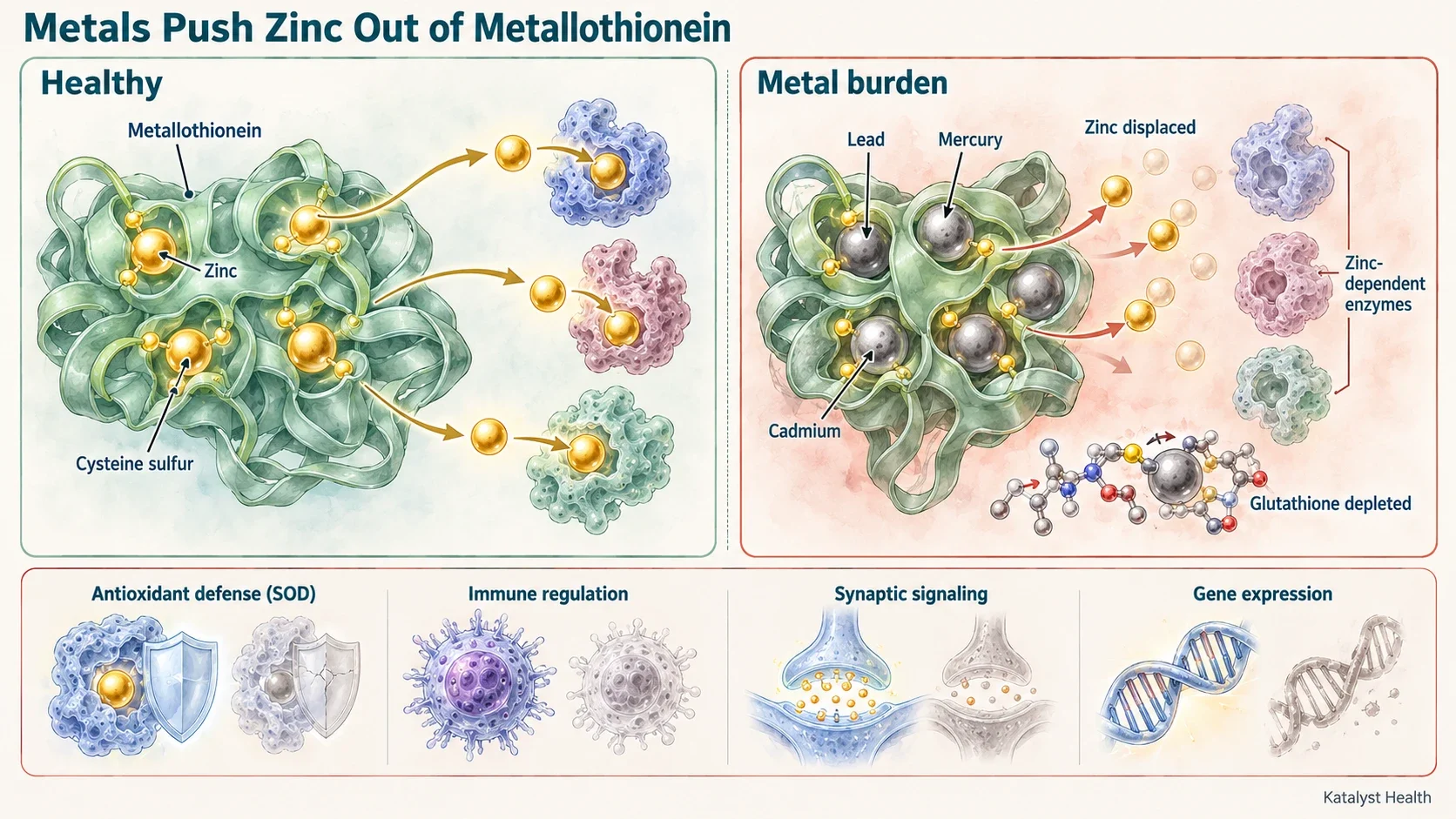
Mercury also collapses antioxidant capacity by targeting thiols. Mercury has a strong affinity for sulfur-containing thiol groups, and in practice this means it binds and depletes glutathione — the primary intracellular antioxidant that protects neurons from oxidative stress. When glutathione drops, reactive oxygen species rise, lipid membranes become vulnerable to peroxidation, and mitochondria become easier to derail. This is one reason metal burden so often shows up as “brain inflammation” rather than just a vague toxicity story. Mercury also binds selenium more tightly than almost anything else, pulling it away from glutathione peroxidase and thioredoxin reductase, the brain’s key antioxidant repair enzymes (Ralston & Raymond, 2018). And in susceptible people, it can drive autoimmunity (Pollard et al., 2019).
Lead is neurotoxic in a different way than mercury — it behaves like calcium. Lead can substitute for calcium in voltage-gated calcium channels and calcium-binding proteins, disrupting synaptic signaling and neurotransmitter release. This is one reason lead exposure is so strongly associated with cognitive impairment: it doesn’t just “poison” neurons, it scrambles the electrical language they use to communicate. Lead also amplifies oxidative stress and mitochondrial dysfunction, pushing neural tissue toward excitotoxicity and inflammatory signaling. And mechanistically, it hits the heme pathway hard: lead inhibits enzymes like δ-aminolevulinic acid dehydratase and ferrochelatase, reducing heme synthesis and further stressing mitochondria. In a brain already carrying inflammatory burden, lead becomes a multiplier — destabilizing signaling, weakening energy production, and lowering the threshold for neuroinflammation.
Lead and pyrroles: a pattern worth watching. In my practice, I have seen clients with elevated lead and a history of lead exposure who also test positive for kryptopyrroles (pyroluria). In William Walsh’s framework, elevated urinary pyrroles are thought to be a byproduct of disordered heme synthesis, and they bind vitamin B6 and zinc and carry both out in the urine. In my clients, positive pyrrole results track closely with markedly low B6 and zinc. Because lead directly inhibits heme-pathway enzymes, the pairing with lead makes mechanistic sense. The overlap matters because the losses compound: lead displaces zinc from metallothionein while pyrroles pull zinc and B6 out through the kidneys. B6 is a required cofactor for making dopamine, serotonin and GABA.
Aluminum deserves a mention because its neurotoxicity is plausible even at chronic, low-grade exposure. In experimental models it drives oxidative stress, mitochondrial dysfunction, endoplasmic reticulum stress and glial activation, and it interacts with amyloid-β and tau. Human studies linking higher aluminum exposure, mainly through drinking water and occupational settings, to dementia risk are mixed. Aluminum citrate appears able to cross the blood–brain barrier through amino-acid transporters, and aluminum can accumulate in the pineal gland, compounding the pineal calcification described earlier and the melatonin decline discussed later.
Cadmium accumulates slowly and binds tightly to metallothionein, hijacking the body’s metal-handling and antioxidant machinery. Much of its toxicity comes from impersonating calcium. The cadmium ion is almost the same size and charge as calcium, so it slips into calcium-dependent pathways: it enters cells through calcium channels, binds calmodulin, the cell’s main calcium sensor, raises calcium inside the cell, and switches on the same calpains and mitochondrial death pathways described in the calcium section (Choong et al., 2014). Beyond the brain, it damages the kidney tubules so calcium is lost in the urine, and it acts directly on bone, which is why chronic exposure is linked to lower bone density and fractures. The extreme case is itai-itai disease in Japan, caused by cadmium-contaminated rice (Kazantzis, 2004). Cadmium also drains glutathione by driving oxidative stress, disrupts the zinc- and selenium-dependent enzymes that protect neurons, and impairs mitochondria, cutting ATP while raising oxidative damage. Tobacco is a major source, along with certain shellfish, organ meats, rice, cacao and occupational exposure. Like lead and aluminum, cadmium is less a single trigger than a steady drain on resilience that makes neuroinflammation easier to sustain.
Neuromelanin and Metal-Induced Cell Death
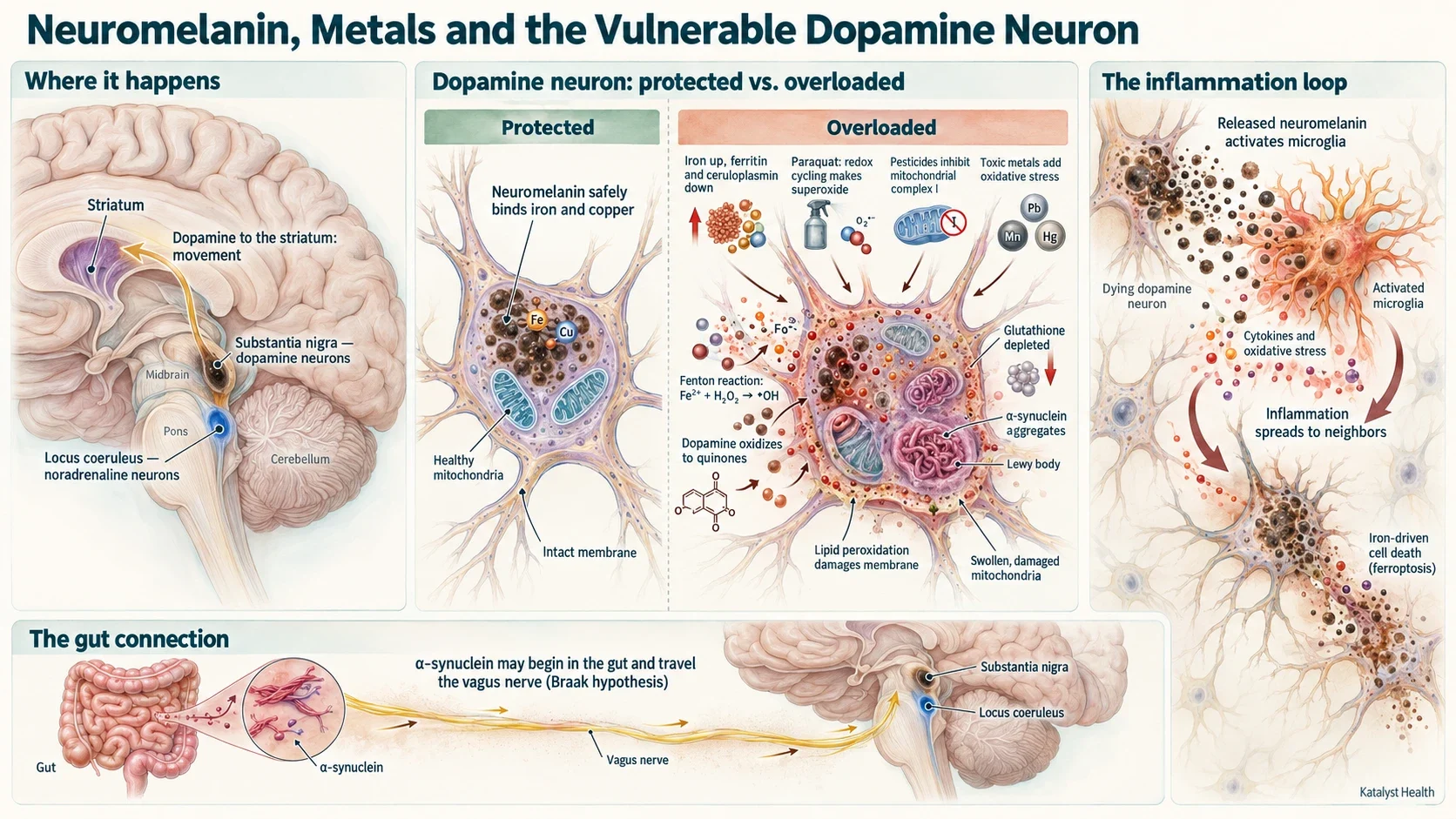
Neuromelanin, the dark pigment found in dopaminergic neurons of the substantia nigra and noradrenergic neurons of the locus coeruleus, normally serves a protective role by chelating excess iron, copper, and other transition metals. However, when metal burden exceeds neuromelanin’s binding capacity, free metals catalyze Fenton chemistry — generating hydroxyl radicals that overwhelm antioxidant defenses and trigger lipid peroxidation, mitochondrial membrane damage, and ultimately neuronal death.
This mechanism is directly implicated in the pathogenesis of Parkinson’s disease. Elevated iron in the substantia nigra, combined with reduced ferritin in brain tissue (Dexter et al., 1990) and a loss of ceruloplasmin’s iron-export activity (Ayton et al., 2013), creates an environment where neuromelanin-containing neurons are selectively destroyed. The same principle applies more broadly: any condition that increases brain metal burden while impairing metal-binding and antioxidant capacity accelerates neurodegeneration.
Inside the neuron, iron-driven lipid peroxidation can end in ferroptosis, an iron-dependent form of cell death, and the protein α-synuclein clumps into the Lewy bodies that define Parkinson’s disease. The damage does not stay inside one cell: when a neuromelanin-containing neuron dies, it releases its pigment, and that released neuromelanin activates microglia (Wilms et al., 2003), which send cytokines and oxidative stress on to neighboring neurons.
The process may not even begin in the brain. Braak’s staging found that Lewy pathology appears in the vagal nucleus of the brainstem and in the olfactory bulb before it reaches the substantia nigra (Braak et al., 2003), which led to the proposal that it may begin in the gut and climb the vagus nerve. In mice, α-synuclein placed in the gut wall spread to the brain, and cutting the vagus nerve prevented it (Kim et al., 2019).
Pesticides, Paraquat, and the Parkinson’s Connection
Heavy metals are not the only environmental toxicants that target these vulnerable dopaminergic neurons. The herbicide paraquat is structurally similar to MPP+, the active metabolite of MPTP — the compound famously discovered to cause acute Parkinsonism in exposed individuals. Paraquat generates superoxide radicals through redox cycling, and epidemiological studies have repeatedly associated occupational and residential paraquat exposure with significantly increased Parkinson’s disease risk. The mechanism converges on the same endpoint: oxidative destruction of neuromelanin-containing neurons in the substantia nigra.
Beyond paraquat, the broader class of organochlorine and organophosphate pesticides contributes to neuroinflammation through mitochondrial complex I inhibition, glutathione depletion, and microglial activation. Glyphosate, the most widely used herbicide globally, warrants specific mention not only for its direct neurotoxic potential but for its impact on the gut: it disrupts tight junction integrity and blocks the bacterial shikimate pathway described in the gut section.
Copper, Mineral Dysregulation, and Neuroexcitotoxicity
Copper is both essential and potentially neurotoxic, and its homeostasis is tightly linked to inflammation. Pro-inflammatory states upregulate ceruloplasmin (an acute-phase reactant that carries copper), while simultaneously impairing copper-zinc balance. Long-term inflammatory states — particularly when accompanied by the cortisol resistance and HPA dysfunction described earlier — can also downregulate the production of ceruloplasmin, leading to copper trafficking dysfunction. The result is elevated unbound copper — a potent generator of reactive oxygen species and a direct contributor to excitotoxicity.
Copper: The Double-Edged Mineral
The Fenton reaction. Copper, like iron, is a redox-active metal: it can easily gain and lose an electron. When it is bound to its proper carrier proteins, that ability is put to work in essential enzymes. When it is free, it drives the Fenton reaction. Unbound copper (or iron) reacts with hydrogen peroxide, a normal by-product of metabolism, and splits it into the hydroxyl radical (•OH), the most reactive and damaging free radical in the body (Valko et al., 2005).
Three things make this so destructive. The hydroxyl radical reacts with the first molecule it meets, so it damages whatever is nearby: the fats in cell membranes (lipid peroxidation), proteins, and DNA. No enzyme exists to neutralize it, unlike other free radicals. The main defense is keeping free metals from forming it in the first place, backed up by small molecules that can intercept it directly. Two stand out: melatonin (see the melatonin section) and molecular hydrogen (H2), which in cell studies selectively neutralized the hydroxyl radical while leaving the other, useful reactive oxygen species alone, and which reduced brain injury in a rat stroke model (Ohsawa et al., 2007). And the metal is not used up: the cell’s own reducing molecules recycle the copper back to its reactive form, so a small amount of free copper can keep producing radicals over and over. In the brain, which is rich in fragile fats and burns a large share of the body’s oxygen, that is a particularly bad combination.
Where copper accumulates. The liver is copper’s main storage site and its main exit: it loads copper onto ceruloplasmin for transport and clears the excess into bile. When that clearance slows — with sluggish bile flow, low zinc, or impaired ceruloplasmin production — copper builds up in the liver and, over time, in the brain. The extreme example is Wilson disease, a genetic disorder of copper excretion in which copper accumulates in the liver and brain and psychiatric symptoms, including anxiety, obsessive-compulsive symptoms, mood changes, and cognitive difficulties, can appear long before the diagnosis is made (Zimbrean & Seniów, 2017). Milder copper dysregulation is far more common, and in my practice I often see it contribute to OCD tendencies, anxiety, and brain fog. Free copper matters for cognition, too: in people with Alzheimer’s disease, higher serum “free” copper predicted faster cognitive decline (Squitti et al., 2009).
Copper and estrogen. Estrogen and copper are closely linked: estrogen raises serum copper and ceruloplasmin, and in animal studies it raised brain copper as well (Mehta & Eikum, 1989). That is why copper-related symptoms can surface or worsen during hormonal transitions. The shifts of perimenopause and menopause can unsettle copper handling and exacerbate symptoms. After pregnancy, copper that rose naturally during pregnancy should come back down; women with a history of postpartum depression were found to have significantly higher copper levels than women without it (Crayton & Walsh, 2007). I go deeper on the estrogen-copper relationship in When Estrogen Steals the Show.
Assessing copper handling. A single copper number does not tell the whole story. During hormonal changes in particular, I recommend testing serum, intracellular, and hair tissue copper levels alongside zinc and ceruloplasmin, so that we can see how copper is being carried, stored, and cleared, not just how much is present.
Other Minerals: Iron, Zinc, Magnesium, and Calcium
Iron. Iron runs the same Fenton chemistry as copper. Brain iron rises with age and inflammation, and where it accumulates alongside dopamine, as in the substantia nigra, it drives the oxidative damage described in the neuromelanin section above.
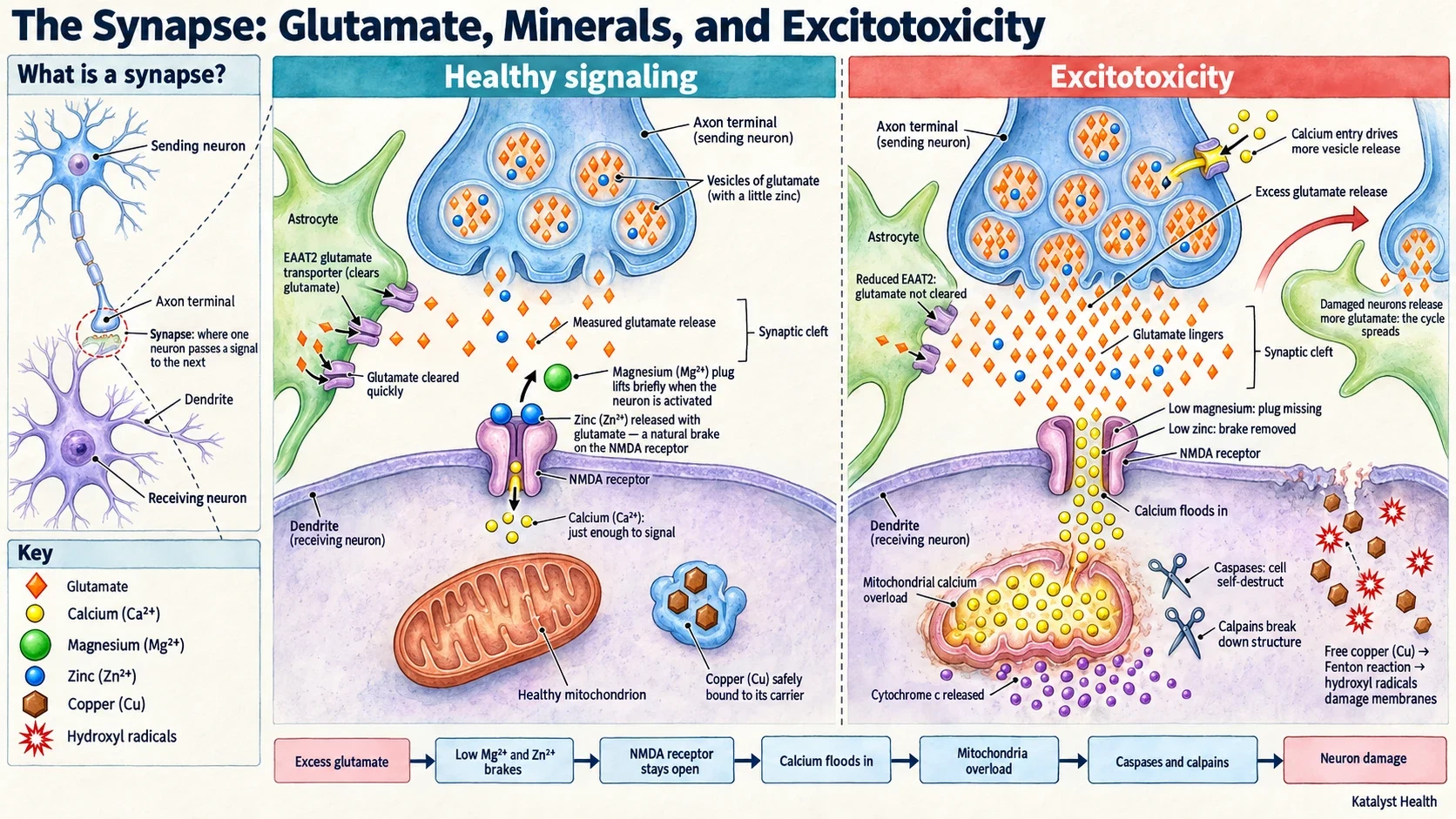
Zinc. Zinc is released alongside glutamate at many synapses and acts as a natural stabilizer of the NMDA receptor, the main receptor involved in excitotoxicity: it binds a high-affinity site on NMDA receptors containing the GluN2A subunit and dampens their activity (Paoletti et al., 1997). Low zinc removes that brake. And because zinc and copper compete, low zinc also lets copper rise, so the two problems tend to travel together.
Magnesium. The excitotoxic cascade involves the NMDA receptor, calcium, magnesium, and glutamate. Under physiological conditions, magnesium occupies the NMDA receptor channel as a voltage-dependent plug, preventing excessive calcium influx. When magnesium is depleted — as it commonly is in chronically inflamed, stressed, or toxic clients — the NMDA receptor becomes overactive. Simultaneously, impaired astrocytic glutamate reuptake (via reduced expression of EAAT2 transporters, often driven by inflammation and oxidative stress) leads to synaptic glutamate accumulation.
Calcium. Calcium has two faces in the nervous system. Outside the cell, it is calming: calcium in the fluid around nerves stabilizes their membranes, which is why low calcium in the blood makes nerves more excitable, causing tingling, muscle cramps and, in severe cases, seizures. What I see far more often in practice, though, is not low blood calcium but poor calcium handling inside the cell in chronic, maladaptive states.
Here is how the pieces fit together. Glutamate is the brain’s main “go” signal, and it acts by opening NMDA receptors. Magnesium normally plugs those receptors and zinc dampens them. When glutamate lingers at the synapse and magnesium and zinc run low, NMDA receptors stay open and calcium floods into the neuron. Calcium is an essential signal inside the cell, but too much of it is lethal. Mitochondria try to soak up the excess, and when they become overloaded, they swell, lose their ability to make energy, and release cytochrome c. Cytochrome c activates caspases, enzymes that dismantle the cell from the inside in a controlled self-destruct program (apoptosis), while calcium-activated calpains break down the neuron’s structural proteins (Orrenius et al., 2003). This chain — too much glutamate, too few brakes, and too much calcium inside the neuron — is called glutamate excitotoxicity, after the signal that sets it off. It is a core mechanism in conditions ranging from traumatic brain injury to chronic neuroinflammation. Calcium-magnesium dysregulation is therefore not a minor nutritional concern — it is a central node in the excitotoxic pathway.
Calcium handling also breaks down under chronic stress. Stress hormones increase calcium entry into neurons through voltage-gated channels, one reason long-term stress wears on the hippocampus, the brain’s memory center (Kerr et al., 1992). Calcium signaling is also part of the Cell Danger Response described in the mitochondria section below. Keeping calcium low inside the cell is costly: pumps in the cell membrane and in the cell’s internal stores constantly push it back out, and they run on ATP. When mitochondria shift into danger mode and energy runs short, those pumps falter, calcium is moved into and out of the cell less efficiently, and it accumulates where it should not. On hair tissue mineral analysis, a very high calcium level is often called a “calcium shell”, a pattern HTMA practitioners interpret as calcium building up in the tissues and at cell membranes, making cells less responsive. In my practice, I often see this calcium dysregulation alongside poor copper handling.
Calcium handling can also go wrong in a more visible, physical way. Under inflammatory conditions, some cells take on a bone-forming, osteoblast-like character. Vascular smooth muscle cells in artery walls are the best-studied example: inflammatory cytokines such as TNF-α push them toward a bone-like program, and they begin laying down calcium in the vessel wall (Tintut et al., 2000). Vascular calcification is now understood as an active, regulated process driven by these cell changes, not simple wear and tear (Demer & Tintut, 2008). Other cells, including fibroblast-like cells in heart valves, pericytes, and progenitor cells in tendons and other soft tissues, can shift in the same direction, which is why chronic inflammation can leave calcium deposits in many different tissues, from arteries and heart valves to tendons.
When the Brakes Reverse: GABA, Glycine and the Chloride Switch
GABA and glycine are the nervous system’s main brakes. Both work the same way: they open channels that let chloride flow into the neuron, which makes that neuron harder to fire. This only works if chloride inside the cell is kept low, and the transporter that keeps it low is KCC2, which pumps chloride out (Rivera et al., 1999). A second transporter, NKCC1, brings chloride in.
When KCC2 falls, chloride builds up inside the neuron. Now, when GABA or glycine opens the channel, chloride flows out instead of in, and a signal that should calm the neuron excites it. This is how the brain works before birth; the switch to inhibition comes as KCC2 rises during development. But the switch can flip back. After nerve injury in rats, activated microglia release BDNF, which lowers KCC2 and turns inhibitory signals into excitatory ones (Coull et al., 2003; Coull et al., 2005). Robert Miller, a traditional naturopath who works in functional genomics, teaches that inflamed microglia are what push GABA toward excitation. Inflammatory cytokines, in particular IL-1β, the cytokine released by the NLRP3 inflammasome, disturb the same transporters during early development (Pozzi et al., 2020). And in brain tissue from people with temporal lobe epilepsy, some neurons had lost KCC2 and were excited by GABA (Huberfeld et al., 2007).
The same flip has been shown in autism. In two rodent models of autism, neurons held too much chloride and GABA stayed excitatory (Tyzio et al., 2014). In people, neurons grown from the cells of patients with Rett syndrome, a severe form of autism spectrum disorder, had too little KCC2 and a delayed switch of GABA from excitation to inhibition (Tang et al., 2016), and children with Rett syndrome had lower KCC2 in their cerebrospinal fluid (Duarte et al., 2013). Gene variants that impair KCC2 have also been found in autism (Merner et al., 2015). Oxidative stress and inflammation are proposed drivers of the same disturbance (Abruzzo et al., 2021).
In my practice, I have seen GABA and glycine supports backfire: a client takes something meant to calm and becomes more anxious, wired or sleepless instead. I believe this chloride switch is the reason. In an inflamed brain with activated microglia, GABA and glycine may no longer be acting as brakes, and until the inflammation behind that is addressed, adding more of them can add to the excitation.
EMF Exposure and Voltage-Gated Calcium Channels
Earlier, the mineral section described calcium flooding into the neuron. NMDA receptors are one door for calcium; voltage-gated calcium channels (VGCCs) are another. They belong to the same family of channels that stress hormones open wider and that let calcium into the axon terminal to trigger glutamate release. The published work of Dr. Martin Pall proposes that electromagnetic field (EMF) exposure acts on exactly these channels: non-thermal EMF exposure, he argues, activates VGCCs in cell membranes and increases calcium entry into cells (Pall, 2013; Pall, 2018).
In Pall’s model, the extra calcium switches on nitric oxide production, and nitric oxide combines with superoxide to form peroxynitrite, the same damaging molecule described in the M1 and M2 section below. The result is oxidative stress layered on top of calcium overload. In a brain that is already low in magnesium, which is also a natural calcium channel blocker, or already struggling to pump calcium back out, that added calcium load has little buffer.
This body of literature is still evolving and remains debated within mainstream toxicology. But the proposed mechanism fits the calcium-dependent pathways described above, and it warrants clinical consideration, particularly in clients with high EMF exposure whose neurological symptoms have not responded to other interventions.
PANS: A Window into Immune-Mediated Neuroinflammation
So far this article has covered what loads the system. The next three sections, on PANS, old head injuries and COVID, show what happens when a trigger lands on a system that is already loaded.
Pediatric Acute-onset Neuropsychiatric Syndrome (PANS) offers one of the clearest clinical illustrations of how immune dysregulation translates directly into neuroinflammation — and working with this population has deeply informed my understanding of these mechanisms in clients of all ages. For parents, I explain PANS in more depth, including what it looks like and how I approach it, in Your Child Can Heal: Understanding PANS.
The name says pediatric and acute-onset, and the formal criteria do describe an abrupt, dramatic onset. In my clinical experience, and in that of my peers and mentors in this field, the same immune-mediated pattern also shows up with a slower, creeping onset, and in adults. I see it as a spectrum rather than a strict category. The textbook case is the child who changes overnight, but the same inflammation directed at the basal ganglia can build gradually, or first appear in adolescence or adulthood, especially when the terrain has been loading for years. Adults with this pattern are often told they have anxiety, OCD or a late-onset psychiatric problem, when their history of infections, mold and flares that track with immune triggers points somewhere else.
PANS is characterized by the sudden onset of obsessive-compulsive symptoms, tics, anxiety, emotional lability, cognitive regression, and behavioral changes. The leading model involves autoantibodies targeting the basal ganglia — the brain region responsible for motor control, habit formation, and executive function. Conventional models attribute PANS to post-infectious molecular mimicry, most commonly following streptococcal infection. And while infection is often the proximal trigger, what I see in practice tells a more layered story. Notably, when rage is a prominent symptom in a PANS child — the sudden, explosive, seemingly unprovoked anger that is so distressing to families — investigating Bartonella is essential (see Stealth Infections above).
In my caseload, mold exposure shows up so consistently that I treat it as a primary platform until proven otherwise. It is the mycotoxin-driven immune dysregulation — the suppression of MSH, the impairment of regulatory T-cell function, the disruption of mucosal barriers, and the resulting chronic immune activation — that creates the terrain on which any subsequent trigger can push the system into frank autoimmunity. The streptococcal infection, the viral illness, the vaccine, the environmental exposure — these are the match, but mold built the kindling.
This is why focusing on the trigger alone, without addressing the underlying mold exposure and the immune dysregulation it creates, so often results in relapsing-remitting courses. The basal ganglia autoantibodies are a downstream expression of a system that has fundamentally lost its ability to regulate immune responses. Until that regulatory capacity is restored — by removing the biotoxic burden, healing barriers, balancing minerals and re-establishing tolerance — the autoimmunity will find new targets with each new trigger.
The PANS model is instructive because it makes visible what is happening more subtly in many adult clients with neuroinflammation: a toxic platform (usually mold-driven, at least in my practice) creates systemic immune dysregulation, and then relatively minor triggers produce disproportionate neuroimmune responses. The autoantibodies to basal ganglia tissue in PANS are the same phenomenon as the neural autoantibodies I see on testing in adults — different targets, same underlying loss of tolerance.
Traumatic Brain Injury: The Priming Event
One factor that is frequently overlooked in the neuroinflammation history is remote traumatic brain injury (TBI) — including concussions that were considered mild or were never formally diagnosed. Brain injury can prime microglia into a “sensitized” state. This is not a short-lived effect. In people, PET imaging has shown microglial activation up to 17 years after moderate to severe TBI, and the thalamus, where activation was highest, tracked with worse cognitive impairment (Ramlackhansingh et al., 2011). Brain tissue studies found dense clusters of reactive microglia in 28% of people who survived more than a year after a single TBI, up to 18 years later, alongside ongoing white matter degeneration and a 25% thinner corpus callosum (Johnson et al., 2013). Animal studies suggest that even mild, repeated impacts can leave microglia primed. Primed microglia may not return fully to their surveilling phenotype. Instead, they remain in a para-inflammatory state, morphologically and functionally altered, with a lower activation threshold for subsequent insults.
Why it stays switched on. Once started, the post-injury state appears to feed itself. In mice followed for a full year after a single moderate brain injury, microglia never settled. Highly activated microglia expressing the superoxide-generating enzyme NADPH oxidase (NOX2) sat at the edges of a lesion that kept expanding, with ongoing hippocampal neuron loss, myelin loss and elevated oxidative stress markers (Loane et al., 2014). Oxidative stress is where this connects to the aldehydes described in the ammonia and aldehydes section and the acrolein story in the M1 and M2 section below. Toxic aldehydes, including acrolein and 4-HNE, accumulate in brain tissue weeks after trauma (Ji et al., 2024). Acrolein damages membranes and mitochondria and itself activates innate immune responses (Race et al., 2026). The likely loop: injury → activated microglia → NOX2-driven oxidative stress → lipid peroxidation and polyamine breakdown → acrolein → more membrane damage and immune activation. (Each step is published; the full loop is my synthesis.) In animal models of TBI, spinal cord injury and MS, compounds that scavenge acrolein, including carnosine and N-acetylcysteine, have been neuroprotective (Race et al., 2026). That hasn’t been established in humans, but it suggests the cycle can be interrupted.
This means that a client who sustained a concussion years or even decades before a mold exposure, a Lyme infection, or a toxic metal accumulation will mount a more aggressive and more sustained neuroinflammatory response to those insults than a client without that priming event. The TBI itself may have been clinically resolved — but the microglial landscape it left behind was not. Repetitive mild TBI, as seen in contact sports, domestic violence, and military service, is thought to create cumulative priming that further lowers the threshold.
When a neuroinflammatory presentation seems disproportionate to the current burden — when the mold exposure was modest, the metal levels are not extreme, the infections are manageable, but the neurological symptoms are severe — a TBI history is often the missing variable. It does not change the treatment approach fundamentally, but it explains why the brain is responding the way it is and sets appropriate expectations for the pace of recovery.
COVID-19: The Straw That Broke Immune Tolerance
No discussion of neuroinflammation in the current clinical landscape is complete without addressing COVID-19. SARS-CoV-2 has demonstrated neurotropic potential — the virus can interface with the nervous system via the olfactory pathway and across the blood–brain barrier. Published research has documented microglial activation, astrocyte reactivity, BBB disruption, and neuronal injury in COVID-19 patients, including those with mild acute illness. Autopsy studies have shown inflammatory changes in regions including the brainstem, hippocampus, and cortex.
Much of this can be driven by the spike protein itself, whether it comes from infection or vaccination; it does not need a whole, replicating virus to cause trouble. Its main docking site is ACE2, found on blood vessel linings, nerves, mast cells and platelets. Neuropilin-1 helps it enter along the olfactory nerve (Cantuti-Castelvetri et al., 2020), and it binds and activates TLR4, the innate immune system’s alarm receptor (Zhao et al., 2021). In mice, its S1 portion crosses the blood–brain barrier (Rhea et al., 2021), and in human barrier models spike alone loosens the barrier (Buzhdygan et al., 2020) and disrupts the pericytes that support it (Khaddaj-Mallat et al., 2021). In human cell studies, spike switches on microglia through the NLRP3 inflammasome (Albornoz et al., 2023) and makes mast cells release inflammatory mediators (Tsilioni & Theoharides, 2023). In human tissue, spike protein has been found persisting in the skull marrow and meninges long after infection (Rong et al., 2024). And spike binds fibrinogen directly, producing abnormal, inflammatory clots that activate microglia (Ryu et al., 2024), which connects to the microclots described next.
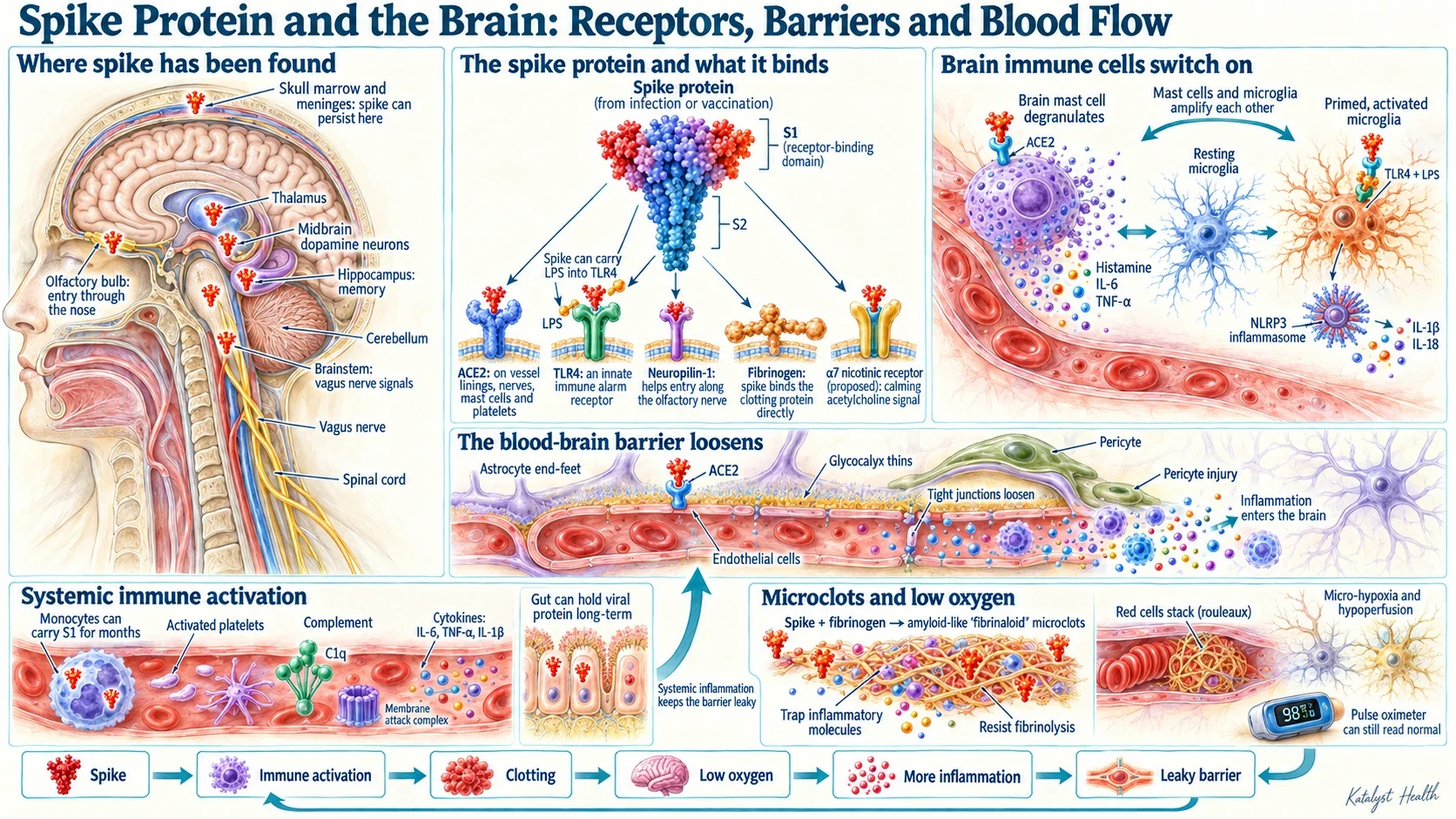
But the more clinically relevant question for many clients is not acute COVID — it is Long COVID. In my view, Long COVID often behaves like a vascular–immune lock-in loop in at least a subset of patients. Multiple groups have reported abnormal fibrin(ogen)-rich “microclots” (sometimes described as amyloid/fibrinaloid fibrin), platelet activation, and impaired fibrinolysis. The proposed consequence is microvascular flow limitation — tiny regions of tissue hypoxia that can sustain fatigue, exertional intolerance, dysautonomia, and cognitive impairment, while also perpetuating inflammatory signaling. This remains an active area of research and debate, but mechanistically it fits the same physiology described in the hypercoagulation section of this article: inflammation drives clotting, clotting worsens oxygen delivery, and hypoxia feeds inflammatory signaling.
At the same time, Long COVID increasingly looks like a persistence-and-immune-activation problem in some cases — particularly in the gut. Tissue studies and emerging reviews describe SARS-CoV-2 antigen persistence in the gastrointestinal tract months after infection, with ongoing immune activation. Notably, double-stranded SARS-CoV-2 RNA has been detected in gut tissue in some participants — a finding consistent with ongoing viral RNA biology and potentially replication activity within tissue immune compartments. If antigenic material persists in gut immune tissue and keeps innate and adaptive immune cells chronically activated, that persistent cytokine and complement tone becomes a plausible upstream driver of vascular dysfunction, BBB permeability, and microglial activation — i.e., chronic neuroinflammation without an ongoing acute infection.
Another persistence model involves the immune cells themselves. Patterson and colleagues reported SARS-CoV-2 S1 protein within CD16+ monocyte subsets in individuals with Long COVID months after infection, alongside immune dysregulation. Their work suggests that even without clear evidence of full-length replicating virus in the bloodstream, antigenic remnants inside long-lived or recirculating monocytes could act as a mobile inflammatory stimulus — interacting with endothelium, platelets, and cytokine networks in a way that sustains vascular inflammation and neuroimmune activation. This is not the only explanation for Long COVID, and causality is still being worked out, but the mechanism is coherent: chronically activated innate immune cells plus vascular dysfunction can keep microglia primed and the brain inflamed long after the acute infection resolves.
What I observe clinically fits this broader systems model. I have had clients come to me with aphasia and significant memory loss in their early 40s — presentations that would be alarming at any age, let alone decades away from typical neurodegenerative timelines. In these cases, COVID was the proximal trigger — but rarely the root cause. It was the straw that broke an immune system whose tolerance was already compromised by pre-existing burdens — mold exposure, accumulated metals, chronic gut dysfunction, metabolic stress — that had not yet produced obvious neurological symptoms.
How does spike push a strained immune system past the point of tolerance? Several routes have been described, and they can overlap:
- Molecular mimicry. Parts of the virus resemble human proteins, so antibodies made against it can cross-react with our own tissue. In one lab study, antibodies to spike and other SARS-CoV-2 proteins reacted with 28 of 55 human tissue antigens, including nervous system tissue (Vojdani et al., 2020).
- A superantigen-like region. A stretch unique to the SARS-CoV-2 spike resembles bacterial superantigens, which switch on large numbers of T cells at once instead of the few that should respond, and patients with hyperinflammation showed the matching skewed T-cell pattern (Cheng et al., 2020).
- Bystander activation. TLR4 signaling, persistent spike and a constant cytokine background keep the innate immune system switched on, lowering the threshold at which self-reactive cells that are normally held in check begin to respond (Dotan et al., 2021).
- Autoantibodies against the immune system itself. People with COVID-19 show a marked rise in autoantibodies, including ones against their own cytokines, complement and immune cell receptors, and these autoantibodies further disturb immune regulation (Wang et al., 2021). Antiphospholipid antibodies, autoantibodies against phospholipids and the proteins that bind them on cell membranes and in the clotting system, are part of the same loss of tolerance: about half of patients hospitalized with COVID-19 had at least one, these autoantibodies promoted clotting in mice (Zuo et al., 2020), and they remain enriched after the acute illness (Emmenegger et al., 2023), another place where autoimmunity and clotting overlap.
COVID’s neuroinflammatory mechanisms — endothelial injury and ACE2-related vascular effects, complement activation, and direct microglial activation via innate immune signaling — are significant in their own right. But they are amplified enormously in a system that has already lost regulatory capacity. The virus exploits the same BBB vulnerability, impaired vagal tone, mast cell instability, and loss of immune tolerance that every other insult in this article can create. This is why some people recover uneventfully while others develop devastating, persistent neurological sequelae. The difference is the terrain.
In other words, COVID can be both an insult and an amplifier — but whether it becomes a long-term neuroinflammatory state depends on what it lands on.
Microglial Activation: Where Immune and Nervous Systems Become One
Microglia are the resident immune cells of the central nervous system, and their activation is both a consequence of and contributor to neuroinflammation. In their surveilling state, microglia monitor the neural environment and support synaptic pruning and plasticity. When activated by any of the insults described above — infections, toxins, metals, metabolic dysfunction — they shift to a pro-inflammatory phenotype, releasing TNF-α, IL-1β, IL-6, reactive oxygen species, and glutamate.
This creates a bidirectional amplification loop: systemic inflammation activates microglia, microglial activation generates neuroinflammation, neuroinflammation impairs neural control of immune function, and impaired neural-immune regulation worsens systemic inflammation. This is why neuroinflammation, once established, tends to be self-perpetuating.
Complement is one of the brain’s most underappreciated “wiring” mechanisms. Complement proteins don’t just fight infections — in the brain, they can act like molecular tags that mark synapses. Microglia can recognize those tags and prune synapses as part of normal development and repair. But when the system is chronically inflamed, that same machinery can become miscalibrated — and the brain starts losing connections it can’t afford to lose. This is one of the cleanest bridges between immune activation and the lived experience of cognitive slowing, mood shifts, sensory overwhelm, and “I don’t feel like myself.”
M1 and M2: A Blend, Not a Switch
Macrophages, and by extension microglia, are often described as either “M1” (pro-inflammatory) or “M2” (anti-inflammatory, repair). One of the clearest ways to see the difference is what each does with the amino acid arginine (Rath et al., 2014):
- M1 cells switch on inducible nitric oxide synthase (iNOS), which turns arginine into nitric oxide. Nitric oxide then feeds reactive nitrogen species such as peroxynitrite. This is the highly pro-inflammatory, microbe-killing state.
- M2 cells switch on arginase, which turns arginine into ornithine. Ornithine feeds the synthesis of polyamines (putrescine, spermidine, spermine) and proline, which cells need for growth and tissue repair.
The two pathways compete for the same arginine and inhibit each other, which is why these states can lock in.
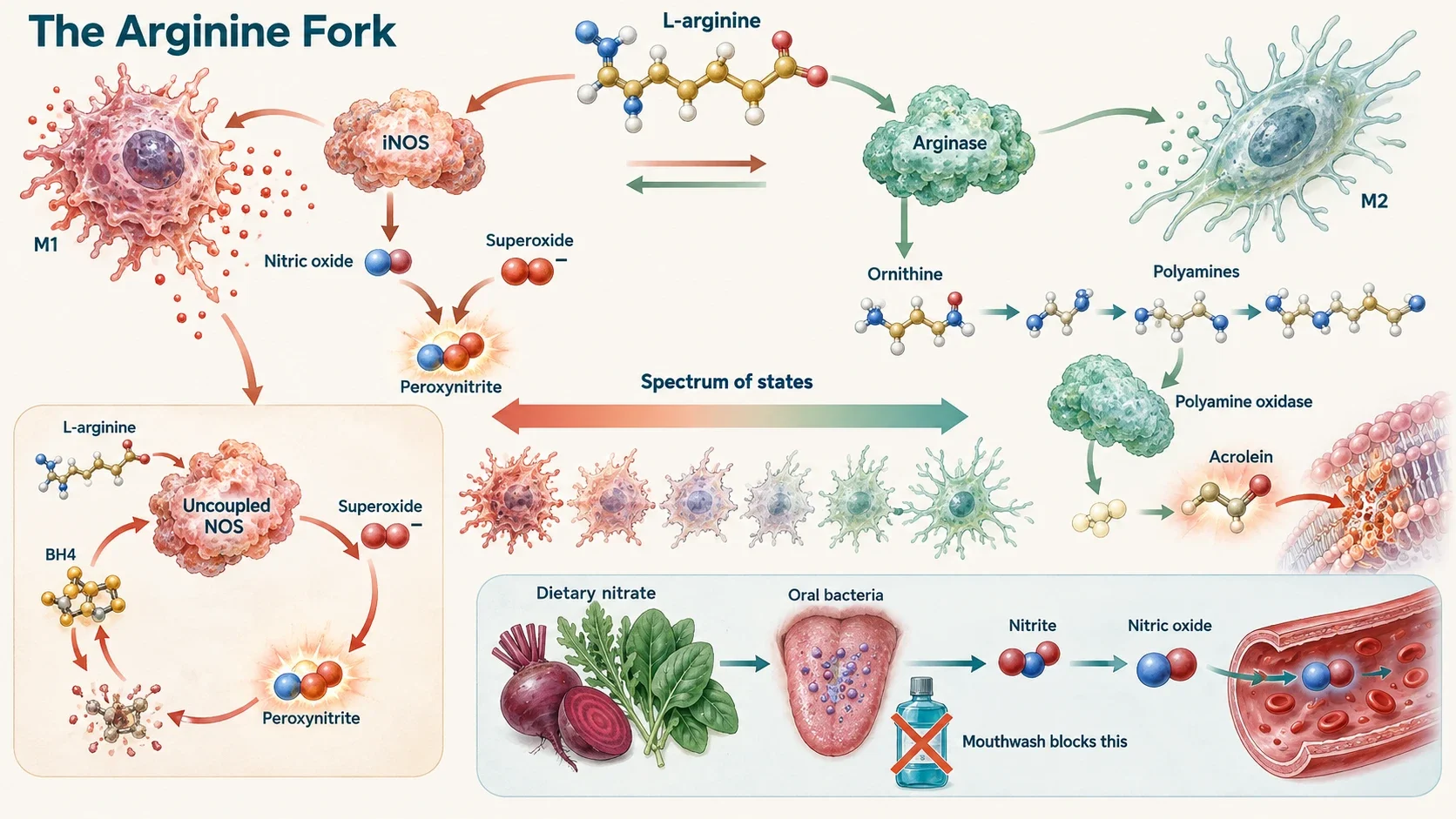
The M2 side is not automatically “the good side.” When polyamines are broken down by polyamine and spermine oxidases, which are upregulated under oxidative stress, they release hydrogen peroxide and acrolein. Acrolein, one of the aldehydes introduced in the ammonia and aldehydes section, binds to proteins and is more toxic than hydrogen peroxide. Protein-bound acrolein rises at the site of brain infarction and is being studied as a blood marker for stroke, including silent stroke (Igarashi & Kashiwagi, 2011; Park & Igarashi, 2013). It belongs to the same family of toxic aldehydes as the 4-HNE and MDA covered in the membrane section below. A repair-oriented state running in an oxidatively stressed brain can therefore produce its own neurotoxin. (This M2 → polyamine → acrolein chain is assembled from established steps; I have not seen it measured end to end in microglia.)
Why I don’t recommend arginine. I don’t reach for supplemental arginine to “boost nitric oxide,” and the main reason is peroxynitrite. To make nitric oxide, the enzyme nitric oxide synthase needs its cofactor tetrahydrobiopterin (BH4), one of the body’s most potent reducing agents. Under inflammation and oxidative stress, superoxide reacts with nitric oxide to form peroxynitrite, and peroxynitrite oxidizes BH4, reacting with it 6–10 times faster than with vitamin C or thiols (Kuzkaya et al., 2003). Without enough BH4, the enzyme becomes “uncoupled”: the electrons it draws from NADPH, which should drive the conversion of arginine into nitric oxide, are passed to oxygen instead, so the enzyme produces superoxide rather than nitric oxide. That superoxide reacts with whatever nitric oxide remains to make more peroxynitrite, which destroys more BH4, and a protective enzyme turns into a source of oxidative stress (Förstermann & Münzel, 2006). Supplying more arginine does not recouple the enzyme, because what is missing is BH4.
The fix is restoring BH4 and redox balance, not more substrate. Folate and vitamin C have been shown to help restore coupled enzyme function, most likely by raising BH4 (Förstermann & Münzel, 2006); folate’s role in methylation is covered below.
The arginine fork adds a second concern. In an inflamed body where arginase is upregulated, extra arginine can also feed the arginase → ornithine → polyamine side, adding substrate for acrolein rather than nitric oxide. (This is a mechanistic inference, not a tested outcome.)
The human data also give pause. In a randomized trial after heart attack, arginine did not improve vascular stiffness or heart function, and 8.6% of the arginine group died versus none on placebo, which led the safety committee to stop enrollment (Schulman et al., 2006).
A cleaner route to nitric oxide bypasses the arginine fork entirely: the nitrate → nitrite → nitric oxide pathway (Lundberg et al., 2008). Dietary nitrates from beets, arugula, spinach and other leafy greens are concentrated in saliva, turned into nitrite by nitrate-reducing bacteria on the tongue, and then converted to nitric oxide in the body, especially where oxygen is low. This depends on a healthy oral microbiome. In one study, a week of antiseptic mouthwash cut oral nitrite production by 90% and raised blood pressure (Kapil et al., 2013), which is another reason the oral microbiome section above matters.
Back to the cells themselves: in reality, microglia do not sit in two boxes. Microglia in living tissue show a spectrum of states that blend features of both, and leading microglia researchers have argued that the M1/M2 labels oversimplify what these cells actually do (Ransohoff, 2016). Clinically, that is the useful takeaway: the goal is not to push the immune system from “M1” to “M2.” It is to remove what keeps these cells activated, and to restore the antioxidant and methylation capacity that lets either program run without collateral damage.
The Vagus Nerve and the Cholinergic Anti-Inflammatory Pathway
The vagus nerve is the primary conduit of the cholinergic anti-inflammatory pathway. Vagal efferent signaling releases acetylcholine (ACh), which acts on alpha-7 nicotinic acetylcholine receptors (α7nAChR) on macrophages and other immune cells to suppress NF-κB-mediated cytokine production. This is the body’s endogenous brake on systemic inflammation.
When vagal tone is impaired — by gut inflammation, biotoxin injury, autonomic dysfunction, or chronic stress — this brake fails. The result is unchecked peripheral and central inflammatory signaling. Clinically, impaired vagal tone manifests as reduced heart rate variability, poor digestive motility, heightened anxiety, and an exaggerated inflammatory response to stimuli that would normally be well-tolerated. Restoring vagal function is therefore not a “nice to have” — it is mechanistically necessary for resolving neuroinflammation.
The neck can matter too. One structural reason vagal tone can falter is craniocervical instability (CCI): looseness in the ligaments that hold the skull, the atlas (C1) and the axis (C2) together. CCI is best described in the Ehlers-Danlos syndromes (EDS), a group of inherited connective tissue disorders, where weak tissue at the craniocervical junction can stretch or compress nearby nerves and the brainstem (Henderson et al., 2017). But genetics is not the only route to a loose neck. Mast cell disorders are common in people with hypermobility (Seneviratne et al., 2017; Monaco et al., 2022), and clinicians working in this area increasingly describe an acquired pattern of hypermobility, distinct from EDS, in which ongoing mast cell activation loosens connective tissue in people who were never hypermobile to begin with. Cardiologist Dr. Andrew Maxwell, in his teaching and in conversation with Dr. Tania Dempsey, describes mast cell mediators “tenderizing” the ligaments of the nose, throat and upper neck in particular. Naturopathic physician Dr. Kirsten Perley adds a mechanical trigger: when connective tissue is already lax, a whiplash injury or concussion can be what tips the upper neck into instability.
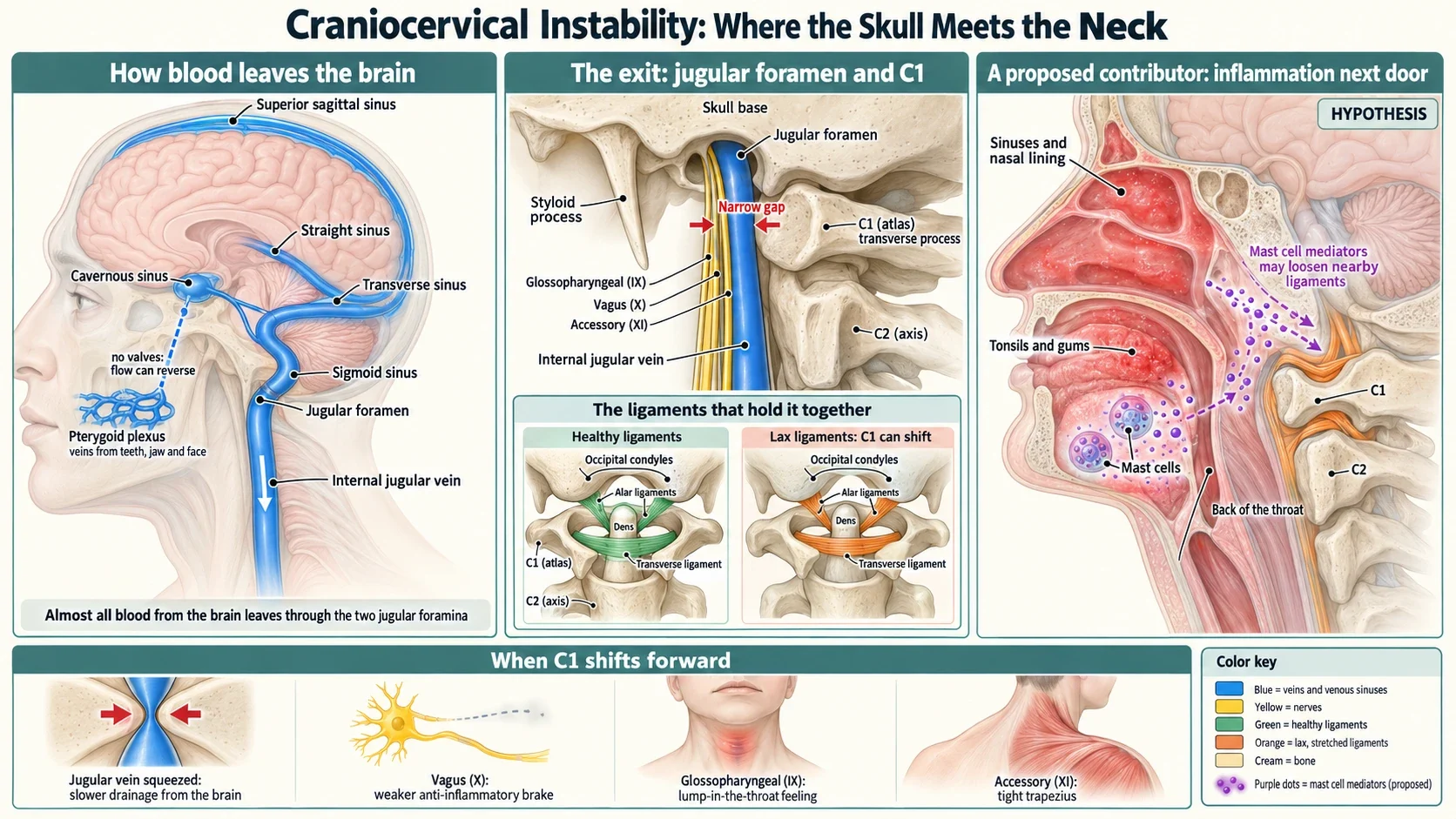
As C1 shifts slightly forward, Dr. Maxwell explains, it can press three cranial nerves that exit the skull right beside it — the glossopharyngeal (IX), vagus (X) and accessory (XI) nerves — against the jugular vein. Each of those pressure points feeds back into the themes of this article. Vagal irritation weakens the cholinergic brake described above, so inflammation in the body and the brain runs with less restraint. Jugular compression slows venous drainage from the head, part of the outflow the brain relies on to clear inflammatory by-products. The jugular veins are the main drainage route when we are lying down; when we are upright, the vertebral veins along the spine take over most of the work (Valdueza et al., 2000). That makes jugular compression matter most at night, during the hours when the brain does its clearing. And the mast cells that loosened the ligaments in the first place keep releasing histamine and other mediators that prime microglia. A few clues tend to cluster: a heavy head or headache at the base of the skull, sensitivity to light and sound, dizziness or tinnitus, a lump-in-the-throat feeling, and tight, knotted trapezius muscles. This model is still emerging, but Dr. Neil Nathan lists CCI among the structural impediments to consider when a sensitive patient is not responding. I come across upper cervical instability often in my practice, especially in clients with hypermobility, mast cell activation and stubborn vagal symptoms. For many of them, gentle structural work such as NUCCA (a precise upper cervical chiropractic technique) or NeuroKinetic Therapy (NKT) has brought remarkable symptom relief, and once the neck is supported, the rest of the work tends to go further.
Mast Cell Activation, Histamine, and Sleep Disruption
Mast cells have come up again and again in this article, from the gut lining to the ligaments of the upper neck. They are present in the brain (particularly in the thalamus, hypothalamus, and meninges) and throughout the gut. When systemic inflammation — driven by gut dysbiosis, infections, or toxicant exposure — activates mast cells, the consequences extend far beyond histamine. Mast cell activation syndrome (MCAS) involves the release of hundreds of mediators including prostaglandins, leukotrienes, tryptase, heparin, TNF-α, IL-6, and vascular endothelial growth factor (VEGF). These mediators collectively increase vascular permeability (including BBB permeability), amplify neuroinflammation, sensitize pain pathways, and dysregulate the autonomic nervous system.
MCAS is often the clinical bridge between biotoxin illness and neuroinflammation. Mycotoxins can activate mast cells, and in clients with mold exposure, MCAS frequently becomes self-perpetuating — the mast cells remain in a hyperreactive state long after the initial trigger, responding to foods, chemicals, temperature changes, and stress with disproportionate mediator release. This is why so many clients with complex neuroinflammatory presentations also carry a pattern of multi-system reactivity that looks like “allergies to everything.” It is often not an allergy. It is a destabilized mast cell population that has lost its regulatory constraints. I cover these cells in full, including what triggers them and how I approach calming them, in Mast Cells: When Your Body Reacts to Everything.
Sex hormones are one of the most under-recognized mast cell amplifiers. Mast cells express hormone receptors, and estrogenic signaling can increase mast cell activation and mediator release — one reason histamine patterns and neuroinflammatory symptoms so often track with cycle changes, perimenopause, and estrogenic states. Progesterone, in contrast, has documented inhibitory effects on mast cell secretion in experimental models — which helps explain why a relative estrogen-to-progesterone imbalance can tip a sensitive client into worse histamine burden, more vascular permeability, and more neuroimmune noise. In a brain already struggling with sleep disruption and sluggish glymphatic clearance (the brain’s overnight waste removal, explained below), that extra mast cell signal can be the difference between “tolerable” and “I’m on fire.”
Histamine specifically warrants attention for its role in sleep disruption. As described in the orexin section, histamine is a wake-promoting neurotransmitter that works alongside orexin, and its elevation disrupts sleep architecture, particularly the ability to initiate and maintain deep slow-wave sleep and REM sleep. This is critically important because deep sleep is when the glymphatic system — an astrocyte-mediated, aquaporin-4-dependent clearance system — is most active. The glymphatic system removes metabolic waste from the brain, including amyloid-β and tau proteins.
Sleep is not just rest — it is clearance. During sleep, glymphatic flow ramps up and helps move metabolic waste and inflammatory byproducts out of brain tissue and into cerebrospinal fluid. From there, meningeal lymphatic vessels help drain fluid and immune traffic out of the skull toward the deep cervical lymph nodes. When sleep is disrupted (or the system is congested), clearance slows — and inflammatory signaling has more time to echo.
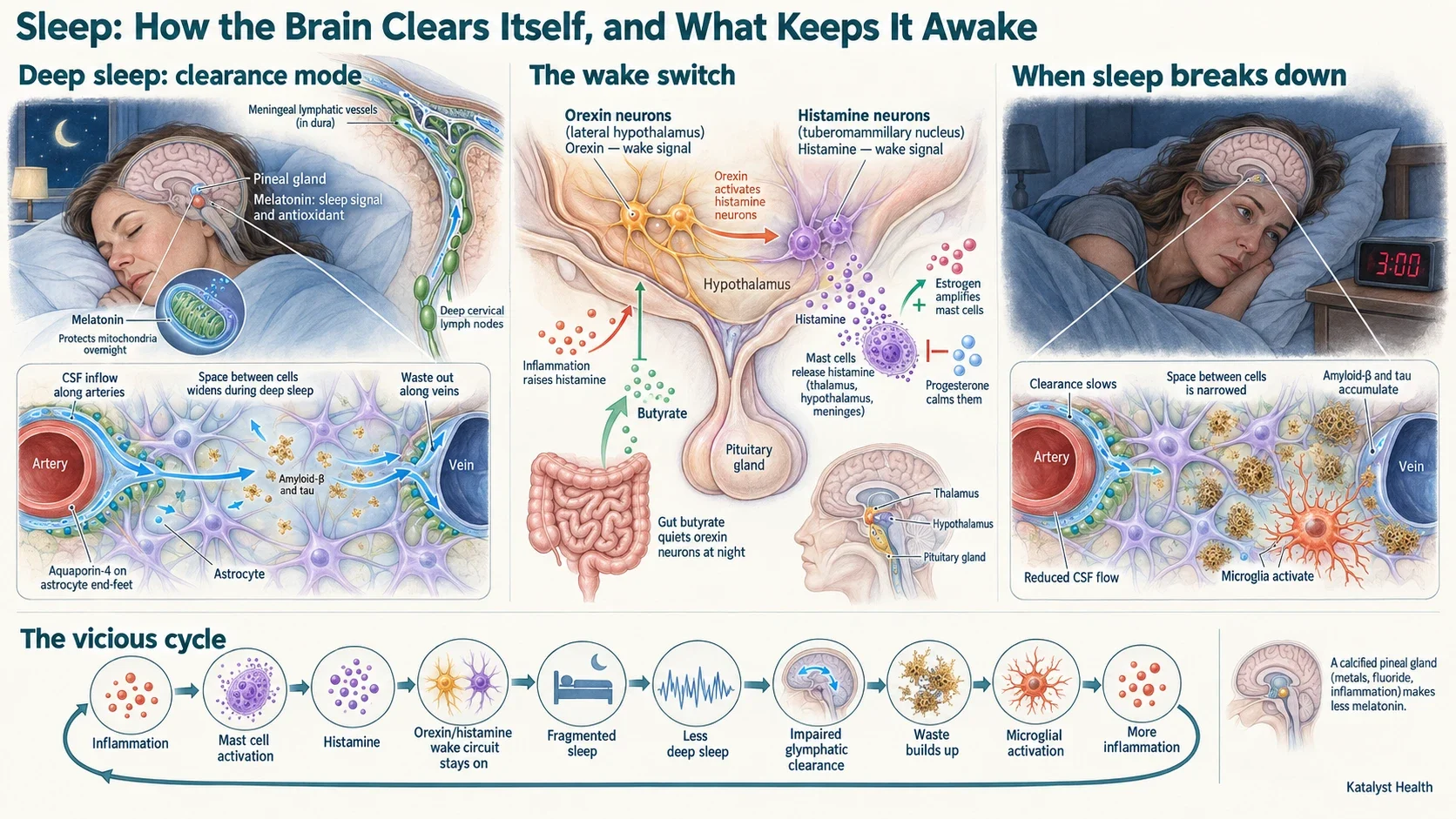
When histamine-driven sleep disruption impairs glymphatic clearance, neurotoxic waste accumulates, further activating microglia and perpetuating neuroinflammation. This creates yet another self-reinforcing loop: inflammation → mast cell activation → histamine → poor sleep → impaired glymphatic clearance → more neuroinflammation.
Melatonin: Far More Than a Sleep Hormone
Melatonin sits at the center of this vulnerability. The work of Dr. Russell Reiter has established that melatonin is far more than a sleep-onset signal. He has published more than 1,300 papers on melatonin over five decades, by a wide margin the most of any researcher in the field. It is one of the most potent endogenous antioxidants the body produces, and critically, it is synthesized within mitochondria themselves, where it scavenges hydroxyl radicals, peroxynitrite, and singlet oxygen at the very site of greatest oxidative stress. It upregulates glutathione peroxidase, superoxide dismutase, and catalase — the same antioxidant defenses that every insult in this article depletes. Melatonin production declines markedly with age, and that decline has been associated across many neurodegenerative conditions: Alzheimer’s, Parkinson’s, ALS, multiple sclerosis, Huntington’s, and poor outcomes following stroke and TBI.
Where it is made. The pineal gland is only one source. The melatonin it releases at night is what shows up in the blood and sets the body’s day–night rhythm; without the pineal gland, blood melatonin falls to almost nothing. But the enzymes that make melatonin have been found in most tissues studied, including the brain, retina, skin, gut, liver, kidney, thyroid, pancreas and immune cells (Acuña-Castroviejo et al., 2014). Inside the cell, the production site appears to be the mitochondria: in mouse brain cells, melatonin was made in the mitochondrial matrix and acted right there to block the release of cytochrome c, the step that starts cell death (Suofu et al., 2017). This locally made melatonin is mostly used on the spot rather than released into the blood. On that basis, Dr. Reiter and colleagues cite an estimate that the pineal gland accounts for less than 5% of the body’s total melatonin, with the rest made in mitochondria throughout the body (Tan et al., 2023). That figure is an estimate, not a measurement, but the principle is well supported: any cell with mitochondria may be able to make and use its own melatonin.
An ancient protector. Dr. Reiter and his colleagues propose that melatonin first arose billions of years ago in bacteria, as an antioxidant. On this view, the bacteria that became mitochondria in animals and chloroplasts in plants brought the ability to make melatonin with them. That would explain why both animals and plants make it, and why it is concentrated in the very organelles that generate the most free radicals (Tan et al., 2013). Its original job, in other words, was protection. The sleep signal came much later.
How it protects. Melatonin neutralizes free radicals directly, including the hydroxyl radical produced by the Fenton reaction, and the molecules it turns into are antioxidants as well, so one melatonin molecule can neutralize several radicals in a cascade (Tan et al., 2007). It also switches on the body’s own antioxidant enzymes, turns down pro-oxidant ones, and binds the free transition metals that drive Fenton chemistry (Reiter et al., 2016). In mitochondria, where it is most concentrated, it protects cardiolipin, the membrane lipid the electron transport chain depends on (Paradies et al., 2010). And it acts on inflammation itself: it dampens TLR4 and NF-κB signaling, helps prevent NLRP3 inflammasome activation and raises Nrf2, the same pathways this article keeps returning to. Its immune effects depend on context, and in some settings it stimulates immune defenses rather than calming them (Hardeland, 2018).
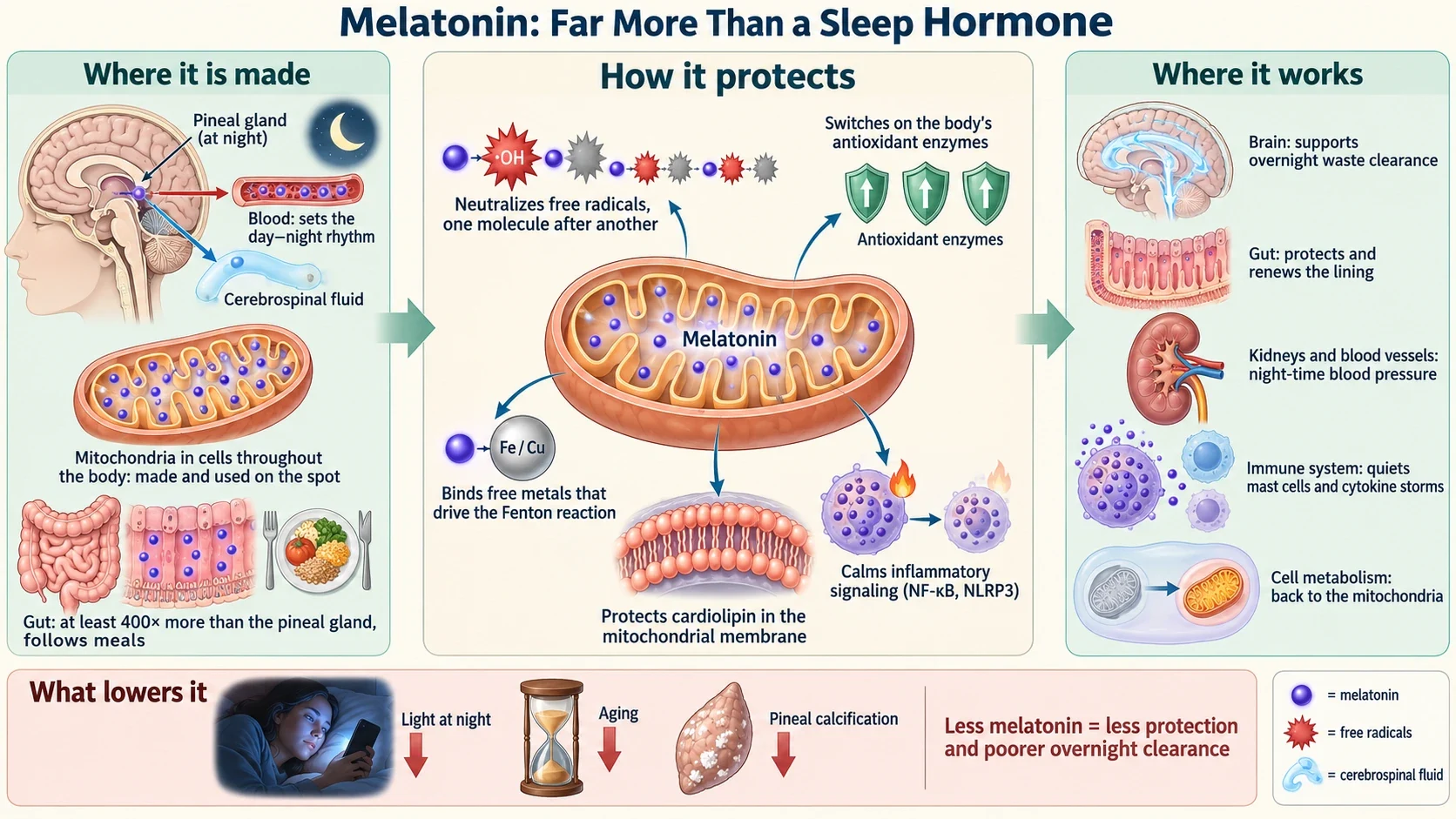
In the brain. The pineal gland releases melatonin not only into the blood but directly into the cerebrospinal fluid, where night-time levels are high. Dr. Reiter proposes that this nightly surge helps the glymphatic system flush out waste such as amyloid-β during deep sleep, and that the fall in melatonin with age is one reason clearance weakens (Reiter et al., 2023). This is a proposal rather than a proven mechanism, but it ties melatonin directly to the overnight clearance described above. Melatonin also supports the growth of new nerve cells. In adult mice, two weeks of melatonin increased the number of newly formed neurons in the hippocampus, the brain’s memory center, helped more of them survive, and gave them more complex, better-branched dendrites (Ramirez-Rodriguez et al., 2011). In clinical trials, melatonin cut the rate of delirium in older adults admitted to hospital from 31% to 12% (Al-Aama et al., 2011) and reduced migraine days more than placebo (Gonçalves et al., 2016).
In the gut. The gut holds at least 400 times more melatonin than the pineal gland. Gut melatonin follows meals rather than light, and it helps regenerate the gut lining, supports gut immunity and relaxes gut muscle (Bubenik, 2002). In a placebo-controlled trial in people with irritable bowel syndrome and poor sleep, melatonin reduced abdominal pain without changing sleep, which points to a direct action in the gut (Song et al., 2005). In people with reflux, a small trial found that it relieved heartburn and upper abdominal pain (Kandil et al., 2010).
In the kidneys and blood vessels. The kidneys are one of the organs where melatonin’s protective role is best documented. In people with chronic kidney disease, the night-time melatonin rise weakens as kidney function falls (Koch et al., 2010). In 53 patients, lower melatonin output went along with worse kidney function, higher blood pressure, more protein in the urine and a more active renin-angiotensin system inside the kidney, the hormone system that drives blood pressure and kidney scarring (Ishigaki et al., 2016). In animal models of chronic kidney disease, giving melatonin calms that system and reduces kidney injury, largely by lowering oxidative stress (Ohashi et al., 2019).
The animal evidence is broad. Pooled across 31 experiments, melatonin improved kidney function and antioxidant defenses after the kidney’s blood supply was cut off and restored (Dun et al., 2021). Across 15 experiments in diabetic kidney damage, it lowered creatinine and protein loss in the urine and reduced oxidative damage (Luo et al., 2022). Human trials are now following. Across six randomized trials, melatonin reduced the occurrence of acute kidney injury and improved filtration rate (Yue et al., 2024). In a double-blind trial in people with chronic kidney disease who were having a heart imaging procedure with contrast dye, which can injure the kidneys, kidney injury occurred in 25% of those given melatonin and 60% of those given placebo, with less oxidative stress and better mitochondrial function in their blood cells (Kusirisin et al., 2025). Not every trial has been positive: in 41 people with diabetes and chronic kidney disease, ten weeks of melatonin lowered markers of oxidative stress and inflammation, but not by a significant margin (Sadeghi et al., 2025). Melatonin’s effects on blood pressure and insulin sensitivity are also being studied for the risk factors that drive kidney disease (Theofilis et al., 2022), and in men with high blood pressure, bedtime melatonin lowered night-time blood pressure (Scheer et al., 2004).
Melatonin and mold toxins. Melatonin has also been tested against mycotoxins, so far only in animals and cells. In rats, it reduced the oxidative damage that ochratoxin A causes in the liver and kidney (Meki & Hussein, 2001). In mice, it eased liver injury from ochratoxin A while restoring the gut barrier and correcting the gut microbiome (Zhang et al., 2021). With aflatoxin B1, it raised tight junction proteins, lowered gut permeability and LPS, and protected the liver, and that protection disappeared when the gut bacteria were wiped out, which shows the benefit ran through the gut (Liu et al., 2022). It has also protected gut lining cells from deoxynivalenol (Xu et al., 2023), and the spleen and thymus of piglets from T-2 toxin, a trichothecene (Ning et al., 2024). None of this has been tested in people, and there is a reason: it would be unethical to expose people deliberately to mycotoxins, several of which are known or suspected carcinogens, so controlled exposure studies in humans are not something we should expect. What could still be studied is melatonin in people who are already exposed, and that has not been done yet. Even so, the animal findings track closely with the gut and barrier themes of this article.
In infection and immune storms. Activated immune cells switch to burning glucose outside their mitochondria even when oxygen is available, a pattern called the Warburg effect, and it fuels runaway inflammation. Dr. Reiter has proposed that melatonin pushes these cells back toward normal mitochondrial metabolism, and that this is one way it could calm a cytokine storm like the one seen in severe COVID-19 (Reiter et al., 2020, Med Drug Discov). In mice infected with H1N1 influenza, melatonin reduced lung injury and deaths, and mast cells turned out to be its main target (Huo et al., 2023). Melatonin did nothing for infected lung cells directly. Instead, it quieted the mast cells: it acted through a melatonin receptor on their surface (MT2), turned down the low-oxygen alarm signal HIF-1 inside them, and cut their release of histamine, tryptase and inflammatory cytokines, and it was that release that had been killing the lung cells. HIF-1 is the same signal described in the hypoxia section as a driver of mast cell activation.
The human data point the same way. In COVID-19, a large hospital analysis found that intubated patients who received melatonin had about an 87% lower risk of death (Ramlall et al., 2020). That was an observational study, released as a preprint, so it could not prove cause. Randomized trials followed: in 158 people with severe COVID-19, adding melatonin to standard care reduced thrombosis, sepsis and deaths (Hasan et al., 2022), and a pooled analysis of three randomized trials found lower in-hospital mortality in severe-to-critical illness (Qin et al., 2025). The trials are small and need confirming, but the result fits melatonin’s effects on clotting, oxidative stress and inflammation, including its direct, receptor-based calming of mast cells. And in newborns with sepsis, melatonin lowered markers of lipid peroxidation, and none of the 10 treated infants died, compared with 3 of the 10 untreated (Gitto et al., 2001).
In cancer. Cancer cells rely on the same Warburg switch, and Dr. Reiter has proposed that melatonin reverses it there too (Reiter et al., 2020, Cell Mol Life Sci). In a mouse model of lung cancer, melatonin slowed tumor growth by doing exactly that (Chen et al., 2021). In people, a pooled analysis of 21 randomized trials in solid tumors found that adding melatonin alongside standard treatment was associated with a 37% lower risk of death at one year and fewer treatment side effects (Seely et al., 2012). Many of those trials were small and not blinded, so the size of the benefit is uncertain, but the direction is consistent. The link also shows up from the other side: light at night suppresses pineal melatonin and disrupts the body’s daily rhythm, and Dr. Reiter’s review links that combination to higher cancer risk in both human and animal studies (Reiter et al., 2007).
No shut-off with supplementation. With many hormones, taking them from outside tells the body to make less of its own. Melatonin does not appear to work that way. In a placebo-controlled study, a week of bedtime melatonin left people’s own night-time melatonin output unchanged, and in one person a much larger daily amount taken for more than a month made no difference either. The researchers concluded that supplemental melatonin can shift the timing of the body’s own release but does not reduce its amount (Matsumoto et al., 1997). The study was small, but no negative feedback loop has been shown. This is why, in my practice, I often use supplemental melatonin when it is tolerated.
Melatonin, in other words, is a whole-body protective molecule, and the brain is only one of the organs that depend on it. As it falls, the brain loses both the circadian signal that initiates the deep sleep required for glymphatic clearance and the mitochondrial antioxidant protection that should be operating during that sleep. The pineal calcification discussed earlier — driven by the same metals, fluoride, and chronic inflammation described throughout this article — accelerates this decline far beyond normal aging. The result is a brain that cannot clear its waste, cannot protect its mitochondria, and cannot achieve the restorative sleep states it needs to resolve inflammation. Melatonin loss is more than a minor age-related inconvenience. It takes away a brake that many of the processes in this article rely on, so the damage they cause can build faster.
Sleep Apnea: When Breathing Fails at Night
Sleep can only clear the brain if breathing holds up through the night. In sleep apnea, it does not. There are two main types. In obstructive sleep apnea, the airway in the throat narrows or collapses during sleep, so breathing stops or becomes shallow even though the body keeps trying. In central sleep apnea, the brainstem briefly stops sending the signal to breathe. A milder relative, upper airway resistance, narrows the airway enough to fragment sleep without full apneas.
Apnea is not simply bad luck or a fact of life. Its drivers are largely inflammatory, hormonal, metabolic or structural, which means they can be looked at and addressed.
The airway starts at the nose. People with frequent night-time nasal congestion were significantly more likely to snore and to have sleep-disordered breathing (Young et al., 1997). This is where the sinus section comes back in: colonized, inflamed sinuses and a swollen, mast-cell-driven nasal lining narrow the airway from the top. Inhaled toxins add to that swelling: living with dampness and mold is linked to a higher risk of rhinitis, inflammation of the nasal lining (Jaakkola et al., 2013), and in my practice I often find mold toxins present in clients with enlarged nasal turbinates (turbinate hypertrophy) and a swollen nasal lining (mucosal edema). Inflammation also causes tissue swelling (edema) more broadly. Fluid that pools in the legs during the day shifts up into the neck when we lie down, and in men referred for sleep studies, the more fluid that moved overnight, the more apneas they had (Redolfi et al., 2009). Inflamed, swollen tissue in the throat narrows the same space.
Other common drivers:
- Low thyroid. Low thyroid function causes soft tissues, including the tongue and airway lining, to swell and retain fluid, and sleep apnea is common in people with hypothyroidism (Pancholi et al., 2022). It is one more consequence of the low-T3 state described in the thyroid section.
- Weight and insulin resistance. Fat deposits in the tongue and around the airway narrow it. In people with obesity and apnea, weight loss reduced tongue fat, and that reduction was the main reason apneas fell (Wang et al., 2020).
- Hormonal shifts. Sleep apnea was rare in premenopausal women and markedly more common after menopause, approaching the rate seen in men (Bixler et al., 2001). Progesterone is a natural breathing stimulant, and its decline removes some of that support.
- Jaw and airway structure. A narrow jaw and palate, often shaped in childhood by mouth breathing from chronic nasal congestion, leaves less room for the tongue and airway. In children, enlarged tonsils and adenoids, themselves often a sign of chronic infection or inflammation, are a common cause.
Central apnea brings us back to the brainstem. Anything that compresses or irritates the brainstem can disrupt the signal to breathe. In children with Chiari malformation, where the lower part of the brain sits low at the base of the skull, about a third had central apnea or periodic breathing on sleep studies (Kirjavainen et al., 2024). This is one more reason the craniocervical instability described in the vagus section deserves attention.
Apnea and inflammation also feed each other. Each night of apnea adds low oxygen, broken sleep and a surge of stress hormones, which can raise systemic inflammation and worsen insulin resistance, and those in turn swell and narrow the airway further. Apnea is often both a result of inflammation and a driver of it.
What it does to the brain. Each apnea ends with a drop in oxygen and a brief arousal, often many times an hour, usually without the person knowing. That hits the brain twice. Repeated intermittent hypoxia stresses the blood-brain barrier and feeds the inflammatory signaling described in the hypoxia section below (Lim & Pack, 2014). And fragmented sleep cuts short the deep sleep when glymphatic clearance peaks: in mice, sleep expanded the space between brain cells by about 60% and sped up the clearance of amyloid-β (Xie et al., 2013). In people, the effects are measurable. Older women with sleep-disordered breathing were more likely to develop mild cognitive impairment or dementia over about five years, and it was the oxygen drops, rather than sleep length or fragmentation, that tracked with the risk (Yaffe et al., 2011). In cognitively normal older adults, more severe sleep apnea went along with faster amyloid build-up over two years (Sharma et al., 2018).
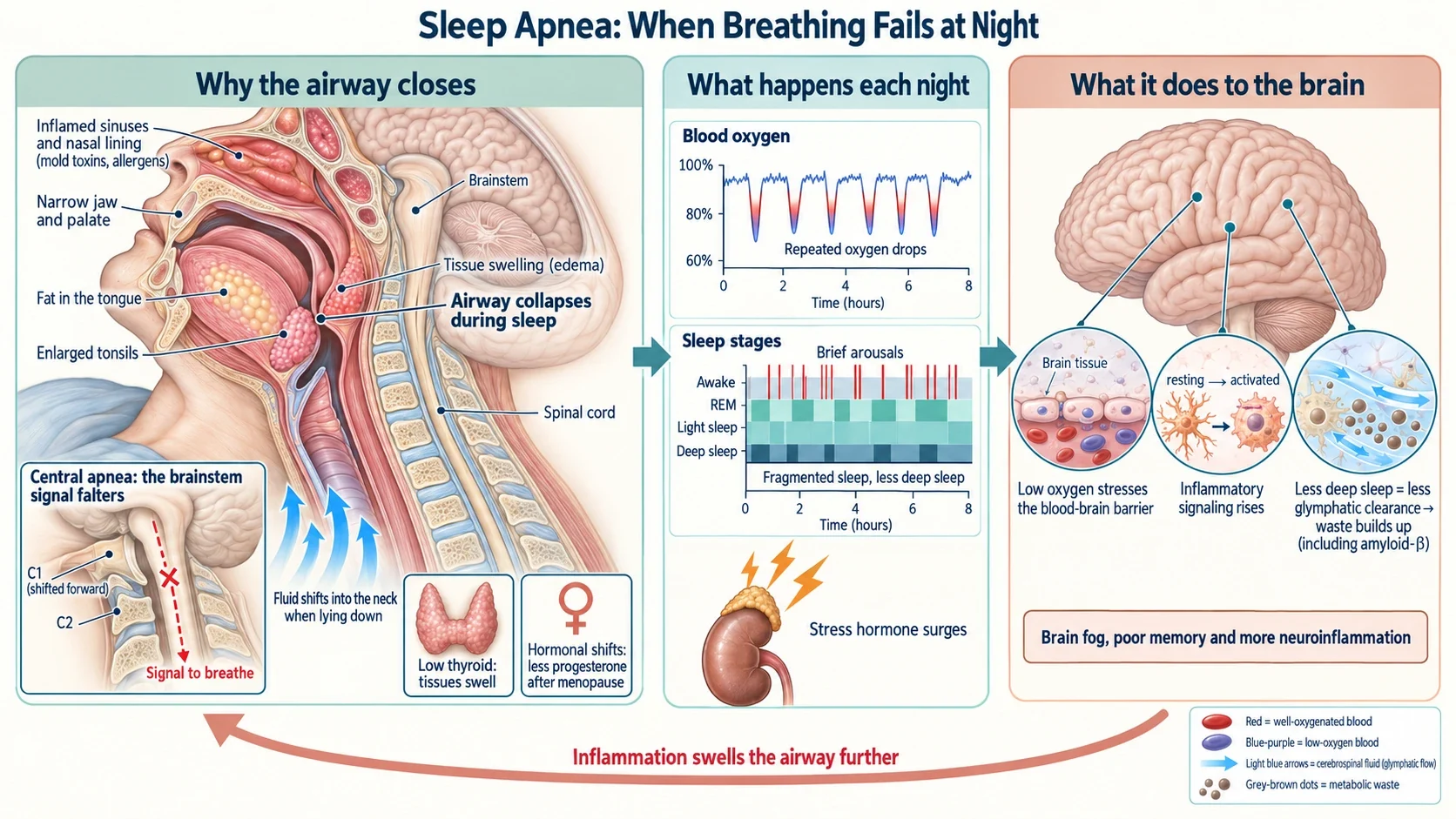
The loop looks like this: inflammation swells the airway → apnea → low oxygen and fragmented sleep → poor glymphatic clearance → toxic build-up and more inflammation in the brain. Loud snoring, waking unrefreshed, morning headaches, a dry mouth on waking or waking with a gasp are all worth noting, and a sleep study or overnight oximetry can show what is happening while you sleep.
Hypercoagulation and Neuronal Hypoxia: The Silent Starvation
Apnea is one way the brain runs short of oxygen. Clotting is another. Inflammation is inherently procoagulant. This is by evolutionary design — the coagulation cascade and the inflammatory cascade share common mediators and were originally part of the same host defense system (Esmon, 2005). But in chronic neuroinflammation, this relationship becomes pathological.
Pro-inflammatory cytokines — particularly IL-6, TNF-α, and IL-1β — upregulate tissue factor expression on monocytes and endothelial cells, activate platelets, increase fibrinogen production, suppress natural anticoagulant pathways (protein C, protein S, antithrombin III), and impair fibrinolysis by elevating plasminogen activator inhibitor-1 (PAI-1) (Levi & van der Poll, 2010). The net result is a hypercoagulable state characterized by increased fibrin deposition in the microvasculature — not necessarily large-vessel clotting, but a diffuse microvascular coagulopathy that impairs blood flow at the capillary level.
In the brain, this microvascular coagulopathy translates directly to neuronal hypoxia. Neurons are exquisitely oxygen-dependent — the brain consumes roughly 20% of the body’s oxygen despite comprising only 2% of its mass (Magistretti & Allaman, 2015). Under normal conditions, the astrocyte-neuron lactate shuttle is a vital partnership: astrocytes take up glucose, convert it to lactate via aerobic glycolysis, and shuttle it to neurons via monocarboxylate transporters (MCT1 and MCT4 on astrocytes, MCT2 on neurons) (Pellerin & Magistretti, 2012; Pierre & Pellerin, 2005). Neurons then convert lactate to pyruvate and feed it into mitochondrial oxidative phosphorylation — an elegant system that provides neurons with a preferred fuel source. However, in hypoxic conditions, this partnership breaks down. Neurons can no longer perform oxidative phosphorylation efficiently, so the lactate they receive cannot be metabolized. Simultaneously, astrocytes upregulate glycolysis in response to hypoxia, producing even more lactate. The result is lactate accumulation that overwhelms the astrocytic buffering capacity, drives local acidosis, impairs pH-sensitive enzymatic function, and paradoxically inhibits the very astrocytic glutamate reuptake (via EAAT2) that prevents excitotoxicity (Swanson et al., 1995). The neuron is simultaneously starved of usable energy and drowning in a substrate it can no longer process.
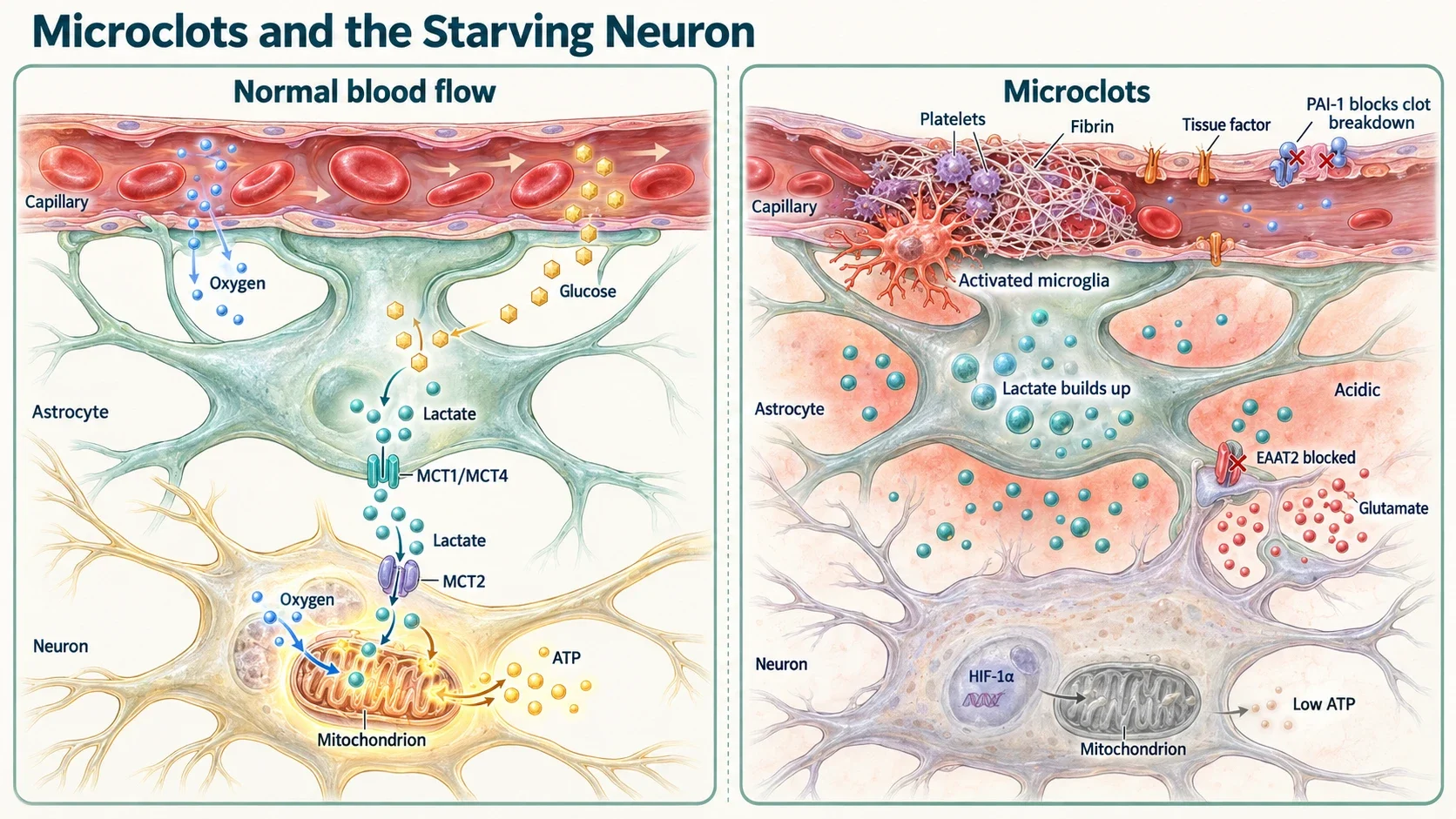
This is one of the underappreciated mechanisms behind brain fog. The client’s neurons are not just inflamed — they are hypoxic. And the hypoxia itself becomes another driver of inflammation, because HIF-1α (hypoxia-inducible factor) activation promotes NF-κB signaling, mast cell cytokine release, and VEGF-mediated vascular leak, further compromising BBB integrity (Cummins et al., 2006; Schoch et al., 2002; Sumbayev et al., 2012). Fibrin itself is directly neurotoxic — it activates microglia via CD11b/CD18 receptors and promotes demyelination, linking the coagulation cascade directly to the autoimmune targeting of myelin discussed earlier (Adams et al., 2007; Davalos et al., 2012; Ryu et al., 2015). In Alzheimer’s disease, the fibrin connection goes even deeper: fibrinogen interacts directly with amyloid-β, forming fibrin-amyloid complexes that are resistant to degradation and that promote sustained microglial activation and vascular inflammation. Research by Cortes-Canteli et al. (2010) and others has demonstrated that these abnormal fibrin deposits are found in amyloid-laden blood vessels, and that lowering fibrinogen reduced vascular amyloid and cognitive decline in animal models. Hypercoagulation is not a peripheral finding in neurodegeneration — it is woven into the pathology itself.
Clinically, hypercoagulation is often invisible on standard labs. A CBC and basic metabolic panel will not reveal it. It requires specific assessment — D-dimer, fibrinogen, thrombin-antithrombin complexes, PAI-1, and in some cases functional platelet testing — to identify. When present, addressing the procoagulant state is essential for restoring oxygen delivery to neural tissue. Without it, every other intervention is working against a brain that is being slowly starved.
Insulin Resistance: Metabolic Fire in the Brain
Insulin resistance is a neuroinflammatory condition as much as a metabolic one. And it is essential to understand that insulin resistance is not synonymous with type 1 or type 2 diabetes. It is a spectrum in which cellular glucose uptake and aerobic oxidative phosphorylation become progressively impaired — and by current estimates, the majority of the population exists somewhere on that spectrum. Any degree of insulin resistance means that cells, including neurons, are less efficient at producing ATP from glucose through their mitochondria. In the brain, which consumes roughly 20% of the body’s glucose supply, even modest impairments in insulin signaling have outsized consequences.
Chronic inflammation and toxicant exposure (particularly heavy metals and persistent organic pollutants) impair insulin receptor signaling in the brain. Cerebral insulin resistance is now so consistently associated with Alzheimer’s disease that many researchers refer to it as “type 3 diabetes.”
The mechanistic link centers on glycogen synthase kinase-3 beta (GSK-3β). Normally, insulin signaling keeps GSK-3β in check through the PI3K/Akt pathway. When insulin resistance develops, that brake weakens and GSK-3β stays overactive. The consequences go well beyond tau:
- Tau and amyloid. Overactive GSK-3β drives hyperphosphorylation of tau, the hallmark of neurofibrillary tangles, and promotes amyloid-β production.
- Cytokine balance. GSK-3 works as a switch in innate immune cells. When active, it favors NF-κB-driven inflammatory cytokines and suppresses CREB-dependent IL-10, a key anti-inflammatory cytokine. Blocking GSK-3 flips the balance toward IL-10 (Martin et al., 2005).
- Microglia. In microglia, GSK-3 promotes migration, IL-6 production and inducible nitric oxide synthase. GSK-3 inhibitors blunted these responses and protected neurons from inflammation-induced injury in hippocampal tissue (Yuskaitis & Jope, 2009).
- Antioxidant defense. In cell studies, GSK-3β tags Nrf2, the master switch for glutathione and antioxidant enzyme production, for destruction, independent of its usual Keap1 control (Rojo et al., 2012). An overactive GSK-3β mutes the very antioxidant response an inflamed brain needs.
- The blood-brain barrier. BBB tight junctions depend on Wnt/β-catenin signaling in brain endothelium (Liebner et al., 2008), and GSK-3β is part of the machinery that marks β-catenin for destruction. It is a reasonable inference, though less directly shown, that sustained GSK-3β activity weakens this barrier-maintenance program.
Put together, insulin resistance does more than starve neurons of fuel. Through GSK-3β, it pushes microglia toward inflammation, lowers anti-inflammatory tone, blunts antioxidant defense and may loosen the barrier. That is why GSK-3β keeps appearing where so many sections of this article meet.
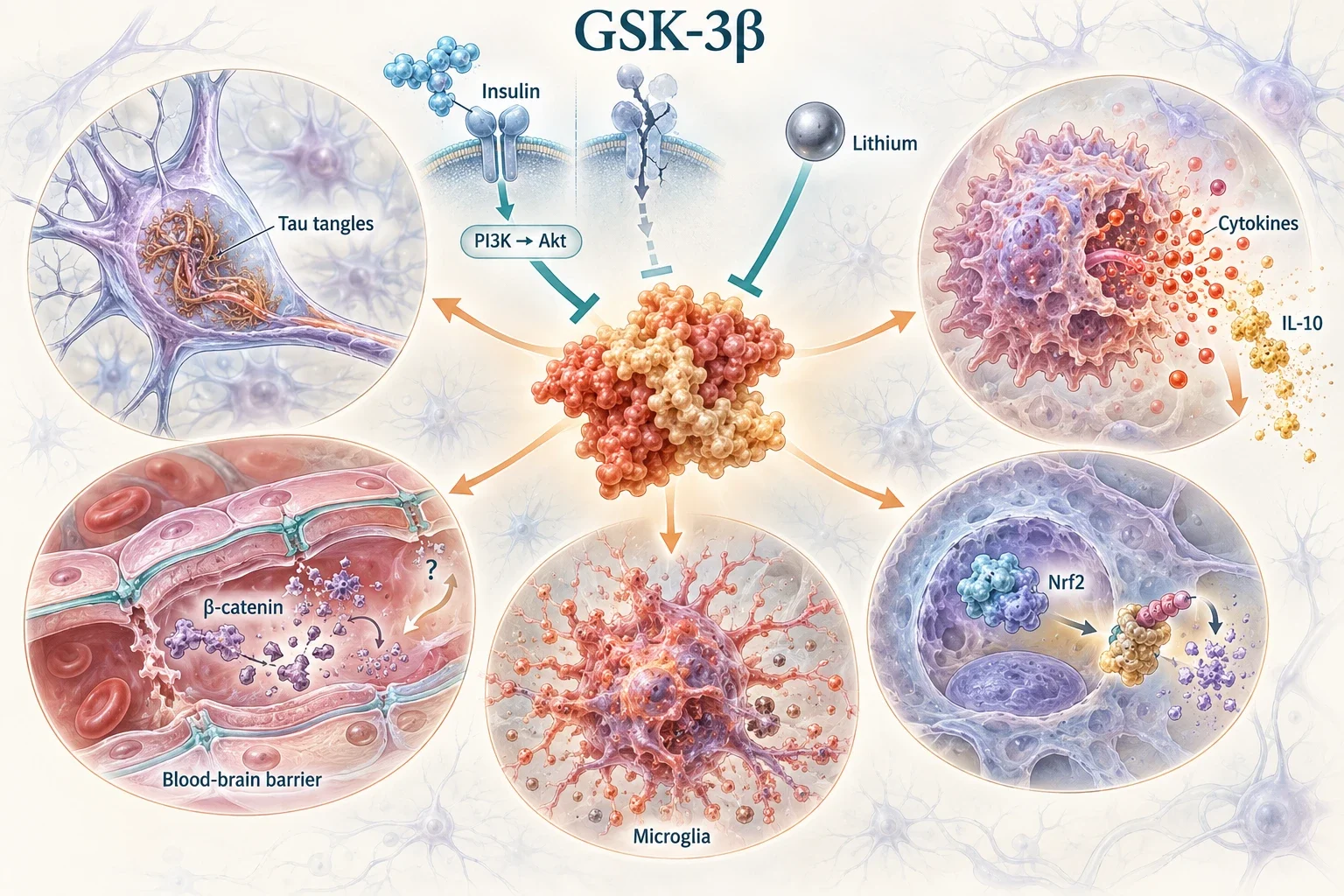
Lithium research has moved quickly, and it runs straight through GSK-3β. In 2025, Aron and colleagues at Harvard reported in Nature that of the metals they measured, lithium was the only one significantly reduced in the brains of people with mild cognitive impairment, the stage before Alzheimer’s. In Alzheimer’s brains, amyloid plaques trapped what lithium remained. In mice, cutting brain lithium by about half:
- increased amyloid-β deposits and phospho-tau
- shifted microglia into a pro-inflammatory state
- caused loss of synapses, axons and myelin
- sped up cognitive decline
These effects ran at least partly through activation of GSK-3β. In mouse models, lithium orotate, a lithium salt that binds amyloid less, prevented the changes and the memory loss (Aron et al., 2025). The finding reframes lithium from a psychiatric drug into a possible trace element the aging brain can run short of. It still needs independent replication.
Human trials are at an early stage. In the first randomized, placebo-controlled pilot trial of low-dose lithium carbonate in mild cognitive impairment (80 people over 2 years), none of the six primary outcomes reached statistical significance. Verbal memory did decline about half as fast on lithium, a signal researchers are now calling on larger trials to test (Gildengers et al., 2026). Together with population data linking higher drinking-water lithium to lower dementia rates (Kessing et al., 2017), the picture is suggestive. In my practice, lithium status belongs in the conversation. When mineral testing shows it is low, I use a very low-dose, over-the-counter form to restore it: a trace-mineral amount, far below the doses used in psychiatry.
Hormonal Dysregulation and Neural Autoimmunity
Neuroinflammation does not occur in a hormonal vacuum. Two patterns are particularly significant for autoimmunity in clinical practice:
Elevated prolactin from estrogenic states. Estrogen dominance — whether from impaired hepatic estrogen clearance, xenoestrogen exposure, or relative progesterone deficiency — stimulates lactotroph proliferation and prolactin secretion. Elevated prolactin is not benign neurologically. It is immunostimulatory: it promotes B-cell maturation, immunoglobulin production, and a Th2-skewed immune response that favors antibody-mediated autoimmunity. In the context of an already-inflamed brain with compromised barrier function, hyperprolactinemia can push the humoral immune system further toward autoantibody production — including the kinds of autoantibodies to brain and nervous system tissue that I see on testing.
Low dopamine tone. Dopamine is a prolactin-inhibiting factor (via D2 receptors on lactotrophs), so dopamine deficiency and hyperprolactinemia are mechanistically linked. Dopamine synthesis depends on iron and BH4 (cofactors for tyrosine hydroxylase), vitamin B6 (for the enzyme that turns L-DOPA into dopamine), zinc, magnesium, and adequate methylation, and copper is needed one step later, when dopamine beta-hydroxylase converts dopamine into noradrenaline. All of these are disrupted in the toxic, inflamed clients described throughout this article. Furthermore, dopamine itself is anti-inflammatory within the CNS, acting on D1 and D2 receptors on microglia to suppress inflammatory cytokine production.
Low dopamine contributes directly to the anhedonia and depression so common in these clients — the inability to experience pleasure, the loss of motivation, the flatness that is often misattributed to psychological causes when it is fundamentally neurochemical. But the clinical picture is not simply “more dopamine is better.” Dopamine in excess is itself neurotoxic. Its auto-oxidation generates reactive quinones, hydrogen peroxide, and superoxide — the same oxidative chemistry that destroys neuromelanin-containing neurons in Parkinson’s disease. Elevated dopamine states, as observed in certain presentations of autism spectrum disorder, carry their own neurotoxic burden. This is consistent with findings of elevated homovanillic acid (HVA) in some autistic individuals, reflecting increased dopaminergic turnover and oxidative stress. The goal is rarely simply to raise or lower dopamine — it is to restore the regulatory balance that allows dopamine to function as a signaling molecule without becoming a source of damage. As with every system discussed in this article, the principle is the same: it is dysregulation, not simply deficiency or excess, that drives disease.
In my view, the convergence of elevated prolactin and low dopamine creates a neuroimmune environment highly permissive to the immune system turning against the brain, what the medical literature calls autoimmune encephalopathy. On autoantibody testing, I often identify autoantibodies to myelin basic protein, gangliosides, tubulin, synapsin, dopamine receptors, NMDA receptors, and other neural targets. Each of these reflects a specific pattern of neural tissue damage and immune dysregulation — and each traces back to the layered insults described in this article. These are not idiopathic autoimmune findings. They are the predictable result of lost tolerance acting on a brain that has been damaged by toxins, infections, metals, and metabolic failure.
Thyroid: The Energy Dial Turned Down
A third hormonal pattern affects energy rather than autoimmunity. Thyroid hormone sets the pace of energy production in nearly every cell, and chronic inflammation turns it down. The thyroid gland releases mostly T4, a storage form. Cells activate it by converting it to T3 with enzymes called deiodinases. D1, mainly in the liver and kidneys, supplies much of the T3 in the blood. D2 activates T4 inside tissues, including the brain, where astrocytes convert it and pass T3 to neurons. D3 does the opposite: it inactivates thyroid hormone, turning T4 into reverse T3 (rT3) and T3 into inactive T2 (Gereben et al., 2008). All three deiodinases are selenium-dependent enzymes, with selenium built into their active site, so selenium status directly shapes how well T4 is activated. That is one more reason the mercury–selenium interaction described in the toxic metals section matters: mercury pulls selenium away from the enzymes that need it.
Under chronic inflammation and illness, this system shifts in a consistent direction: D1 activity falls, D3 rises, blood T3 drops and reverse T3 climbs, a pattern known as nonthyroidal illness syndrome (Boelen et al., 2011). Stress hormones push the same way: when people were given a glucocorticoid, T3 fell and reverse T3 rose within a day (Chopra et al., 1975). D2 is less straightforward. In the hypothalamus, inflammation actually increases D2, so the brain’s thyroid sensor reads “plenty of T3” and TSH does not rise to compensate (Boelen et al., 2011). The result can be low thyroid signaling in the tissues while TSH looks normal: the hypothalamus is reading its own local T3, not what the rest of the body is getting. In an inflamed body, TSH alone is not a good measure of thyroid status; a full thyroid panel, including free T3 and reverse T3, says far more. I explain the deiodinase pathway further in When Estrogen Steals the Show.
Low T3 matters because T3 is an energy signal. It drives mitochondrial biogenesis and respiration, and it increases the activity of the sodium-potassium pump (Na+/K+-ATPase), which keeps cells electrically charged (Mullur et al., 2014). The brain spends a large share of its energy running these pumps to reset neurons after every signal. With less T3, mitochondria make less ATP, the pumps slow, and both brain and body run at a lower setting: fatigue, feeling cold, slowed thinking and low mood. In the short term, this is an energy-saving adaptation to illness. Kept on for months or years, it becomes one more layer of the low-energy, danger-mode state described in the mitochondria section.
Membrane Integrity: Plasmalogens and Phosphatidylcholine
Underneath all of this sits the cell membrane. Neuronal membranes are extraordinarily rich in specialized lipids — particularly plasmalogens and phosphatidylcholine — and their integrity determines whether neurons function, communicate, and survive.
Plasmalogens are a unique class of ether phospholipids that make up as much as 20% of the body’s phospholipids, and the brain is especially rich in them (Braverman & Moser, 2012). They serve as endogenous antioxidants (their vinyl-ether bond scavenges reactive oxygen species), structural components of synaptic membranes, and facilitators of membrane fusion events critical for neurotransmitter release (Zoeller et al., 1999; Farooqui & Horrocks, 2001). Plasmalogen levels are reduced in Alzheimer’s disease (Han et al., 2001; Goodenowe et al., 2007), and lower levels have been reported in other neurological conditions. When oxidative stress from metals, mycotoxins, and chronic inflammation depletes plasmalogens faster than they can be synthesized, membrane fluidity decreases, synaptic signaling deteriorates, and neurons become increasingly vulnerable to excitotoxic and immune-mediated damage.
Dietary factors compound this problem significantly. The modern Western diet is disproportionately high in polyunsaturated fatty acids (PUFAs), particularly omega-6 linoleic acid from seed oils and processed foods (Blasbalg et al., 2011; Guyenet & Carlson, 2015). While PUFAs are often marketed as “heart healthy,” their molecular structure — multiple double bonds susceptible to oxidation — makes them highly vulnerable to lipid peroxidation, especially in the pro-oxidant environment of an inflamed body. When PUFAs in cell membranes undergo peroxidation, they generate toxic aldehyde byproducts including 4-hydroxynonenal (4-HNE) and malondialdehyde (MDA). These are not minor metabolites. 4-HNE is a potent electrophile that forms adducts with proteins, DNA, and lipids, directly damaging mitochondrial electron transport chain complexes and inactivating critical enzymes (Ayala et al., 2014). MDA crosslinks proteins and contributes to the formation of advanced lipid peroxidation end products. Together, these aldehydes are directly toxic to the mitochondrial inner membrane — where cardiolipin, the specialized phospholipid essential for electron transport chain function, resides (Paradies et al., 2014). When cardiolipin is oxidized and damaged by lipid peroxidation products, mitochondrial efficiency collapses, ROS generation increases, and the cell shifts further toward the danger signaling of the Cell Danger Response (CDR), described in the mitochondria section below. In one trial, lowering dietary linoleic acid reduced oxidized linoleic acid metabolites in the blood (Ramsden et al., 2012). A high-PUFA diet in a chronically inflamed client is not just unhelpful — it is actively providing the substrate for ongoing membrane and mitochondrial destruction.
Phosphatidylcholine (PC) is the most abundant phospholipid in cell membranes and is essential for membrane structure, cell signaling, and as a precursor for acetylcholine synthesis (van der Veen et al., 2017; Li & Vance, 2008). It is built mostly from dietary choline, with the liver making some through methylation (the PEMT pathway) (Vance, 2014). In clients with impaired methylation, toxic burden, and chronic inflammation, PC synthesis is compromised — which simultaneously impairs membrane integrity and the cholinergic signaling that is critical for the vagal anti-inflammatory pathway discussed earlier.
Supporting membrane health through plasmalogen and phosphatidylcholine repletion is therefore not a peripheral intervention — it is addressing the structural foundation upon which every other neurological function depends. Without intact membranes, neurotransmitter signaling fails, mitochondria lose their membrane potential, and the BBB cannot maintain its tight junctions. Membrane health is cellular health.
When Inflammation Becomes a Cell-Death Program
When chronic inflammation stays on long enough, the question is not only “how inflamed is the brain?” — it becomes “what programs are getting activated inside cells?” There are several regulated cell-death pathways that can sit downstream of oxidative stress, immune activation, and metabolic collapse. These aren’t theoretical. They are the biochemical endpoints that turn dysfunction into degeneration.
Ferroptosis, introduced in the neuromelanin section, is one of the most relevant here: an iron-dependent form of regulated cell death driven by runaway lipid peroxidation — meaning membrane damage becomes the final common pathway (Dixon et al., 2012). When oxidative stress, iron dysregulation, and fragile membranes stack together, ferroptosis becomes a very real candidate mechanism for decline, not just symptoms.
Necroptosis is another: a programmed form of inflammatory cell death that can be triggered by innate immune signaling and cytokine pathways, and it tends to amplify inflammation because it ends in membrane rupture and danger signaling (Yuan et al., 2019, Nat Rev Neurosci). Cuproptosis is emerging research, but clinically interesting given how often mitochondrial stress shows up in complex cases: copper inside cells can trigger a distinct regulated death pathway tied to mitochondrial metabolism (Tsvetkov et al., 2022). I mention these not to overwhelm, but to make the point clear: when the biology is stuck in threat, the cell can eventually choose an “exit strategy.” Our job is to remove the threat before it gets there.
Mitochondrial Dysfunction and the Cell Danger Response
Mitochondria are where many of these insults meet. Heavy metals inhibit electron transport chain complexes (Wang et al., 2004). Mycotoxins uncouple oxidative phosphorylation (Wei et al., 1985). Chronic infections increase metabolic demand while impairing energy production. Excitotoxic calcium influx collapses mitochondrial membrane potential. Hypercoagulation-driven hypoxia starves the very organelles that depend on oxygen to produce ATP.
When mitochondria fail, ATP production drops, reactive oxygen species generation increases, and the cell shifts toward glycolytic metabolism — which is itself pro-inflammatory (Kelly & O’Neill, 2015). Damaged mitochondria release mitochondrial DNA (mtDNA) and other damage-associated molecular patterns (DAMPs) that activate innate immune receptors including the NLRP3 inflammasome and cGAS-STING, further amplifying inflammation (Shimada et al., 2012; West et al., 2015). Mitochondrial dysfunction is therefore a driver of neuroinflammation, not only a consequence of it. Struggling mitochondria also leave NAD+ in short supply, which slows aldehyde clearance and lets those aldehydes damage mitochondria further, the loop described in the aldehyde section.
Dr. Robert Naviaux’s Cell Danger Response (CDR) model provides an essential framework for understanding why mitochondrial dysfunction persists even after the initial threat has been removed. The CDR describes an evolutionarily conserved metabolic response in which cells detect danger — whether from infection, toxicants, physical trauma, or psychological stress — and shift mitochondria from their primary role of energy production to a defensive signaling role (Naviaux, 2014). Cells begin releasing ATP — which, outside the cell, functions as a damage-associated molecular pattern (DAMP), one of the most potent danger signals in innate immunity. This extracellular ATP activates purinergic receptors (P2X7 in particular) on microglia, mast cells, and other immune cells, triggering NLRP3 inflammasome assembly and pro-inflammatory cytokine release (Ferrari et al., 1997; Di Virgilio et al., 2017). The mitochondria also release other purinergic signals that alter cellular metabolism and change gene expression to prioritize survival over normal function.
This is adaptive in the short term. But when the danger signals are chronic and layered — as they are in the clients described throughout this article, with ongoing mold exposure, persistent infections, accumulating metals, and unresolved gut dysfunction — the CDR does not resolve through its normal three stages (Naviaux, 2019). The cell remains locked in a defensive state. Mitochondria continue signaling danger rather than producing energy. The extracellular ATP that should resolve and allow healing instead perpetuates inflammation through P2X and P2Y purinergic receptor activation on immune and glial cells.
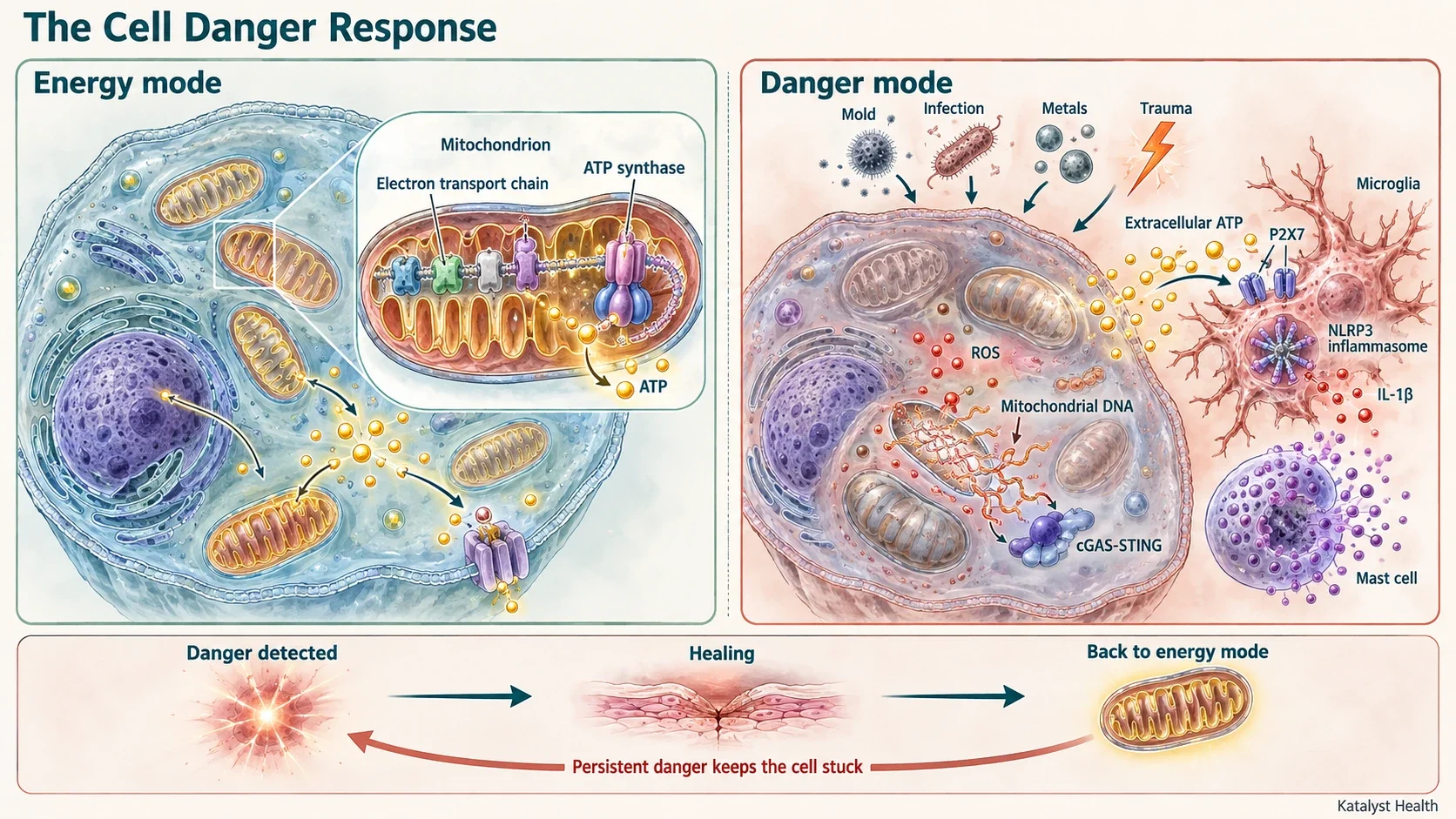
This is why so many chronically ill clients have the hallmarks of mitochondrial failure — profound fatigue, exercise intolerance, cognitive dysfunction, autonomic instability — without a primary genetic mitochondrial disease. Their mitochondria are not broken. They are responding to a persistent danger signal. The CDR model reframes the clinical challenge: it is not enough to support mitochondrial bioenergetics with cofactors and substrates, though that is necessary. The danger signals themselves must be resolved — the mold must be removed, metal burden reduced, the infections addressed, the gut healed, the barriers restored — before mitochondria will shift back from defensive mode to energy production.
Mitochondrial membranes are themselves rich in cardiolipin and plasmalogens, linking mitochondrial health directly to the membrane integrity discussion above. When oxidative stress depletes these specialized lipids, mitochondrial electron transport becomes less efficient, generating more ROS in a vicious cycle.
Any comprehensive approach must address both the upstream triggers that activated the CDR and the bioenergetic support that mitochondria need to resume normal function once safety is restored.
Thiamine (B1): When the Fuel Cannot Be Burned
Mitochondria cannot burn fuel without thiamine (vitamin B1). Its active form, thiamine pyrophosphate (TPP), is the cofactor for a short list of enzymes that sit at the entry points of energy metabolism (Marrs & Lonsdale, 2021):
- Pyruvate dehydrogenase converts pyruvate, the product of glucose breakdown, into acetyl-CoA so that it can enter the Krebs cycle. When this step slows, more pyruvate is diverted to lactate.
- Alpha-ketoglutarate dehydrogenase, a rate-limiting step of the Krebs cycle itself, and one that also shapes how glutamate is handled.
- Branched-chain keto acid dehydrogenase, needed to burn the branched-chain amino acids.
- Transketolase, in the pentose phosphate pathway, which supplies the NADPH that recycles glutathione and the building blocks for DNA and RNA.
- 2-hydroxyacyl-CoA lyase, which helps break down certain fats in the peroxisomes.
Magnesium is what switches thiamine on. Thiamine from food is inactive until the enzyme thiamine pyrophosphokinase attaches two phosphates to it, and that step requires magnesium and ATP. The TPP-dependent enzymes then need magnesium again to hold TPP in place. So a person can take in enough thiamine and still be functionally deficient if magnesium is low, and magnesium depletion has been shown to worsen thiamine deficiency (Dyckner et al., 1985). Given how often magnesium runs low in the clients described in this article, this matters a great deal.
When thiamine runs short, glucose cannot be fully burned, lactate builds up, and the tissues with the highest energy demand, the brain, the nerves and the heart, are affected first. In the brain, thiamine deficiency produces three things this article has covered at length: oxidative stress, glutamate excitotoxicity and inflammation (Hazell & Butterworth, 2009).
The extreme form is beriberi, and it comes in two patterns (Whitfield et al., 2018). Wet beriberi affects the heart and circulation: a fast heart rate, fluid retention and swelling (edema), and in severe cases heart failure. Dry beriberi affects the peripheral nerves, starting with the longest ones, so it begins in the feet and legs: weakness, numbness and tingling, loss of balance and position sense, and sometimes burning pain. What I see in practice is not overt beriberi but functional deficiency: enough thiamine to avoid the textbook disease, but not enough to run energy metabolism well. In that milder form, the same systems are involved, and it can show up as a racing heart on standing, swelling, or nerve symptoms.
The gut is affected too. Elliot Overton, one of the leading voices on thiamine, and his colleagues have reviewed the evidence that thiamine insufficiency can show up mainly as digestive symptoms, without the classic signs of beriberi: slowed gut motility and disturbed stomach acid, pancreatic enzyme output and gut barrier function. They propose mechanisms involving local thiamine metabolism in the gut and thiamine’s role in acetylcholine signaling in the gut’s own nervous system (Overton et al., 2025). That links thiamine straight back to the low stomach acid, low enzymes and slow transit described in the ammonia section, and to the cholinergic pathway in the vagus section.
Thiamine deficiency can also cause dysautonomia in its own right. Dr. Derrick Lonsdale described beriberi as the prototype of autonomic dysfunction and argued that marginal deficiency, driven by diets high in refined carbohydrates, lies behind much unexplained dysautonomia (Lonsdale, 2009). In one clinic, 6% of people with postural orthostatic tachycardia syndrome (POTS) had low vitamin B1, and one of those four improved significantly once it was replaced (Blitshteyn, 2017). That is a small subset, but an easy one to miss. Fibromyalgia may belong on the same list: in a small case series, three women with fibromyalgia had an appreciable improvement in pain and fatigue with high-dose thiamine, and the authors proposed that many fibromyalgia symptoms reflect a mild, functional thiamine deficiency (Costantini et al., 2013). Three cases cannot prove that, but it fits the pattern.
Dysautonomia has many possible causes, and thiamine is only one of them. It deserves a fuller treatment than I can give it here, and I plan to cover it in a future post.
Methylation: The Quiet Bottleneck
Methylation is a quieter bottleneck that many of these pathways share. S-adenosylmethionine (SAMe) is required for neurotransmitter synthesis and degradation (COMT-mediated catecholamine metabolism), glutathione production (the primary intracellular antioxidant and detoxification molecule), phosphatidylcholine synthesis (cell membrane integrity), myelin maintenance, and epigenetic regulation of gene expression.
Polymorphisms in MTHFR, MTR, MTRR, BHMT, and CBS — combined with nutrient deficiencies in B12, folate, B6, and riboflavin — can reduce methylation capacity. In the context of heavy metal exposure (which depletes glutathione), chronic infection (which increases oxidative demand), and neuroinflammation (which requires robust neurotransmitter turnover), impaired methylation becomes a rate-limiting bottleneck that prevents recovery even when other interventions are in place.
Methylation also ties together threads from earlier in this article. HNMT, the enzyme that clears histamine inside cells, and COMT, which clears dopamine and the other catecholamines, both draw on the same SAMe pool, so a heavy histamine load and a strained methylation cycle compete for the same resource (see the histamine section). And because the methylation cycle feeds transsulfuration, the pathway that supplies cysteine for glutathione, a bottleneck here weakens the antioxidant defenses that metals, aldehydes and mycotoxins are already draining.
Folate Receptor Autoantibodies: When Folate Can’t Reach the Brain
Folate has to actually reach the brain, and much of it gets there through the choroid plexus, where cerebrospinal fluid is made. The blood vessels of the choroid plexus are leaky by design, so folate reaches the choroid plexus easily; the real gate is the layer of epithelial cells above them, sealed by tight junctions. Those cells pick up active folate (5-MTHF) with folate receptor alpha (FRα) on their blood-facing side, ferry it across inside small vesicles, and release it into the cerebrospinal fluid packaged in exosomes (Grapp et al., 2013). Autoantibodies against this receptor (FRAAs) come in two types:
- Blocking antibodies stop folate from binding and being transported.
- Binding antibodies attach elsewhere on the receptor and may disrupt it through an immune or inflammatory response (Sequeira et al., 2013).
Either type can lead to cerebral folate deficiency: low folate in the brain even when blood folate looks normal.
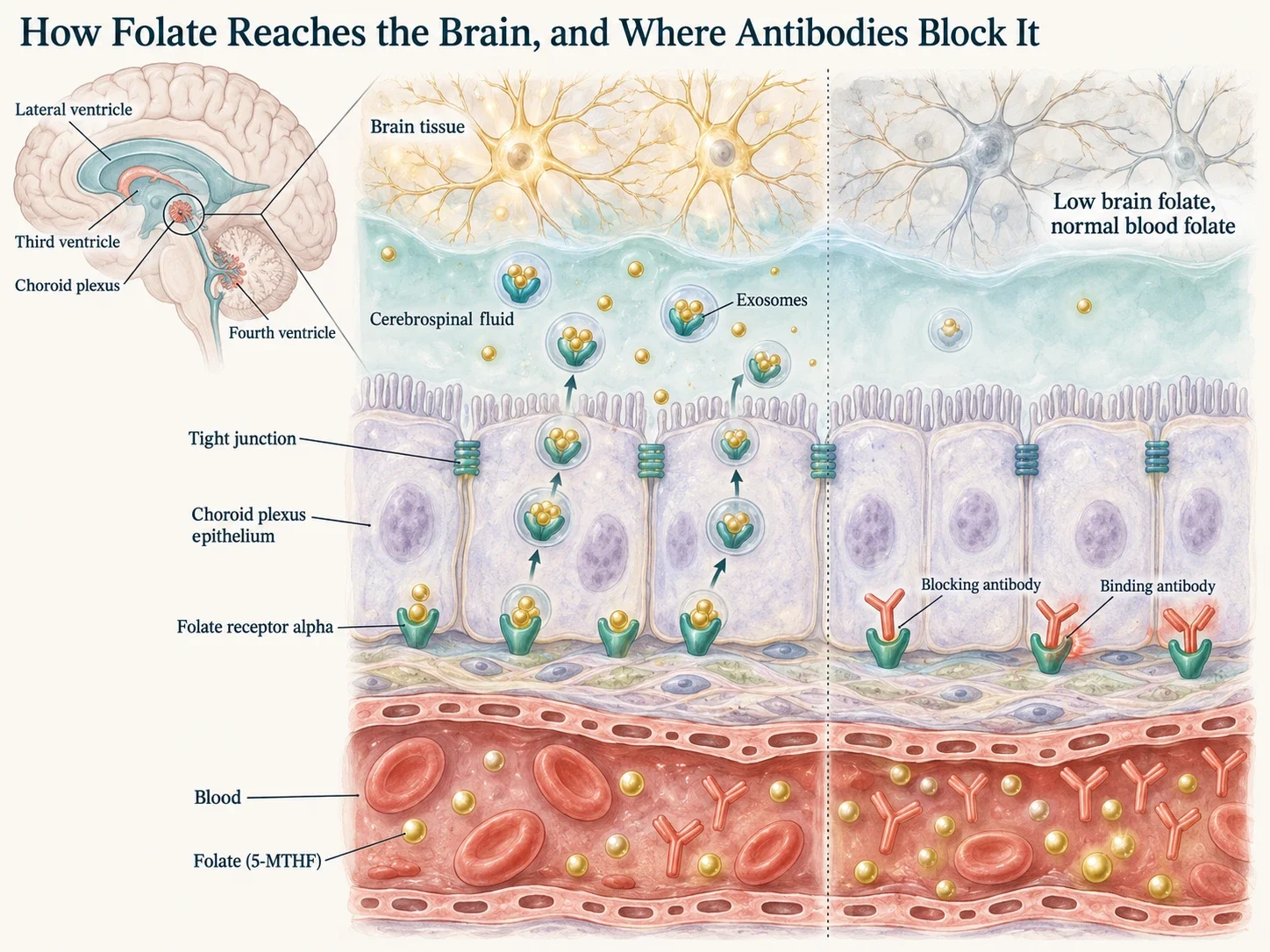
This connects directly to the people this article is about:
- Autism. FRAAs were first linked to cerebral folate deficiency and autism, and this remains the best-studied group. In 227 children with autism, 39.2% had binding FRAAs, 3.5% had blocking FRAAs and 13.2% had soluble folate receptor, a free-floating form of the receptor shed into the blood (Stefanyshyn et al., 2025). In a randomized, double-blind, placebo-controlled trial in 48 children with autism and language impairment, folinic acid improved verbal communication more than placebo, and the effect was largest in FRAA-positive children (Frye et al., 2018). FRAAs also appear to run in autism families: maternal and child blocking titers correlate, and titers were higher in families with more than one affected child (Frye et al., 2025).
- PANS/PANDAS. In 47 children and teens with PANS/PANDAS, 63.8% had blocking and/or binding FRAAs, and more severe tics tracked with higher binding titers (Wells et al., 2024).
- Tick-borne infection. In 68 patients with confirmed vector-borne infections, 61.8% were FRAA-positive. A soluble folate receptor was found in about 12%, and seven of those eight patients had evidence of Borrelia infection. This hints at a link between spirochetal infection and folate receptor autoimmunity (Wells et al., 2026).
Cerebral folate deficiency can look a lot like neuroinflammation: cognitive dysfunction, mood instability, headaches, seizures, and speech or neurodevelopmental symptoms. In the vector-borne cohort, symptoms alone did not distinguish FRAA-positive from FRAA-negative patients, so this has to be tested rather than guessed. For the right clients I recommend folate receptor antibody testing (FRAT). Folate receptor autoimmunity is one more example of the theme running through this article: once tolerance is lost, the immune system can starve the brain of what it needs, not only attack it.
Immune Regulation: The Thread That Ties It All Together
If there is a single principle that unifies every section of this article, it is this: immune regulation is the master variable. Not immune suppression, not immune stimulation — immune regulation.
Regulatory T cells (Tregs), tolerogenic dendritic cells, MSH-mediated melanocortin signaling, vagal cholinergic tone, androgen tone (testosterone), and adequate cortisol rhythms all participate in keeping the immune system calibrated. When any of these regulatory mechanisms are disrupted — by gut barrier breakdown, mycotoxin exposure, chronic infection, hormonal imbalance, or metabolic dysfunction — the immune system shifts from a state of tolerance to a state of reactivity (Sakaguchi et al., 2008). And once tolerance is lost, the immune system begins attacking the very tissues it is meant to protect.
Androgen tone matters for immune regulation. Testosterone is not just about libido and muscle — it interfaces with immune signaling, and low testosterone commonly travels with a higher inflammatory burden (Trigunaite et al., 2015; Mohamad et al., 2019). In a chronically stressed or toxic client, inflammation can suppress the gonadal axis (Maggio et al., 2005), and the resulting drop in testosterone removes another layer of immune restraint. Clinically, this can show up as more cytokine-driven symptoms, more mast cell volatility, and less resilience to the same triggers that a better-regulated system would normally buffer.
Vitamin D signaling is another quiet regulator of immune tolerance. Immune cells can convert 25(OH)D into active 1,25(OH)2D locally, and that signaling tends to support a more regulatory immune tone (Baeke et al., 2010; Jeffery et al., 2012). But in chronic inflammatory environments, the body can shift vitamin D metabolism — upregulating enzymes that inactivate active vitamin D (including 24-hydroxylase / CYP24A1) and downshifting receptor signaling in tissues. In people with cystic fibrosis colonized by Aspergillus, for example, the mold toxin gliotoxin lowered vitamin D receptor levels in airway cells and macrophages (Coughlan et al., 2012). The result can be lower “bioactive” vitamin D signaling at the immune level, even when the serum numbers look deceptively fine. In a prolonged danger state — what Naviaux would frame as a CDR-like physiology — this is one more way tolerance can erode and autoimmunity can gain traction.
Vitamin D is not only a calming signal, though. It is also part of the immune system’s front-line weaponry. When macrophages detect a microbe through their Toll-like receptors, they ramp up both the vitamin D receptor and the enzyme that activates vitamin D, and active vitamin D then switches on cathelicidin (LL-37), an antimicrobial peptide that kills bacteria directly. In the study that mapped this pathway, the response faltered in serum from people with low vitamin D and recovered when vitamin D was added back (Liu et al., 2006). Low vitamin D, in other words, is not just a loss of regulation; it is a loss of the immune system’s capacity to destroy pathogenic organisms. Weaker killing plus weaker restraint is exactly the combination that lets chronic infections persist and keeps the immune system activated.
Vitamin A is just as critical for tolerance. Retinoic acid, its active form, is made by specialized dendritic cells in the gut lining and steers naïve T cells toward becoming regulatory T cells rather than inflammatory Th17 cells (Coombes et al., 2007; Mucida et al., 2007). This is one of the main ways the gut teaches the immune system to tolerate food and its own microbes, which ties immune regulation directly back to the gut barrier. Vitamins A and D also share a receptor partner (RXR) and work best in balance, which is why I consider them together rather than pushing one in isolation.
That loss of tolerance is also why the autoantibodies I see on testing panels are so diverse. They are not targeting one tissue for one reason. They are the expression of a fundamentally dysregulated immune system encountering neural antigens that have been exposed by barrier breakdown, cellular damage, and molecular mimicry. Each antibody tells us something about where the damage is, but the root cause is almost always the loss of immune tolerance that allowed the attack in the first place.
Restoring immune regulation means restoring the barriers (gut, sinuses, BBB, and other mucosal surfaces) that prevent inappropriate antigen exposure. It means addressing the toxic burden (mold, including mold colonizing the sinuses, metals, infections) that drives chronic immune activation. It means supporting the hormonal and metabolic milieu (MSH, cortisol rhythms, thyroid signaling, insulin sensitivity, dopamine) that the regulatory machinery depends on. And it means supporting the cellular and mitochondrial health that allows immune cells to function properly rather than defaulting to inflammatory programs.
There is no shortcut. But when we address these layers systematically, tolerance can be rebuilt, autoantibodies can diminish, and the brain can begin to heal.
Bringing It Together
Neuroinflammation is not one problem with one cause. It is the brain’s expression of total body burden, layered on top of genetic susceptibility: the sum of gut barrier breakdown and microbial imbalance, the metabolic exhaust of ammonia and aldehydes, oral and sinus dysbiosis, structural strain on the vagus nerve, sleep apnea, toxic and biotoxic exposures, chronic infections, immune dysregulation, metabolic failure, hormonal disruption, membrane degradation, and impaired detoxification capacity. These systems do not operate in silos. They amplify each other through shared mechanisms: BBB breakdown, microglial activation, mitochondrial damage, excitotoxicity, loss of tolerance, and the erosion of neural-immune communication.
This is why single-target interventions so often fail these clients. Treating the infection without addressing the metals, clearing the mold without restoring the gut, supporting neurotransmitters without fixing mineral status and membrane integrity — these partial approaches cannot interrupt a cycle that operates across every system simultaneously.
The path forward requires identifying which layers are active in each individual and addressing them in the right sequence. Which tests matter depends on the case; testing should be guided by history, symptoms, and a clinician’s judgment. Gut, hormone, HTMA, organic acids, mycotoxin panels, heavy metal assessments, comprehensive metabolic panels, and advanced autoimmune testing and inflammatory markers can provide the map. But understanding the interconnected biology is what allows us to read that map correctly.
The brain is rarely inflamed in isolation. To heal it, we must understand everything that is speaking to it.
Selected references and further reading
Key studies and reviews behind the mechanisms described above. Many of the patterns in this article also come from clinical experience shared across practitioners, which doesn't always have a single paper behind it.
Gut, mouth and the blood-brain barrier
- Braniste V, Al-Asmakh M, Kowal C, Anuar F, Abbaspour A, Tóth M, et al. The gut microbiota influences blood-brain barrier permeability in mice. Sci Transl Med. 2014;6(263):263ra158. PubMed 25411471
- Dominy SS, Lynch C, Ermini F, Benedyk M, Marczyk A, Konradi A, et al. Porphyromonas gingivalis in Alzheimer's disease brains: Evidence for disease causation and treatment with small-molecule inhibitors. Sci Adv. 2019;5(1):eaau3333. PubMed 30746447
- Johansson ME, Phillipson M, Petersson J, Velcich A, Holm L, Hansson GC. The inner of the two Muc2 mucin-dependent mucus layers in colon is devoid of bacteria. Proc Natl Acad Sci U S A. 2008;105(39):15064-15069. PubMed 18806221
- Vanuytsel T, van Wanrooy S, Vanheel H, Vanormelingen C, Verschueren S, Houben E, et al. Psychological stress and corticotropin-releasing hormone increase intestinal permeability in humans by a mast cell-dependent mechanism. Gut. 2014;63(8):1293-1299. PubMed 24153250
- Mesnage R, Teixeira M, Mandrioli D, Falcioni L, Ducarmon QR, Zwittink RD, et al. Use of shotgun metagenomics and metabolomics to evaluate the impact of glyphosate or Roundup MON 52276 on the gut microbiota and serum metabolome of Sprague-Dawley rats. Environ Health Perspect. 2021;129(1):17005. PubMed 33502259
- Yano JM, Yu K, Donaldson GP, Shastri GG, Ann P, Ma L, et al. Indigenous bacteria from the gut microbiota regulate host serotonin biosynthesis. Cell. 2015;161(2):264-276. PubMed 25860609
- Schwarcz R, Bruno JP, Muchowski PJ, Wu HQ. Kynurenines in the mammalian brain: when physiology meets pathology. Nat Rev Neurosci. 2012;13(7):465-477. PubMed 22678511
- Drago S, El Asmar R, Di Pierro M, Grazia Clemente M, Tripathi A, Sapone A, et al. Gliadin, zonulin and gut permeability: effects on celiac and non-celiac intestinal mucosa and intestinal cell lines. Scand J Gastroenterol. 2006;41(4):408-419. PubMed 16635908
- Hadjivassiliou M, Sanders DS, Grünewald RA, Woodroofe N, Boscolo S, Aeschlimann D. Gluten sensitivity: from gut to brain. Lancet Neurol. 2010;9(3):318-330. PubMed 20170845
- Hadjivassiliou M, Grünewald R, Sharrack B, Sanders D, Lobo A, Williamson C, et al. Gluten ataxia in perspective: epidemiology, genetic susceptibility and clinical characteristics. Brain. 2003;126(Pt 3):685-691. PubMed 12566288
- Hadjivassiliou M, Aeschlimann P, Strigun A, Sanders DS, Woodroofe N, Aeschlimann D. Autoantibodies in gluten ataxia recognize a novel neuronal transglutaminase. Ann Neurol. 2008;64(3):332-343. PubMed 18825674
- Alaedini A, Okamoto H, Briani C, Wollenberg K, Shill HA, Bushara KO, et al. Immune cross-reactivity in celiac disease: anti-gliadin antibodies bind to neuronal synapsin I. J Immunol. 2007;178(10):6590-6595. PubMed 17475890
- Hadjivassiliou M, Boscolo S, Davies-Jones GA, Grünewald RA, Not T, Sanders DS, et al. The humoral response in the pathogenesis of gluten ataxia. Neurology. 2002;58(8):1221-1226. PubMed 11971090
- Vojdani A, Kharrazian D, Mukherjee PS. The prevalence of antibodies against wheat and milk proteins in blood donors and their contribution to neuroimmune reactivities. Nutrients. 2013;6(1):15-36. PubMed 24451306
- Alaedini A, Green PH, Sander HW, Hays AP, Gamboa ET, Fasano A, et al. Ganglioside reactive antibodies in the neuropathy associated with celiac disease. J Neuroimmunol. 2002;127(1-2):145-148. PubMed 12044986
Ammonia and aldehydes
- Chen CH, Ferreira JC, Gross ER, Mochly-Rosen D. Targeting aldehyde dehydrogenase 2: new therapeutic opportunities. Physiol Rev. 2014;94(1):1-34. PubMed 24382882
- Salaspuro MP. Acetaldehyde, microbes, and cancer of the digestive tract. Crit Rev Clin Lab Sci. 2003;40(2):183-208. PubMed 12755455
- Uittamo J, Siikala E, Kaihovaara P, Salaspuro M, Rautemaa R. Chronic candidosis and oral cancer in APECED-patients: production of carcinogenic acetaldehyde from glucose and ethanol by Candida albicans. Int J Cancer. 2009;124(3):754-756. PubMed 18975379
- Yuan J, Chen C, Cui J, Lu J, Yan C, Wei X, et al. Fatty liver disease caused by high-alcohol-producing Klebsiella pneumoniae. Cell Metab. 2019;30(4):675-688.e7. PubMed 31543403
- Rabbani N, Thornalley PJ. Dicarbonyl stress in cell and tissue dysfunction contributing to ageing and disease. Biochem Biophys Res Commun. 2015;458(2):221-226. PubMed 25666945
- Goldstein DS, Sullivan P, Holmes C, Miller GW, Alter S, Strong R, et al. Determinants of buildup of the toxic dopamine metabolite DOPAL in Parkinson’s disease. J Neurochem. 2013;126(5):591-603. PubMed 23786406
- Maintz L, Novak N. Histamine and histamine intolerance. Am J Clin Nutr. 2007;85(5):1185-1196. PubMed 17490952
- Kurnik-Łucka M, Panula P, Bugajski A, Gil K. Salsolinol: an unintelligible and double-faced molecule—lessons learned from in vivo and in vitro experiments. Neurotox Res. 2018;33(2):485-514. PubMed 29063289
- Barcik W, Pugin B, Westermann P, Perez NR, Ferstl R, Wawrzyniak M, et al. Histamine-secreting microbes are increased in the gut of adult asthma patients. J Allergy Clin Immunol. 2016;138(5):1491-1494.e7. PubMed 27576125
- Sánchez-Pérez S, Comas-Basté O, Duelo A, Veciana-Nogués MT, Berlanga M, Latorre-Moratalla ML, Vidal-Carou MC. Intestinal dysbiosis in patients with histamine intolerance. Nutrients. 2022;14(9):1774. PubMed 35565742
- Voropaeva EA. [Resistance to antibiotics and histamine production at the bacteria, isolated from the stomatopharynx of the children with bronchial asthma]. Antibiot Khimioter. 2002;47(3):8-13. Article in Russian. PubMed 16127900
- Sakurai A, Yamaguchi N, Sonoyama K. Cell wall polysaccharides of Candida albicans induce mast cell degranulation in the gut. Biosci Microbiota Food Health. 2012;31(3):67-70. PubMed 24936351
- Settle J, Dempsey T. Psychiatric manifestations of MCAS with Dr. Janet Settle. Mast Cell Matters (The POTScast), episode 178. December 5, 2023. Episode and transcript
- Windey K, De Preter V, Verbeke K. Relevance of protein fermentation to gut health. Mol Nutr Food Res. 2012;56(1):184-196. PubMed 22121108
- Davila AM, Blachier F, Gotteland M, Andriamihaja M, Benetti PH, Sanz Y, Tomé D. Intestinal luminal nitrogen metabolism: role of the gut microbiota and consequences for the host. Pharmacol Res. 2013;68(1):95-107. PubMed 23183532
- Vylkova S, Carman AJ, Danhof HA, Collette JR, Zhou H, Lorenz MC. The fungal pathogen Candida albicans autoinduces hyphal morphogenesis by raising extracellular pH. mBio. 2011;2(3):e00055-11. PubMed 21586647
- Albrecht J, Norenberg MD. Glutamine: a Trojan horse in ammonia neurotoxicity. Hepatology. 2006;44(4):788-794. PubMed 17006913
- Chan H, Hazell AS, Desjardins P, Butterworth RF. Effects of ammonia on glutamate transporter (GLAST) protein and mRNA in cultured rat cortical astrocytes. Neurochem Int. 2000;37(2-3):243-248. PubMed 10812209
- Rodrigo R, Cauli O, Gomez-Pinedo U, Agusti A, Hernandez-Rabaza V, Garcia-Verdugo JM, Felipo V. Hyperammonemia induces neuroinflammation that contributes to cognitive impairment in rats with hepatic encephalopathy. Gastroenterology. 2010;139(2):675-684. PubMed 20303348
- Pugin B, Barcik W, Westermann P, Heider A, Wawrzyniak M, Hellings P, et al. A wide diversity of bacteria from the human gut produces and degrades biogenic amines. Microb Ecol Health Dis. 2017;28(1):1353881. PubMed 28959180
- Vince AJ, Burridge SM. Ammonia production by intestinal bacteria: the effects of lactose, lactulose and glucose. J Med Microbiol. 1980;13(2):177-191. PubMed 7381915
- Zhu L, Baker SS, Gill C, Liu W, Alkhouri R, Baker RD, Gill SR. Characterization of gut microbiomes in nonalcoholic steatohepatitis (NASH) patients: a connection between endogenous alcohol and NASH. Hepatology. 2013;57(2):601-609. PubMed 23055155
- Doorn JA, Hurley TD, Petersen DR. Inhibition of human mitochondrial aldehyde dehydrogenase by 4-hydroxynon-2-enal and 4-oxonon-2-enal. Chem Res Toxicol. 2006;19(1):102-110. PubMed 16411662
- Woolley J, Allen R, Wessely S. Alcohol use in chronic fatigue syndrome. J Psychosom Res. 2004;56(2):203-206. PubMed 15016579
- Eastin EF, Tiwari A, Quach TC, Bonilla HF, Miglis MG, Yang PC, Geng LN. New alcohol sensitivity in patients with post-acute sequelae of SARS-CoV-2 (PASC): a case series. Cureus. 2023;15(12):e51286. PubMed 38288178
- Reddy MGS, Kakodkar P, Nayanar G. Capacity of Candida species to produce acetaldehyde at various concentrations of alcohol. J Oral Maxillofac Pathol. 2022;26(2):161-165. PubMed 35968173
- Tillonen J, Homann N, Rautio M, Jousimies-Somer H, Salaspuro M. Role of yeasts in the salivary acetaldehyde production from ethanol among risk groups for ethanol-associated oral cavity cancer. Alcohol Clin Exp Res. 1999;23(8):1409-1415. PubMed 10470985
- Ghosh S, Navarathna DH, Roberts DD, Cooper JT, Atkin AL, Petro TM, Nickerson KW. Arginine-induced germ tube formation in Candida albicans is essential for escape from murine macrophage line RAW 264.7. Infect Immun. 2009;77(4):1596-1605. PubMed 19188358
- Vylkova S, Lorenz MC. Modulation of phagosomal pH by Candida albicans promotes hyphal morphogenesis and requires Stp2p, a regulator of amino acid transport. PLoS Pathog. 2014;10(3):e1003995. PubMed 24626429
Infections, viruses and COVID-19
- Bjornevik K, Cortese M, Healy BC, Kuhle J, Mina MJ, Leng Y, et al. Longitudinal analysis reveals high prevalence of Epstein-Barr virus associated with multiple sclerosis. Science. 2022;375(6578):296-301. PubMed 35025605
- Lanz TV, Brewer RC, Ho PP, Moon JS, Jude KM, Fernandez D, et al. Clonally expanded B cells in multiple sclerosis bind EBV EBNA1 and GlialCAM. Nature. 2022;603(7900):321-327. PubMed 35073561
- Challoner PB, Smith KT, Parker JD, MacLeod DL, Coulter SN, Rose TM, et al. Plaque-associated expression of human herpesvirus 6 in multiple sclerosis. Proc Natl Acad Sci U S A. 1995;92(16):7440-7444. PubMed 7638210
- Matschke J, Lütgehetmann M, Hagel C, Sperhake JP, Schröder AS, Edler C, et al. Neuropathology of patients with COVID-19 in Germany: a post-mortem case series. Lancet Neurol. 2020;19(11):919-929. PubMed 33031735
- Davis HE, McCorkell L, Vogel JM, Topol EJ. Long COVID: major findings, mechanisms and recommendations. Nat Rev Microbiol. 2023;21(3):133-146. PubMed 36639608
- Pretorius E, Vlok M, Venter C, Bezuidenhout JA, Laubscher GJ, Steenkamp J, et al. Persistent clotting protein pathology in Long COVID/Post-Acute Sequelae of COVID-19 (PASC) is accompanied by increased levels of antiplasmin. Cardiovasc Diabetol. 2021;20(1):172. PubMed 34425843
- Peluso MJ, Ryder D, Flavell RR, Wang Y, Levi J, LaFranchi BH, et al. Tissue-based T cell activation and viral RNA persist for up to 2 years after SARS-CoV-2 infection. Sci Transl Med. 2024;16(754):eadk3295. PubMed 38959327
- Patterson BK, Francisco EB, Yogendra R, Long E, Pise A, Rodrigues H, et al. Persistence of SARS CoV-2 S1 Protein in CD16+ Monocytes in Post-Acute Sequelae of COVID-19 (PASC) up to 15 Months Post-Infection. Front Immunol. 2021;12:746021. PubMed 35082777
- Cantuti-Castelvetri L, Ojha R, Pedro LD, Djannatian M, Franz J, Kuivanen S, et al. Neuropilin-1 facilitates SARS-CoV-2 cell entry and infectivity. Science. 2020;370(6518):856-860. PubMed 33082293
- Zhao Y, Kuang M, Li J, Zhu L, Jia Z, Guo X, et al. SARS-CoV-2 spike protein interacts with and activates TLR4. Cell Res. 2021;31(7):818-820. PubMed 33742149
- Rhea EM, Logsdon AF, Hansen KM, Williams LM, Reed MJ, Baumann KK, et al. The S1 protein of SARS-CoV-2 crosses the blood-brain barrier in mice. Nat Neurosci. 2021;24(3):368-378. PubMed 33328624
- Buzhdygan TP, DeOre BJ, Baldwin-Leclair A, Bullock TA, McGary HM, Khan JA, et al. The SARS-CoV-2 spike protein alters barrier function in 2D static and 3D microfluidic in-vitro models of the human blood-brain barrier. Neurobiol Dis. 2020;146:105131. PubMed 33053430
- Khaddaj-Mallat R, Aldib N, Bernard M, Paquette AS, Ferreira A, Lecordier S, et al. SARS-CoV-2 deregulates the vascular and immune functions of brain pericytes via Spike protein. Neurobiol Dis. 2021;161:105561. PubMed 34780863
- Albornoz EA, Amarilla AA, Modhiran N, Parker S, Li XX, Wijesundara DK, et al. SARS-CoV-2 drives NLRP3 inflammasome activation in human microglia through spike protein. Mol Psychiatry. 2023;28(7):2878-2893. PubMed 36316366
- Tsilioni I, Theoharides TC. Recombinant SARS-CoV-2 spike protein stimulates secretion of chymase, tryptase, and IL-1β from human mast cells, augmented by IL-33. Int J Mol Sci. 2023;24(11):9487. PubMed 37298438
- Rong Z, Mai H, Ebert G, Kapoor S, Puelles VG, Czogalla J, et al. Persistence of spike protein at the skull-meninges-brain axis may contribute to the neurological sequelae of COVID-19. Cell Host Microbe. 2024;32(12):2112-2130.e10. PubMed 39615487
- Ryu JK, Yan Z, Montano M, Sozmen EG, Dixit K, Suryawanshi RK, et al. Fibrin drives thromboinflammation and neuropathology in COVID-19. Nature. 2024;633(8031):905-913. PubMed 39198643
- Vojdani A, Vojdani E, Kharrazian D. Reaction of human monoclonal antibodies to SARS-CoV-2 proteins with tissue antigens: implications for autoimmune diseases. Front Immunol. 2020;11:617089. PubMed 33584709
- Cheng MH, Zhang S, Porritt RA, Noval Rivas M, Paschold L, Willscher E, et al. Superantigenic character of an insert unique to SARS-CoV-2 spike supported by skewed TCR repertoire in patients with hyperinflammation. Proc Natl Acad Sci U S A. 2020;117(41):25254-25262. PubMed 32989130
- Dotan A, Muller S, Kanduc D, David P, Halpert G, Shoenfeld Y. The SARS-CoV-2 as an instrumental trigger of autoimmunity. Autoimmun Rev. 2021;20(4):102792. PubMed 33610751
- Wang EY, Mao T, Klein J, Dai Y, Huck JD, Jaycox JR, et al. Diverse functional autoantibodies in patients with COVID-19. Nature. 2021;595(7866):283-288. PubMed 34010947
- Zuo Y, Estes SK, Ali RA, Gandhi AA, Yalavarthi S, Shi H, et al. Prothrombotic autoantibodies in serum from patients hospitalized with COVID-19. Sci Transl Med. 2020;12(570):eabd3876. PubMed 33139519
- Emmenegger M, Emmenegger V, Shambat SM, Scheier TC, Gomez-Mejia A, et al. Antiphospholipid antibodies are enriched post-acute COVID-19 but do not modulate the thrombotic risk. Clin Immunol. 2023;257:109845. PubMed 37995947
Toxic metals and pesticides
- Bressler JP, Goldstein GW. Mechanisms of lead neurotoxicity. Biochem Pharmacol. 1991;41(4):479-484. PubMed 1671748
- Rondeau V, Jacqmin-Gadda H, Commenges D, Helmer C, Dartigues JF. Aluminum and silica in drinking water and the risk of Alzheimer's disease or cognitive decline: findings from 15-year follow-up of the PAQUID cohort. Am J Epidemiol. 2009;169(4):489-496. PubMed 19064650
- Tanner CM, Kamel F, Ross GW, Hoppin JA, Goldman SM, Korell M, et al. Rotenone, paraquat, and Parkinson's disease. Environ Health Perspect. 2011;119(6):866-872. PubMed 21269927
- Ralston NVC, Raymond LJ. Mercury’s neurotoxicity is characterized by its disruption of selenium biochemistry. Biochim Biophys Acta Gen Subj. 2018;1862(11):2405-2416. PubMed 29753115
- Pollard KM, Cauvi DM, Toomey CB, Hultman P, Kono DH. Mercury-induced inflammation and autoimmunity. Biochim Biophys Acta Gen Subj. 2019;1863(12):129299. PubMed 30742953
- Choong G, Liu Y, Templeton DM. Interplay of calcium and cadmium in mediating cadmium toxicity. Chem Biol Interact. 2014;211:54-65. PubMed 24463198
- Kazantzis G. Cadmium, osteoporosis and calcium metabolism. Biometals. 2004;17(5):493-498. PubMed 15688852
Neuromelanin, iron and Parkinson’s
- Dexter DT, Carayon A, Vidailhet M, Ruberg M, Agid F, Agid Y, et al. Decreased ferritin levels in brain in Parkinson’s disease. J Neurochem. 1990;55(1):16-20. PubMed 2355217
- Ayton S, Lei P, Duce JA, Wong BX, Sedjahtera A, Adlard PA, et al. Ceruloplasmin dysfunction and therapeutic potential for Parkinson disease. Ann Neurol. 2013;73(4):554-559. PubMed 23424051
- Wilms H, Rosenstiel P, Sievers J, Deuschl G, Zecca L, Lucius R. Activation of microglia by human neuromelanin is NF-kappaB dependent and involves p38 mitogen-activated protein kinase: implications for Parkinson’s disease. FASEB J. 2003;17(3):500-502. PubMed 12631585
- Braak H, Del Tredici K, Rüb U, de Vos RA, Jansen Steur EN, Braak E. Staging of brain pathology related to sporadic Parkinson’s disease. Neurobiol Aging. 2003;24(2):197-211. PubMed 12498954
- Kim S, Kwon SH, Kam TI, Panicker N, Karuppagounder SS, Lee S, et al. Transneuronal propagation of pathologic α-synuclein from the gut to the brain models Parkinson’s disease. Neuron. 2019;103(4):627-641.e7. PubMed 31255487
Copper and mineral balance
- Valko M, Morris H, Cronin MT. Metals, toxicity and oxidative stress. Curr Med Chem. 2005;12(10):1161-1208. PubMed 15892631
- Zimbrean P, Seniów J. Cognitive and psychiatric symptoms in Wilson disease. Handb Clin Neurol. 2017;142:121-140. PubMed 28433097
- Squitti R, Bressi F, Pasqualetti P, Bonomini C, Ghidoni R, Binetti G, et al. Longitudinal prognostic value of serum “free” copper in patients with Alzheimer disease. Neurology. 2009;72(1):50-55. PubMed 19122030
- Mehta SW, Eikum R. Effect of estrogen on serum and tissue levels of copper and zinc. Adv Exp Med Biol. 1989;258:155-162. PubMed 2626984
- Crayton JW, Walsh WJ. Elevated serum copper levels in women with a history of post-partum depression. J Trace Elem Med Biol. 2007;21(1):17-21. PubMed 17317521
- Paoletti P, Ascher P, Neyton J. High-affinity zinc inhibition of NMDA NR1-NR2A receptors. J Neurosci. 1997;17(15):5711-5725. PubMed 9221770
- Orrenius S, Zhivotovsky B, Nicotera P. Regulation of cell death: the calcium-apoptosis link. Nat Rev Mol Cell Biol. 2003;4(7):552-565. PubMed 12838338
- Kerr DS, Campbell LW, Thibault O, Landfield PW. Hippocampal glucocorticoid receptor activation enhances voltage-dependent Ca2+ conductances: relevance to brain aging. Proc Natl Acad Sci U S A. 1992;89(18):8527-8531. PubMed 1528857
- Tintut Y, Patel J, Parhami F, Demer LL. Tumor necrosis factor-alpha promotes in vitro calcification of vascular cells via the cAMP pathway. Circulation. 2000;102(21):2636-2642. PubMed 11085968
- Demer LL, Tintut Y. Vascular calcification: pathobiology of a multifaceted disease. Circulation. 2008;117(22):2938-2948. PubMed 18519861
- Ohsawa I, Ishikawa M, Takahashi K, Watanabe M, Nishimaki K, Yamagata K, et al. Hydrogen acts as a therapeutic antioxidant by selectively reducing cytotoxic oxygen radicals. Nat Med. 2007;13(6):688-694. PubMed 17486089
Electromagnetic fields
- Pall ML. Electromagnetic fields act via activation of voltage-gated calcium channels to produce beneficial or adverse effects. J Cell Mol Med. 2013;17(8):958-965. PubMed 23802593
- Pall ML. Wi-Fi is an important threat to human health. Environ Res. 2018;164:405-416. PubMed 29573716
Brain immune signaling, microglia and sleep
- Dantzer R, O'Connor JC, Freund GG, Johnson RW, Kelley KW. From inflammation to sickness and depression: when the immune system subjugates the brain. Nat Rev Neurosci. 2008;9(1):46-56. PubMed 18073775
- Stone TW, Perkins MN. Quinolinic acid: a potent endogenous excitant at amino acid receptors in CNS. Eur J Pharmacol. 1981;72(4):411-412. PubMed 6268428
- Nowak L, Bregestovski P, Ascher P, Herbet A, Prochiantz A. Magnesium gates glutamate-activated channels in mouse central neurones. Nature. 1984;307(5950):462-465. PubMed 6320006
- Perry VH, Holmes C. Microglial priming in neurodegenerative disease. Nat Rev Neurol. 2014;10(4):217-224. PubMed 24638131
- Hong S, Beja-Glasser VF, Nfonoyim BM, Frouin A, Li S, Ramakrishnan S, et al. Complement and microglia mediate early synapse loss in Alzheimer mouse models. Science. 2016;352(6286):712-716. PubMed 27033548
- Tracey KJ. The inflammatory reflex. Nature. 2002;420(6917):853-859. PubMed 12490958
- Miller GE, Cohen S, Ritchey AK. Chronic psychological stress and the regulation of pro-inflammatory cytokines: a glucocorticoid-resistance model. Health Psychol. 2002;21(6):531-541. PubMed 12433005
- Xie L, Kang H, Xu Q, Chen MJ, Liao Y, Thiyagarajan M, et al. Sleep drives metabolite clearance from the adult brain. Science. 2013;342(6156):373-377. PubMed 24136970
- Louveau A, Smirnov I, Keyes TJ, Eccles JD, Rouhani SJ, Peske JD, et al. Structural and functional features of central nervous system lymphatic vessels. Nature. 2015;523(7560):337-341. PubMed 26030524
- Reiter RJ, Mayo JC, Tan DX, Sainz RM, Alatorre-Jimenez M, Qin L. Melatonin as an antioxidant: under promises but over delivers. J Pineal Res. 2016;61(3):253-278. PubMed 27500468
- Henderson FC Sr, Austin C, Benzel E, Bolognese P, Ellenbogen R, Francomano CA, et al. Neurological and spinal manifestations of the Ehlers-Danlos syndromes. Am J Med Genet C Semin Med Genet. 2017;175(1):195-211. PubMed 28220607
- Seneviratne SL, Maitland A, Afrin L. Mast cell disorders in Ehlers-Danlos syndrome. Am J Med Genet C Semin Med Genet. 2017;175(1):226-236. PubMed 28261938
- Monaco A, Choi D, Uzun S, Maitland A, Riley B. Association of mast-cell-related conditions with hypermobile syndromes: a review of the literature. Immunol Res. 2022;70(4):419-431. PubMed 35449490
- Valdueza JM, von Münster T, Hoffman O, Schreiber S, Einhäupl KM. Postural dependency of the cerebral venous outflow. Lancet. 2000;355(9199):200-201. PubMed 10675123
Clotting, metabolism and mitochondria
- Levi M, van der Poll T. Inflammation and coagulation. Crit Care Med. 2010;38(2 Suppl):S26-34. PubMed 20083910
- Davalos D, Ryu JK, Merlini M, Baeten KM, Le Moan N, Petersen MA, et al. Fibrinogen-induced perivascular microglial clustering is required for the development of axonal damage in neuroinflammation. Nat Commun. 2012;3:1227. PubMed 23187627
- Cortes-Canteli M, Paul J, Norris EH, Bronstein R, Ahn HJ, Zamolodchikov D, et al. Fibrinogen and beta-amyloid association alters thrombosis and fibrinolysis: a possible contributing factor to Alzheimer's disease. Neuron. 2010;66(5):695-709. PubMed 20547128
- Talbot K, Wang HY, Kazi H, Han LY, Bakshi KP, Stucky A, et al. Demonstrated brain insulin resistance in Alzheimer's disease patients is associated with IGF-1 resistance, IRS-1 dysregulation, and cognitive decline. J Clin Invest. 2012;122(4):1316-1338. PubMed 22476197
- Han X, Holtzman DM, McKeel DW Jr. Plasmalogen deficiency in early Alzheimer's disease subjects and in animal models: molecular characterization using electrospray ionization mass spectrometry. J Neurochem. 2001;77(4):1168-1180. PubMed 11359882
- Dixon SJ, Lemberg KM, Lamprecht MR, Skouta R, Zaitsev EM, Gleason CE, et al. Ferroptosis: an iron-dependent form of nonapoptotic cell death. Cell. 2012;149(5):1060-1072. PubMed 22632970
- Tsvetkov P, Coy S, Petrova B, Dreishpoon M, Verma A, Abdusamad M, et al. Copper induces cell death by targeting lipoylated TCA cycle proteins. Science. 2022;375(6586):1254-1261. PubMed 35298263
- West AP, Khoury-Hanold W, Staron M, Tal MC, Pineda CM, Lang SM, et al. Mitochondrial DNA stress primes the antiviral innate immune response. Nature. 2015;520(7548):553-557. PubMed 25642965
- Naviaux RK. Metabolic features of the cell danger response. Mitochondrion. 2014;16:7-17. PubMed 23981537
- Hazell AS, Butterworth RF. Update of cell damage mechanisms in thiamine deficiency: focus on oxidative stress, excitotoxicity and inflammation. Alcohol Alcohol. 2009;44(2):141-147. PubMed 19151161
- Whitfield KC, Bourassa MW, Adamolekun B, Bergeron G, Bettendorff L, Brown KH, et al. Thiamine deficiency disorders: diagnosis, prevalence, and a roadmap for global control programs. Ann N Y Acad Sci. 2018;1430(1):3-43. PubMed 30151974
- Lonsdale D. Dysautonomia, a heuristic approach to a revised model for etiology of disease. Evid Based Complement Alternat Med. 2009;6(1):3-10. PubMed 18955227
- Blitshteyn S. Vitamin B1 deficiency in patients with postural tachycardia syndrome (POTS). Neurol Res. 2017;39(8):685-688. PubMed 28531358
- Dyckner T, Ek B, Nyhlin H, Wester PO. Aggravation of thiamine deficiency by magnesium depletion. A case report. Acta Med Scand. 1985;218(1):129-131. PubMed 4050546
- Marrs C, Lonsdale D. Hiding in plain sight: modern thiamine deficiency. Cells. 2021;10(10):2595. PubMed 34685573
- Overton E, Emelyanova A, Bunik VI. Thiamine, gastrointestinal beriberi and acetylcholine signaling. Front Nutr. 2025;12:1541054. PubMed 40271433
- Costantini A, Pala MI, Tundo S, Matteucci P. High-dose thiamine improves the symptoms of fibromyalgia. BMJ Case Rep. 2013;2013:bcr2013009019. PubMed 23696141
MSH and barrier defense
- Cutuli M, Cristiani S, Lipton JM, Catania A. Antimicrobial effects of alpha-MSH peptides. J Leukoc Biol. 2000;67(2):233-239. PubMed 10670585
- Catania A, Cutuli M, Garofalo L, Carlin A, Airaghi L, Barcellini W, et al. The neuropeptide alpha-MSH in host defense. Ann N Y Acad Sci. 2000;917:227-231. PubMed 11268348
- Rauch I, Holzmeister S, Kofler B. Anti-Candida activity of alpha-melanocyte-stimulating hormone (alpha-MSH) peptides. J Leukoc Biol. 2009;85(3):371-372. PubMed 19092131
- DiTulio M, Navarro-Torres CA. Clearance of multiple antibiotic-resistant coagulase-negative staphylococci is selectively associated with higher circulating α-melanocyte stimulating hormone in patients evaluated for chronic inflammatory response syndrome. Front Endocrinol (Lausanne). 2026;17:1728408. PubMed 42077435
Vitamins D and A
- Liu PT, Stenger S, Li H, Wenzel L, Tan BH, Krutzik SR, et al. Toll-like receptor triggering of a vitamin D-mediated human antimicrobial response. Science. 2006;311(5768):1770-1773. PubMed 16497887
- Coombes JL, Siddiqui KR, Arancibia-Cárcamo CV, Hall J, Sun CM, Belkaid Y, Powrie F. A functionally specialized population of mucosal CD103+ DCs induces Foxp3+ regulatory T cells via a TGF-beta and retinoic acid-dependent mechanism. J Exp Med. 2007;204(8):1757-1764. PubMed 17620361
- Mucida D, Park Y, Kim G, Turovskaya O, Scott I, Kronenberg M, Cheroutre H. Reciprocal TH17 and regulatory T cell differentiation mediated by retinoic acid. Science. 2007;317(5835):256-260. PubMed 17569825
Genetics, infection and Alzheimer’s
- Montagne A, Nation DA, Sagare AP, Barisano G, Sweeney MD, Chakhoyan A, et al. APOE4 leads to blood-brain barrier dysfunction predicting cognitive decline. Nature. 2020;581(7806):71-76. PubMed 32376954
- Bell RD, Winkler EA, Singh I, Sagare AP, Deane R, Wu Z, et al. Apolipoprotein E controls cerebrovascular integrity via cyclophilin A. Nature. 2012;485(7399):512-516. PubMed 22622580
- Armulik A, Genové G, Mäe M, Nisancioglu MH, Wallgard E, Niaudet C, et al. Pericytes regulate the blood-brain barrier. Nature. 2010;468(7323):557-561. PubMed 20944627
- Daneman R, Zhou L, Kebede AA, Barres BA. Pericytes are required for blood-brain barrier integrity during embryogenesis. Nature. 2010;468(7323):562-566. PubMed 20944625
- Miklossy J. Alzheimer’s disease - a neurospirochetosis. Analysis of the evidence following Koch’s and Hill’s criteria. J Neuroinflammation. 2011;8:90. PubMed 21816039
- Horowitz R. Improving biomarkers of inflammation including phosphorylated tau in a patient with chronic Lyme disease/post-treatment Lyme disease syndrome using dapsone combination therapy: a case study and literature review. J Alzheimers Dis Rep. 2026;10:25424823261445434. doi:10.1177/25424823261445434
Bartonella
- Bush JC, Robveille C, Maggi RG, Breitschwerdt EB. Neurobartonelloses: emerging from obscurity! Parasit Vectors. 2024;17(1):416. PubMed 39369199
- Breitschwerdt EB, Greenberg R, Maggi RG, Mozayeni BR, Lewis A, Bradley JM. Bartonella henselae bloodstream infection in a boy with pediatric acute-onset neuropsychiatric syndrome. J Cent Nerv Syst Dis. 2019;11:1179573519832014. PubMed 30911227
- Delaney S, Robveille C, Maggi RG, Lashnits E, Kingston E, Liedig C, et al. Bartonella species bacteremia in association with adult psychosis. Front Psychiatry. 2024;15:1388442. PubMed 38911703
- Kumadaki K, Suzuki N, Tatematsu K, Doi Y, Tsukamoto K. Comparison of biological activities of BafA family autotransporters within Bartonella species derived from cats and rodents. Infect Immun. 2023;91(3):e0018622. PubMed 36744895
GSK-3
- Martin M, Rehani K, Jope RS, Michalek SM. Toll-like receptor-mediated cytokine production is differentially regulated by glycogen synthase kinase 3. Nat Immunol. 2005;6(8):777-784. PubMed 16007092
- Yuskaitis CJ, Jope RS. Glycogen synthase kinase-3 regulates microglial migration, inflammation, and inflammation-induced neurotoxicity. Cell Signal. 2009;21(2):264-273. PubMed 19007880
- Rojo AI, Medina-Campos ON, Rada P, Zúñiga-Toalá A, López-Gazcón A, Espada S, et al. Signaling pathways activated by the phytochemical nordihydroguaiaretic acid contribute to a Keap1-independent regulation of Nrf2 stability: role of glycogen synthase kinase-3. Free Radic Biol Med. 2012;52(2):473-487. PubMed 22142471
- Liebner S, Corada M, Bangsow T, Babbage J, Taddei A, Czupalla CJ, et al. Wnt/beta-catenin signaling controls development of the blood-brain barrier. J Cell Biol. 2008;183(3):409-417. PubMed 18955553
Folate receptor autoimmunity
- Sequeira JM, Ramaekers VT, Quadros EV. The diagnostic utility of folate receptor autoantibodies in blood. Clin Chem Lab Med. 2013;51(3):545-554. PubMed 23314538
- Wells L, O’Hara N, Frye RE, Hullavard N, Smith E. Folate receptor alpha autoantibodies in the pediatric acute-onset neuropsychiatric syndrome (PANS) and pediatric autoimmune neuropsychiatric disorders associated with streptococcal infections (PANDAS) population. J Pers Med. 2024;14(2):166. PubMed 38392599
- Wells L, Hinchey M, Frye RE, Morgan A. Folate receptor alpha autoantibodies in vector-borne disease populations. Diseases. 2026;14(6):202. PubMed 42346294
- Frye RE, Cohen IL, Sequeira JM, Hill Z, Espinoza A, Brown WT, et al. Transgenerational effects and heritability of folate receptor alpha autoantibodies in autism spectrum disorder. Int J Mol Sci. 2025;26(17):8293. PubMed 40943215
- Stefanyshyn V, Stetsyuk R, Hrebeniuk O, Ayoub G, Fishchuk L, Rossokha Z, et al. Analysis of the association between the SLC19A1 genetic variant (rs1051266) and autism spectrum disorders, cerebral folate deficiency, and clinical and laboratory parameters. J Mol Neurosci. 2025;75(2):42. PubMed 40156756
- Frye RE, Slattery J, Delhey L, Furgerson B, Strickland T, Tippett M, et al. Folinic acid improves verbal communication in children with autism and language impairment: a randomized double-blind placebo-controlled trial. Mol Psychiatry. 2018;23(2):247-256. PubMed 27752075
- Grapp M, Wrede A, Schweizer M, Hüwel S, Galla HJ, Snaidero N, et al. Choroid plexus transcytosis and exosome shuttling deliver folate into brain parenchyma. Nat Commun. 2013;4:2123. PubMed 23828504
Lithium
- Aron L, Ngian ZK, Qiu C, Choi J, Liang M, Drake DM, et al. Lithium deficiency and the onset of Alzheimer’s disease. Nature. 2025;645(8081):712-721. PubMed 40770094
- Gildengers AG, Ibrahim TS, Anderson SJ, Emanuel JE, Santini T, Diaz JL, et al. Low-dose lithium for mild cognitive impairment: a pilot randomized clinical trial. JAMA Neurol. 2026;83(4):310-319. PubMed 41770546
- Kessing LV, Gerds TA, Knudsen NN, Jørgensen LF, Kristiansen SM, Voutchkova D, et al. Association of Lithium in Drinking Water With the Incidence of Dementia. JAMA Psychiatry. 2017;74(10):1005-1010. PubMed 28832877
Macrophage and microglial states
- Rath M, Müller I, Kropf P, Closs EI, Munder M. Metabolism via arginase or nitric oxide synthase: two competing arginine pathways in macrophages. Front Immunol. 2014;5:532. PubMed 25386178
- Ransohoff RM. A polarizing question: do M1 and M2 microglia exist? Nat Neurosci. 2016;19(8):987-991. PubMed 27459405
- Igarashi K, Kashiwagi K. Use of polyamine metabolites as markers for stroke and renal failure. Methods Mol Biol. 2011;720:395-408. PubMed 21318888
- Park MH, Igarashi K. Polyamines and their metabolites as diagnostic markers of human diseases. Biomol Ther (Seoul). 2013;21(1):1-9. PubMed 24009852
Traumatic brain injury
- Ramlackhansingh AF, Brooks DJ, Greenwood RJ, Bose SK, Turkheimer FE, Kinnunen KM, et al. Inflammation after trauma: microglial activation and traumatic brain injury. Ann Neurol. 2011;70(3):374-383. PubMed 21710619
- Johnson VE, Stewart JE, Begbie FD, Trojanowski JQ, Smith DH, Stewart W. Inflammation and white matter degeneration persist for years after a single traumatic brain injury. Brain. 2013;136(Pt 1):28-42. PubMed 23365092
- Loane DJ, Kumar A, Stoica BA, Cabatbat R, Faden AI. Progressive neurodegeneration after experimental brain trauma: association with chronic microglial activation. J Neuropathol Exp Neurol. 2014;73(1):14-29. PubMed 24335533
- Ji Y, Morel Y, Tran AQ, Lipinski MM, Sarkar C, Jones JW. Development and evaluation of a liquid chromatography-tandem mass spectrometry method for simultaneous measurement of toxic aldehydes from brain tissue. J Chromatogr B Analyt Technol Biomed Life Sci. 2024;1242:124208. PubMed 38880056
- Race NS, Uchida K, Burcham PC, Shi R. Multimodal toxicity of acrolein and associated therapeutic strategies in central nervous system trauma and disease. Annu Rev Biomed Eng. 2026;28(1):107-133. PubMed 41563857
Arginine and nitric oxide
- Schulman SP, Becker LC, Kass DA, Champion HC, Terrin ML, Forman S, et al. L-arginine therapy in acute myocardial infarction: the Vascular Interaction With Age in Myocardial Infarction (VINTAGE MI) randomized clinical trial. JAMA. 2006;295(1):58-64. PubMed 16391217
- Lundberg JO, Weitzberg E, Gladwin MT. The nitrate-nitrite-nitric oxide pathway in physiology and therapeutics. Nat Rev Drug Discov. 2008;7(2):156-167. PubMed 18167491
- Kapil V, Haydar SM, Pearl V, Lundberg JO, Weitzberg E, Ahluwalia A. Physiological role for nitrate-reducing oral bacteria in blood pressure control. Free Radic Biol Med. 2013;55:93-100. PubMed 23183324
- Förstermann U, Münzel T. Endothelial nitric oxide synthase in vascular disease: from marvel to menace. Circulation. 2006;113(13):1708-1714. PubMed 16585403
- Kuzkaya N, Weissmann N, Harrison DG, Dikalov S. Interactions of peroxynitrite, tetrahydrobiopterin, ascorbic acid, and thiols: implications for uncoupling endothelial nitric-oxide synthase. J Biol Chem. 2003;278(25):22546-22554. PubMed 12692136
Sinuses and the olfactory route
- Jafari A, de Lima Xavier L, Bernstein JD, Simonyan K, Bleier BS. Association of sinonasal inflammation with functional brain connectivity. JAMA Otolaryngol Head Neck Surg. 2021;147(6):534-543. PubMed 33830194
- Islam Z, Harkema JR, Pestka JJ. Satratoxin G from the black mold Stachybotrys chartarum evokes olfactory sensory neuron loss and inflammation in the murine nose and brain. Environ Health Perspect. 2006;114(7):1099-1107. PubMed 16835065
- Soudry Y, Lemogne C, Malinvaud D, Consoli SM, Bonfils P. Olfactory system and emotion: common substrates. Eur Ann Otorhinolaryngol Head Neck Dis. 2011;128(1):18-23. PubMed 21227767
- Brewer JH, Thrasher JD, Hooper D. Chronic illness associated with mold and mycotoxins: is naso-sinus fungal biofilm the culprit? Toxins (Basel). 2013;6(1):66-80. PubMed 24368325
- Ponikau JU, Sherris DA, Kern EB, Homburger HA, Frigas E, Gaffey TA, et al. The diagnosis and incidence of allergic fungal sinusitis. Mayo Clin Proc. 1999;74(9):877-884. PubMed 10488788
Sleep, orexin and histamine
- Wang Z, Wang Z, Lu T, Yuan G, Chen W, Jin J, et al. Gut microbiota regulate insomnia-like behaviors via gut-brain metabolic axis. Mol Psychiatry. 2025;30(6):2597-2611. PubMed 39658705
- Eriksson KS, Sergeeva O, Brown RE, Haas HL. Orexin/hypocretin excites the histaminergic neurons of the tuberomammillary nucleus. J Neurosci. 2001;21(23):9273-9279. PubMed 11717361
- Thannickal TC, Moore RY, Nienhuis R, Ramanathan L, Gulyani S, Aldrich M, et al. Reduced number of hypocretin neurons in human narcolepsy. Neuron. 2000;27(3):469-474. PubMed 11055430
Melatonin
- Acuña-Castroviejo D, Escames G, Venegas C, Díaz-Casado ME, Lima-Cabello E, López LC, et al. Extrapineal melatonin: sources, regulation, and potential functions. Cell Mol Life Sci. 2014;71(16):2997-3025. PubMed 24554058
- Suofu Y, Li W, Jean-Alphonse FG, Jia J, Khattar NK, Li J, et al. Dual role of mitochondria in producing melatonin and driving GPCR signaling to block cytochrome c release. Proc Natl Acad Sci U S A. 2017;114(38):E7997-E8006. PubMed 28874589
- Tan DX, Reiter RJ, Zimmerman S, Hardeland R. Melatonin: both a messenger of darkness and a participant in the cellular actions of non-visible solar radiation of near infrared light. Biology (Basel). 2023;12(1):89. PubMed 36671781
- Tan DX, Manchester LC, Terron MP, Flores LJ, Reiter RJ. One molecule, many derivatives: a never-ending interaction of melatonin with reactive oxygen and nitrogen species? J Pineal Res. 2007;42(1):28-42. PubMed 17198536
- Paradies G, Petrosillo G, Paradies V, Reiter RJ, Ruggiero FM. Melatonin, cardiolipin and mitochondrial bioenergetics in health and disease. J Pineal Res. 2010;48(4):297-310. PubMed 20433638
- Hardeland R. Melatonin and inflammation: story of a double-edged blade. J Pineal Res. 2018;65(4):e12525. PubMed 30242884
- Bubenik GA. Gastrointestinal melatonin: localization, function, and clinical relevance. Dig Dis Sci. 2002;47(10):2336-2348. PubMed 12395907
- Song GH, Leng PH, Gwee KA, Moochhala SM, Ho KY. Melatonin improves abdominal pain in irritable bowel syndrome patients who have sleep disturbances: a randomised, double blind, placebo controlled study. Gut. 2005;54(10):1402-1407. PubMed 15914575
- Koch BC, van der Putten K, Van Someren EJ, Wielders JP, Ter Wee PM, Nagtegaal JE, Gaillard CA. Impairment of endogenous melatonin rhythm is related to the degree of chronic kidney disease (CREAM study). Nephrol Dial Transplant. 2010;25(2):513-519. PubMed 19767630
- Theofilis P, Vordoni A, Kalaitzidis RG. The role of melatonin in chronic kidney disease and its associated risk factors: a new tool in our arsenal? Am J Nephrol. 2022;53(7):565-574. PubMed 35767942
- Ramlall V, Zucker J, Tatonetti N. Melatonin is significantly associated with survival of intubated COVID-19 patients. medRxiv [preprint]. 2020. doi:10.1101/2020.10.15.20213546
- Hasan ZT, Atrakji MQYMAA, Mehuaiden AK. The effect of melatonin on thrombosis, sepsis and mortality rate in COVID-19 patients. Int J Infect Dis. 2022;114:79-84. PubMed 34653660
- Qin J, Wang G, Han D. Benefits of melatonin on mortality in severe-to-critical COVID-19 patients: a systematic review and meta-analysis of randomized controlled trials. Clinics (Sao Paulo). 2025;80:100638. PubMed 40187234
- Gitto E, Karbownik M, Reiter RJ, Tan DX, Cuzzocrea S, Chiurazzi P, et al. Effects of melatonin treatment in septic newborns. Pediatr Res. 2001;50(6):756-760. PubMed 11726736
- Al-Aama T, Brymer C, Gutmanis I, Woolmore-Goodwin SM, Esbaugh J, Dasgupta M. Melatonin decreases delirium in elderly patients: a randomized, placebo-controlled trial. Int J Geriatr Psychiatry. 2011;26(7):687-694. PubMed 20845391
- Gonçalves AL, Martini Ferreira A, Ribeiro RT, Zukerman E, Cipolla-Neto J, Peres MF. Randomised clinical trial comparing melatonin 3 mg, amitriptyline 25 mg and placebo for migraine prevention. J Neurol Neurosurg Psychiatry. 2016;87(10):1127-1132. PubMed 27165014
- Scheer FA, Van Montfrans GA, van Someren EJ, Mairuhu G, Buijs RM. Daily nighttime melatonin reduces blood pressure in male patients with essential hypertension. Hypertension. 2004;43(2):192-197. PubMed 14732734
- Kandil TS, Mousa AA, El-Gendy AA, Abbas AM. The potential therapeutic effect of melatonin in gastro-esophageal reflux disease. BMC Gastroenterol. 2010;10:7. PubMed 20082715
- Seely D, Wu P, Fritz H, Kennedy DA, Tsui T, Seely AJ, Mills E. Melatonin as adjuvant cancer care with and without chemotherapy: a systematic review and meta-analysis of randomized trials. Integr Cancer Ther. 2012;11(4):293-303. PubMed 22019490
- Tan DX, Manchester LC, Liu X, Rosales-Corral SA, Acuna-Castroviejo D, Reiter RJ. Mitochondria and chloroplasts as the original sites of melatonin synthesis: a hypothesis related to melatonin’s primary function and evolution in eukaryotes. J Pineal Res. 2013;54(2):127-138. PubMed 23137057
- Reiter RJ, Sharma R, Ma Q, Rosales-Corral S, de Almeida Chuffa LG. Melatonin inhibits Warburg-dependent cancer by redirecting glucose oxidation to the mitochondria: a mechanistic hypothesis. Cell Mol Life Sci. 2020;77(13):2527-2542. PubMed 31970423
- Chen X, Hao B, Li D, Reiter RJ, Bai Y, Abay B, et al. Melatonin inhibits lung cancer development by reversing the Warburg effect via stimulating the SIRT3/PDH axis. J Pineal Res. 2021;71(2):e12755. PubMed 34214200
- Reiter RJ, Sharma R, Ma Q, Dominguez-Rodriguez A, Marik PE, Abreu-Gonzalez P. Melatonin inhibits COVID-19-induced cytokine storm by reversing aerobic glycolysis in immune cells: a mechanistic analysis. Med Drug Discov. 2020;6:100044. PubMed 32395713
- Huo C, Tang Y, Li X, Han D, Gu Q, Su R, et al. Melatonin alleviates lung injury in H1N1-infected mice by mast cell inactivation and cytokine storm suppression. PLoS Pathog. 2023;19(5):e1011406. PubMed 37200384
- Reiter RJ, Sharma R, Cucielo MS, Tan DX, Rosales-Corral S, Gancitano G, de Almeida Chuffa LG. Brain washing and neural health: role of age, sleep, and the cerebrospinal fluid melatonin rhythm. Cell Mol Life Sci. 2023;80(4):88. PubMed 36917314
- Meki AR, Hussein AA. Melatonin reduces oxidative stress induced by ochratoxin A in rat liver and kidney. Comp Biochem Physiol C Toxicol Pharmacol. 2001;130(3):305-313. PubMed 11701387
- Zhang H, Yan A, Liu X, Ma Y, Zhao F, Wang M, et al. Melatonin ameliorates ochratoxin A induced liver inflammation, oxidative stress and mitophagy in mice involving in intestinal microbiota and restoring the intestinal barrier function. J Hazard Mater. 2021;407:124489. PubMed 33359973
- Liu S, Kang W, Mao X, Ge L, Du H, Li J, et al. Melatonin mitigates aflatoxin B1-induced liver injury via modulation of gut microbiota/intestinal FXR/liver TLR4 signaling axis in mice. J Pineal Res. 2022;73(2):e12812. PubMed 35652241
- Xu Y, Xie Y, Wu Z, Wang H, Chen Z, Wang J, Bao W. Protective effects of melatonin on deoxynivalenol-induced oxidative stress and autophagy in IPEC-J2 cells. Food Chem Toxicol. 2023;177:113803. PubMed 37120089
- Ning C, Xiao W, Liang Z, Wu Y, Fan H, Wang S, et al. Melatonin alleviates T-2 toxin-induced oxidative damage, inflammatory response, and apoptosis in piglet spleen and thymus. Int Immunopharmacol. 2024;129:111653. PubMed 38354511
- Reiter RJ, Tan DX, Korkmaz A, Erren TC, Piekarski C, Tamura H, Manchester LC. Light at night, chronodisruption, melatonin suppression, and cancer risk: a review. Crit Rev Oncog. 2007;13(4):303-328. PubMed 18540832
- Matsumoto M, Sack RL, Blood ML, Lewy AJ. The amplitude of endogenous melatonin production is not affected by melatonin treatment in humans. J Pineal Res. 1997;22(1):42-44. PubMed 9062869
- Ramirez-Rodriguez G, Ortíz-López L, Domínguez-Alonso A, Benítez-King GA, Kempermann G. Chronic treatment with melatonin stimulates dendrite maturation and complexity in adult hippocampal neurogenesis of mice. J Pineal Res. 2011;50(1):29-37. PubMed 20880317
- Ishigaki S, Ohashi N, Isobe S, Tsuji N, Iwakura T, Ono M, et al. Impaired endogenous nighttime melatonin secretion relates to intrarenal renin-angiotensin system activation and renal damage in patients with chronic kidney disease. Clin Exp Nephrol. 2016;20(6):878-884. PubMed 26743744
- Ohashi N, Ishigaki S, Isobe S. The pivotal role of melatonin in ameliorating chronic kidney disease by suppression of the renin-angiotensin system in the kidney. Hypertens Res. 2019;42(6):761-768. PubMed 30610209
- Dun RL, Lan TY, Tsai J, Mao JM, Shao YQ, Hu XH, et al. Protective effect of melatonin for renal ischemia-reperfusion injury: a systematic review and meta-analysis. Front Physiol. 2021;12:791036. PubMed 35095558
- Luo Q, Cai Y, Zhao Q, Jiang Y, Tian L, Liu Y, Liu WJ. Renal protective effects of melatonin in animal models of diabetes mellitus-related kidney damage: a systematic review and meta-analysis. J Diabetes Res. 2022;2022:3770417. PubMed 35746917
- Yue J, Bao X, Meng LF. Protective role of melatonin for acute kidney injury: a systematic review and meta-analysis. Shock. 2024;61(2):167-174. PubMed 38010077
- Kusirisin P, Apaijai N, Noppakun K, Kuanprasert S, Chattipakorn SC, Chattipakorn N. Protective effects of melatonin on kidney function against contrast media-induced kidney damage in patients with chronic kidney disease: a prospective, randomized, double-blinded, placebo-controlled trial. J Pineal Res. 2025;77(1):e70031. PubMed 39829061
- Sadeghi S, Nassiri A, Hakemi MS, Hosseini F, Pourrezagholie F, Naeini F, et al. Effects of melatonin supplementation on oxidative stress, and inflammatory biomarkers in diabetic patients with chronic kidney disease: a double-blind, randomized controlled trial. BMC Nutr. 2025;11(1):34. PubMed 39923085
The oral route
- Arimatsu K, Yamada H, Miyazawa H, Minagawa T, Nakajima M, Ryder MI, et al. Oral pathobiont induces systemic inflammation and metabolic changes associated with alteration of gut microbiota. Sci Rep. 2014;4:4828. PubMed 24797416
- Nesse W, Abbas F, van der Ploeg I, Spijkervet FK, Dijkstra PU, Vissink A. Periodontal inflamed surface area: quantifying inflammatory burden. J Clin Periodontol. 2008;35(8):668-673. PubMed 18564145
- Forner L, Larsen T, Kilian M, Holmstrup P. Incidence of bacteremia after chewing, tooth brushing and scaling in individuals with periodontal inflammation. J Clin Periodontol. 2006;33(6):401-407. PubMed 16677328
- Riviere GR, Riviere KH, Smith KS. Molecular and immunological evidence of oral Treponema in the human brain and their association with Alzheimer’s disease. Oral Microbiol Immunol. 2002;17(2):113-118. PubMed 11929559
- Summers AO, Wireman J, Vimy MJ, Lorscheider FL, Marshall B, Levy SB, et al. Mercury released from dental “silver” fillings provokes an increase in mercury- and antibiotic-resistant bacteria in oral and intestinal floras of primates. Antimicrob Agents Chemother. 1993;37(4):825-834. PubMed 8280208
- Sällsten G, Thorén J, Barregård L, Schütz A, Skarping G. Long-term use of nicotine chewing gum and mercury exposure from dental amalgam fillings. J Dent Res. 1996;75(1):594-598. PubMed 8655765
Thyroid
- Gereben B, Zavacki AM, Ribich S, Kim BW, Huang SA, Simonides WS, et al. Cellular and molecular basis of deiodinase-regulated thyroid hormone signaling. Endocr Rev. 2008;29(7):898-938. PubMed 18815314
- Boelen A, Kwakkel J, Fliers E. Beyond low plasma T3: local thyroid hormone metabolism during inflammation and infection. Endocr Rev. 2011;32(5):670-693. PubMed 21791567
- Chopra IJ, Williams DE, Orgiazzi J, Solomon DH. Opposite effects of dexamethasone on serum concentrations of 3,3',5'-triiodothyronine (reverse T3) and 3,3',5-triiodothyronine (T3). J Clin Endocrinol Metab. 1975;41(5):911-920. PubMed 1242390
- Mullur R, Liu YY, Brent GA. Thyroid hormone regulation of metabolism. Physiol Rev. 2014;94(2):355-382. PubMed 24692351
Sleep apnea
- Young T, Finn L, Kim H. Nasal obstruction as a risk factor for sleep-disordered breathing. J Allergy Clin Immunol. 1997;99(2):S757-S762. PubMed 9042068
- Jaakkola MS, Quansah R, Hugg TT, Heikkinen SA, Jaakkola JJ. Association of indoor dampness and molds with rhinitis risk: a systematic review and meta-analysis. J Allergy Clin Immunol. 2013;132(5):1099-1110.e18. PubMed 24028857
- Redolfi S, Yumino D, Ruttanaumpawan P, Yau B, Su MC, Lam J, Bradley TD. Relationship between overnight rostral fluid shift and obstructive sleep apnea in nonobese men. Am J Respir Crit Care Med. 2009;179(3):241-246. PubMed 19011149
- Pancholi C, Chaudhary SC, Gupta KK, Sawlani KK, Verma SK, Singh A, et al. Obstructive sleep apnea in hypothyroidism. Ann Afr Med. 2022;21(4):403-409. PubMed 36412342
- Wang SH, Keenan BT, Wiemken A, Zang Y, Staley B, Sarwer DB, et al. Effect of weight loss on upper airway anatomy and the apnea-hypopnea index: the importance of tongue fat. Am J Respir Crit Care Med. 2020;201(6):718-727. PubMed 31918559
- Bixler EO, Vgontzas AN, Lin HM, Ten Have T, Rein J, Vela-Bueno A, Kales A. Prevalence of sleep-disordered breathing in women: effects of gender. Am J Respir Crit Care Med. 2001;163(3 Pt 1):608-613. PubMed 11254512
- Kirjavainen T, Miraftabi P, Martelius L, Karppinen A. Type one Chiari malformation as a cause of central sleep apnea and hypoventilation in children. Sleep Med. 2024;116:32-40. PubMed 38417306
- Lim DC, Pack AI. Obstructive sleep apnea and cognitive impairment: addressing the blood-brain barrier. Sleep Med Rev. 2014;18(1):35-48. PubMed 23541562
- Yaffe K, Laffan AM, Harrison SL, Redline S, Spira AP, Ensrud KE, et al. Sleep-disordered breathing, hypoxia, and risk of mild cognitive impairment and dementia in older women. JAMA. 2011;306(6):613-619. PubMed 21828324
- Sharma RA, Varga AW, Bubu OM, Pirraglia E, Kam K, Parekh A, et al. Obstructive sleep apnea severity affects amyloid burden in cognitively normal elderly: a longitudinal study. Am J Respir Crit Care Med. 2018;197(7):933-943. PubMed 29125327
Cortisol resistance and the stress axis
- Smoak KA, Cidlowski JA. Mechanisms of glucocorticoid receptor signaling during inflammation. Mech Ageing Dev. 2004;125(10-11):697-706. PubMed 15541765
- Pace TW, Hu F, Miller AH. Cytokine-effects on glucocorticoid receptor function: relevance to glucocorticoid resistance and the pathophysiology and treatment of major depression. Brain Behav Immun. 2007;21(1):9-19. PubMed 17070667
- Cohen S, Janicki-Deverts D, Doyle WJ, Miller GE, Frank E, Rabin BS, et al. Chronic stress, glucocorticoid receptor resistance, inflammation, and disease risk. Proc Natl Acad Sci U S A. 2012;109(16):5995-5999. PubMed 22474371
The blood-brain barrier and circumventricular organs
- Abbott NJ, Patabendige AA, Dolman DE, Yusof SR, Begley DJ. Structure and function of the blood-brain barrier. Neurobiol Dis. 2010;37(1):13-25. PubMed 19664713
- Nitta T, Hata M, Gotoh S, Seo Y, Sasaki H, Hashimoto N, et al. Size-selective loosening of the blood-brain barrier in claudin-5-deficient mice. J Cell Biol. 2003;161(3):653-660. PubMed 12743111
- Varatharaj A, Galea I. The blood-brain barrier in systemic inflammation. Brain Behav Immun. 2017;60:1-12. PubMed 26995317
- Ribatti D. The crucial role of mast cells in blood-brain barrier alterations. Exp Cell Res. 2015;338(1):119-125. PubMed 26004870
- Zheng W, Aschner M, Ghersi-Egea JF. Brain barrier systems: a new frontier in metal neurotoxicological research. Toxicol Appl Pharmacol. 2003;192(1):1-11. PubMed 14554098
- Raad M, Nohra E, Chams N, Itani M, Talih F, Mondello S, et al. Autoantibodies in traumatic brain injury and central nervous system trauma. Neuroscience. 2014;281:16-23. PubMed 25220901
- Miyata S. Glial functions in the blood-brain communication at the circumventricular organs. Front Neurosci. 2022;16:991779. PubMed 36278020
- Luke J. Fluoride deposition in the aged human pineal gland. Caries Res. 2001;35(2):125-128. PubMed 11275672
- Kunz D, Schmitz S, Mahlberg R, Mohr A, Stöter C, Wolf KJ, et al. A new concept for melatonin deficit: on pineal calcification and melatonin excretion. Neuropsychopharmacology. 1999;21(6):765-772. PubMed 10633482
Clotting, fibrin and low oxygen
- Esmon CT. The interactions between inflammation and coagulation. Br J Haematol. 2005;131(4):417-430. PubMed 16281932
- Magistretti PJ, Allaman I. A cellular perspective on brain energy metabolism and functional imaging. Neuron. 2015;86(4):883-901. PubMed 25996133
- Pellerin L, Magistretti PJ. Sweet sixteen for ANLS. J Cereb Blood Flow Metab. 2012;32(7):1152-1166. PubMed 22027938
- Pierre K, Pellerin L. Monocarboxylate transporters in the central nervous system: distribution, regulation and function. J Neurochem. 2005;94(1):1-14. PubMed 15953344
- Swanson RA, Farrell K, Simon RP. Acidosis causes failure of astrocyte glutamate uptake during hypoxia. J Cereb Blood Flow Metab. 1995;15(3):417-424. PubMed 7713999
- Adams RA, Bauer J, Flick MJ, Sikorski SL, Nuriel T, Lassmann H, et al. The fibrin-derived gamma377-395 peptide inhibits microglia activation and suppresses relapsing paralysis in central nervous system autoimmune disease. J Exp Med. 2007;204(3):571-582. PubMed 17339406
- Ryu JK, Petersen MA, Murray SG, Baeten KM, Meyer-Franke A, Chan JP, et al. Blood coagulation protein fibrinogen promotes autoimmunity and demyelination via chemokine release and antigen presentation. Nat Commun. 2015;6:8164. PubMed 26353940
- Cummins EP, Berra E, Comerford KM, Ginouves A, Fitzgerald KT, Seeballuck F, et al. Prolyl hydroxylase-1 negatively regulates IkappaB kinase-beta, giving insight into hypoxia-induced NFkappaB activity. Proc Natl Acad Sci U S A. 2006;103(48):18154-18159. PubMed 17114296
- Schoch HJ, Fischer S, Marti HH. Hypoxia-induced vascular endothelial growth factor expression causes vascular leakage in the brain. Brain. 2002;125(Pt 11):2549-2557. PubMed 12390979
- Sumbayev VV, Yasinska I, Oniku AE, Streatfield CL, Gibbs BF. Involvement of hypoxia-inducible factor-1 in the inflammatory responses of human LAD2 mast cells and basophils. PLoS One. 2012;7(3):e34259. PubMed 22470546
Membranes, plasmalogens and cell death
- Zoeller RA, Lake AC, Nagan N, Gaposchkin DP, Legner MA, Lieberthal W. Plasmalogens as endogenous antioxidants: somatic cell mutants reveal the importance of the vinyl ether. Biochem J. 1999;338 ( Pt 3):769-776. PubMed 10051451
- Farooqui AA, Horrocks LA. Plasmalogens: workhorse lipids of membranes in normal and injured neurons and glia. Neuroscientist. 2001;7(3):232-245. PubMed 11499402
- Blasbalg TL, Hibbeln JR, Ramsden CE, Majchrzak SF, Rawlings RR. Changes in consumption of omega-3 and omega-6 fatty acids in the United States during the 20th century. Am J Clin Nutr. 2011;93(5):950-962. PubMed 21367944
- Guyenet SJ, Carlson SE. Increase in adipose tissue linoleic acid of US adults in the last half century. Adv Nutr. 2015;6(6):660-664. PubMed 26567191
- Ayala A, Muñoz MF, Argüelles S. Lipid peroxidation: production, metabolism, and signaling mechanisms of malondialdehyde and 4-hydroxy-2-nonenal. Oxid Med Cell Longev. 2014;2014:360438. PubMed 24999379
- Paradies G, Paradies V, De Benedictis V, Ruggiero FM, Petrosillo G. Functional role of cardiolipin in mitochondrial bioenergetics. Biochim Biophys Acta. 2014;1837(4):408-417. PubMed 24183692
- van der Veen JN, Kennelly JP, Wan S, Vance JE, Vance DE, Jacobs RL. The critical role of phosphatidylcholine and phosphatidylethanolamine metabolism in health and disease. Biochim Biophys Acta Biomembr. 2017;1859(9 Pt B):1558-1572. PubMed 28411170
- Li Z, Vance DE. Phosphatidylcholine and choline homeostasis. J Lipid Res. 2008;49(6):1187-1194. PubMed 18204095
- Yuan J, Amin P, Ofengeim D. Necroptosis and RIPK1-mediated neuroinflammation in CNS diseases. Nat Rev Neurosci. 2019;20(1):19-33. PubMed 30467385
- Braverman NE, Moser AB. Functions of plasmalogen lipids in health and disease. Biochim Biophys Acta. 2012;1822(9):1442-1452. PubMed 22627108
- Goodenowe DB, Cook LL, Liu J, Lu Y, Jayasinghe DA, Ahiahonu PW, et al. Peripheral ethanolamine plasmalogen deficiency: a logical causative factor in Alzheimer's disease and dementia. J Lipid Res. 2007;48(11):2485-2498. PubMed 17664527
- Ramsden CE, Ringel A, Feldstein AE, Taha AY, MacIntosh BA, Hibbeln JR, et al. Lowering dietary linoleic acid reduces bioactive oxidized linoleic acid metabolites in humans. Prostaglandins Leukot Essent Fatty Acids. 2012;87(4-5):135-141. PubMed 22959954
- Vance DE. Phospholipid methylation in mammals: from biochemistry to physiological function. Biochim Biophys Acta. 2014;1838(6):1477-1487. PubMed 24184426
Mitochondria and the Cell Danger Response
- Wang Y, Fang J, Leonard SS, Rao KM. Cadmium inhibits the electron transfer chain and induces reactive oxygen species. Free Radic Biol Med. 2004;36(11):1434-1443. PubMed 15135180
- Wei YH, Lu CY, Lin TN, Wei RD. Effect of ochratoxin A on rat liver mitochondrial respiration and oxidative phosphorylation. Toxicology. 1985;36(2-3):119-130. PubMed 2996181
- Shimada K, Crother TR, Karlin J, Dagvadorj J, Chiba N, Chen S, et al. Oxidized mitochondrial DNA activates the NLRP3 inflammasome during apoptosis. Immunity. 2012;36(3):401-414. PubMed 22342844
- Kelly B, O'Neill LA. Metabolic reprogramming in macrophages and dendritic cells in innate immunity. Cell Res. 2015;25(7):771-784. PubMed 26045163
- Ferrari D, Chiozzi P, Falzoni S, Hanau S, Di Virgilio F. Purinergic modulation of interleukin-1 beta release from microglial cells stimulated with bacterial endotoxin. J Exp Med. 1997;185(3):579-582. PubMed 9053458
- Di Virgilio F, Dal Ben D, Sarti AC, Giuliani AL, Falzoni S. The P2X7 Receptor in Infection and Inflammation. Immunity. 2017;47(1):15-31. PubMed 28723547
- Naviaux RK. Metabolic features and regulation of the healing cycle-A new model for chronic disease pathogenesis and treatment. Mitochondrion. 2019;46:278-297. PubMed 30099222
Immune regulation, testosterone and vitamin D
- Sakaguchi S, Yamaguchi T, Nomura T, Ono M. Regulatory T cells and immune tolerance. Cell. 2008;133(5):775-787. PubMed 18510923
- Trigunaite A, Dimo J, Jørgensen TN. Suppressive effects of androgens on the immune system. Cell Immunol. 2015;294(2):87-94. PubMed 25708485
- Maggio M, Basaria S, Ceda GP, Ble A, Ling SM, Bandinelli S, et al. The relationship between testosterone and molecular markers of inflammation in older men. J Endocrinol Invest. 2005;28(11 Suppl Proceedings):116-119. PubMed 16760639
- Mohamad NV, Wong SK, Wan Hasan WN, Jolly JJ, Nur-Farhana MF, Ima-Nirwana S, et al. The relationship between circulating testosterone and inflammatory cytokines in men. Aging Male. 2019;22(2):129-140. PubMed 29925283
- Baeke F, Takiishi T, Korf H, Gysemans C, Mathieu C. Vitamin D: modulator of the immune system. Curr Opin Pharmacol. 2010;10(4):482-496. PubMed 20427238
- Jeffery LE, Wood AM, Qureshi OS, Hou TZ, Gardner D, Briggs Z, et al. Availability of 25-hydroxyvitamin D(3) to APCs controls the balance between regulatory and inflammatory T cell responses. J Immunol. 2012;189(11):5155-5164. PubMed 23087405
- Coughlan CA, Chotirmall SH, Renwick J, Hassan T, Low TB, Bergsson G, et al. The effect of Aspergillus fumigatus infection on vitamin D receptor expression in cystic fibrosis. Am J Respir Crit Care Med. 2012;186(10):999-1007. PubMed 22904183
GABA, glycine and the chloride switch
- Rivera C, Voipio J, Payne JA, Ruusuvuori E, Lahtinen H, Lamsa K, et al. The K+/Cl- co-transporter KCC2 renders GABA hyperpolarizing during neuronal maturation. Nature. 1999;397(6716):251-255. PubMed 9930699
- Coull JA, Boudreau D, Bachand K, Prescott SA, Nault F, Sík A, et al. Trans-synaptic shift in anion gradient in spinal lamina I neurons as a mechanism of neuropathic pain. Nature. 2003;424(6951):938-942. PubMed 12931188
- Coull JA, Beggs S, Boudreau D, Boivin D, Tsuda M, Inoue K, et al. BDNF from microglia causes the shift in neuronal anion gradient underlying neuropathic pain. Nature. 2005;438(7070):1017-1021. PubMed 16355225
- Pozzi D, Rasile M, Corradini I, Matteoli M. Environmental regulation of the chloride transporter KCC2: switching inflammation off to switch the GABA on?. Transl Psychiatry. 2020;10(1):349. PubMed 33060559
- Huberfeld G, Wittner L, Clemenceau S, Baulac M, Kaila K, Miles R, et al. Perturbed chloride homeostasis and GABAergic signaling in human temporal lobe epilepsy. J Neurosci. 2007;27(37):9866-9873. PubMed 17855601
- Tyzio R, Nardou R, Ferrari DC, Tsintsadze T, Shahrokhi A, Eftekhari S, et al. Oxytocin-mediated GABA inhibition during delivery attenuates autism pathogenesis in rodent offspring. Science. 2014;343(6171):675-679. PubMed 24503856
- Tang X, Kim J, Zhou L, Wengert E, Zhang L, Wu Z, et al. KCC2 rescues functional deficits in human neurons derived from patients with Rett syndrome. Proc Natl Acad Sci U S A. 2016;113(3):751-756. PubMed 26733678
- Duarte ST, Armstrong J, Roche A, Ortez C, Pérez A, O'Callaghan Mdel M, et al. Abnormal expression of cerebrospinal fluid cation chloride cotransporters in patients with Rett syndrome. PLoS One. 2013;8(7):e68851. PubMed 23894354
- Merner ND, Chandler MR, Bourassa C, Liang B, Khanna AR, Dion P, et al. Regulatory domain or CpG site variation in SLC12A5, encoding the chloride transporter KCC2, in human autism and schizophrenia. Front Cell Neurosci. 2015;9:386. PubMed 26528127
- Abruzzo PM, Panisi C, Marini M. The Alteration of Chloride Homeostasis/GABAergic Signaling in Brain Disorders: Could Oxidative Stress Play a Role?. Antioxidants (Basel). 2021;10(8):1316. PubMed 34439564